By examining the intersections of Paganism, Greek philosophy, Renaissance thinkers, and the lives of Hypatia and Synesius of Ptolemais, this analysis reveals a rich body of ideas and influences that demonstrate the pursuit of truth and understanding.
The Nexus of Paganism and Greek Philosophy
Paganism, often misunderstood in its time, is revealed to be a complex and manifold system of beliefs and practices that coexisted with Christian thought. The ancient pagan philosophies, as embodied by Julian, encompassed a wide range of ideas and symbolism that drew upon the spiritual and cultural heritage of various civilizations. Meanwhile, Greek philosophy, particularly the teachings of Pythagoras, introduced concepts of moderation, monotheistic thinking, and the harmony of the spheres. The Pythagorean system, with its emphasis on mathematics and cosmic balance, reflects a profound understanding of the universe as an ordered and harmonious whole.
The Alexandrian Connection
Hypatia, a renowned philosopher and mathematician, played a central part in bridging these esoteric traditions. As a teacher at the Alexandrian School of Neo-Platonism, she embodied the intersection of Paganism and Greek philosophy. Her associations with Synesius of Ptolemais, a bishop and devoted friend, demonstrate the deep intellectual and personal bonds that transcended the boundaries of faith and reason. The city of Alexandria, with its School of Alexandria, served as a hub of intellectual and spiritual inquiry, where Magic and Christianity converged under the auspices of Ammonius Saccas and Plato.
The Renaissance Thinkers and the Pursuit of Truth
The Renaissance thinkers, as part of a continuous tradition of seeking and revealing truth, drew upon the philosophical and scientific heritage of ancient Greece and Rome. This lineage of thinkers, which includes the likes of Paracelsus, who sought to reconcile Pagan philosophies with Christian teachings, demonstrates the ongoing pursuit of understanding and wisdom.
Mathematics and the Language of Truth
Mathematics, as a scientific discipline, is revealed to be a unique vehicle for conveying self-evident truths. The study of mathematics, with its emphasis on reason and logic, is shown to be a crucial component in the pursuit of truth, bridging the gap between philosophy and science.
Bibliographia & Fontes
Primary Source Books Used in This Article
The doctrines, historical citations, and symbolic correspondences synthesized in this article are drawn from the following primary works and chapters:
- I.Manly P. Hall, The Secret Teachings of All Ages1928
An Encyclopedic Outline of Masonic, Hermetic, Qabbalistic and Rosicrucian Symbolical Philosophy
Chapters / Sections Consulted:Ch. “The Mysteries and Their Emissaries” - II.Max Heindel, The Rosicrucian Mysteries: An Elementary Exposition of Their Secret Teachings1911
The Rosicrucian Fellowship
- III.Éliphas Lévi, Transcendental Magic: Its Doctrine and Ritual (Dogme et Rituel de la Haute Magie)1856 / 1896 trans.
Translated and Annotated by A. E. Waite
Chapters / Sections Consulted:Part II: The Ritual of Transcendental Magic
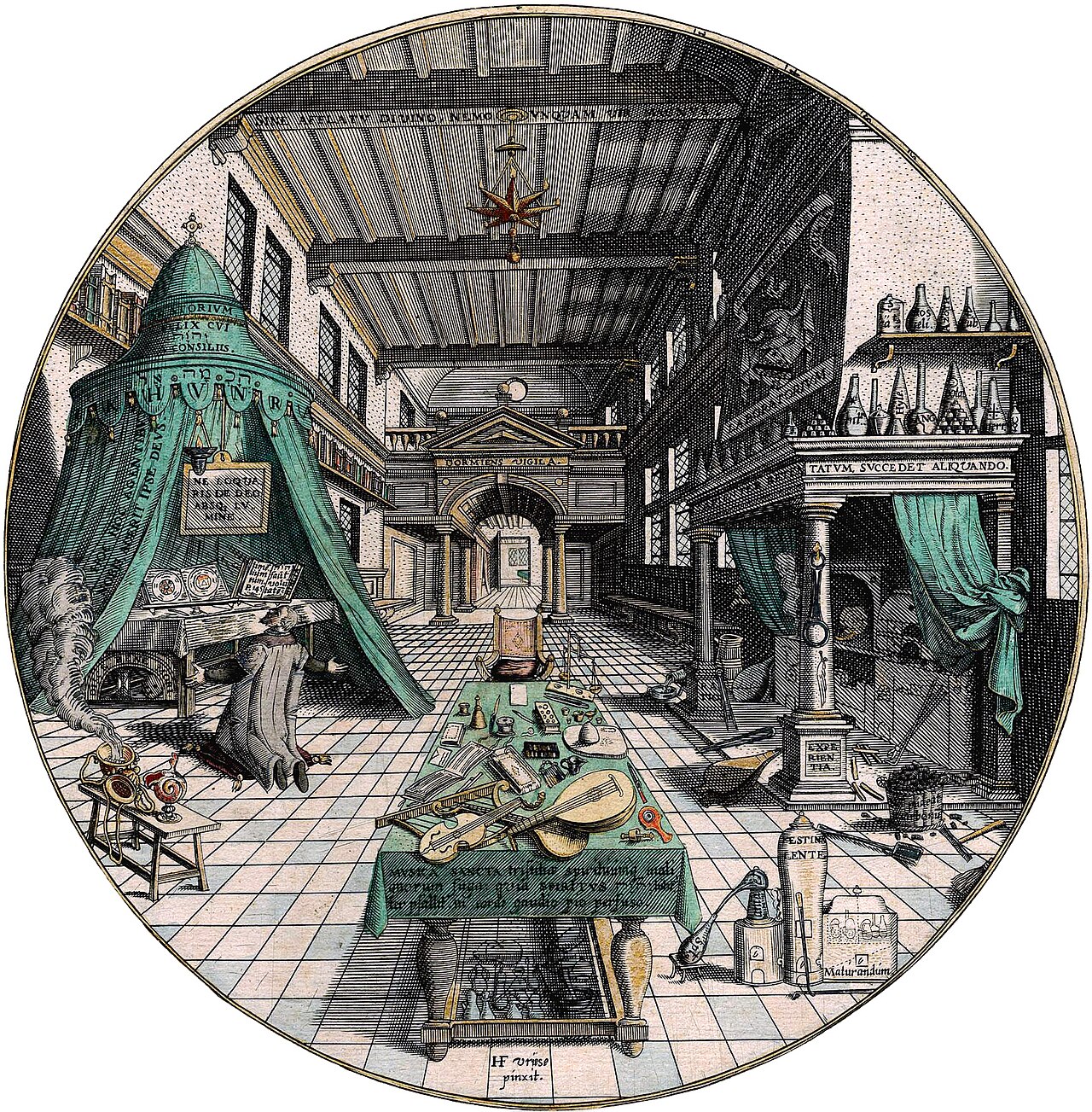
The Hermetic Museum: Restored and Enlarged (Waite Edition)
A compendium of twenty-two celebrated seventeenth-century alchemical treatises on the Philosopher’s Stone, the Tria Prima, and the Spagyric Art, translated and annotated by Arthur Edward Waite.