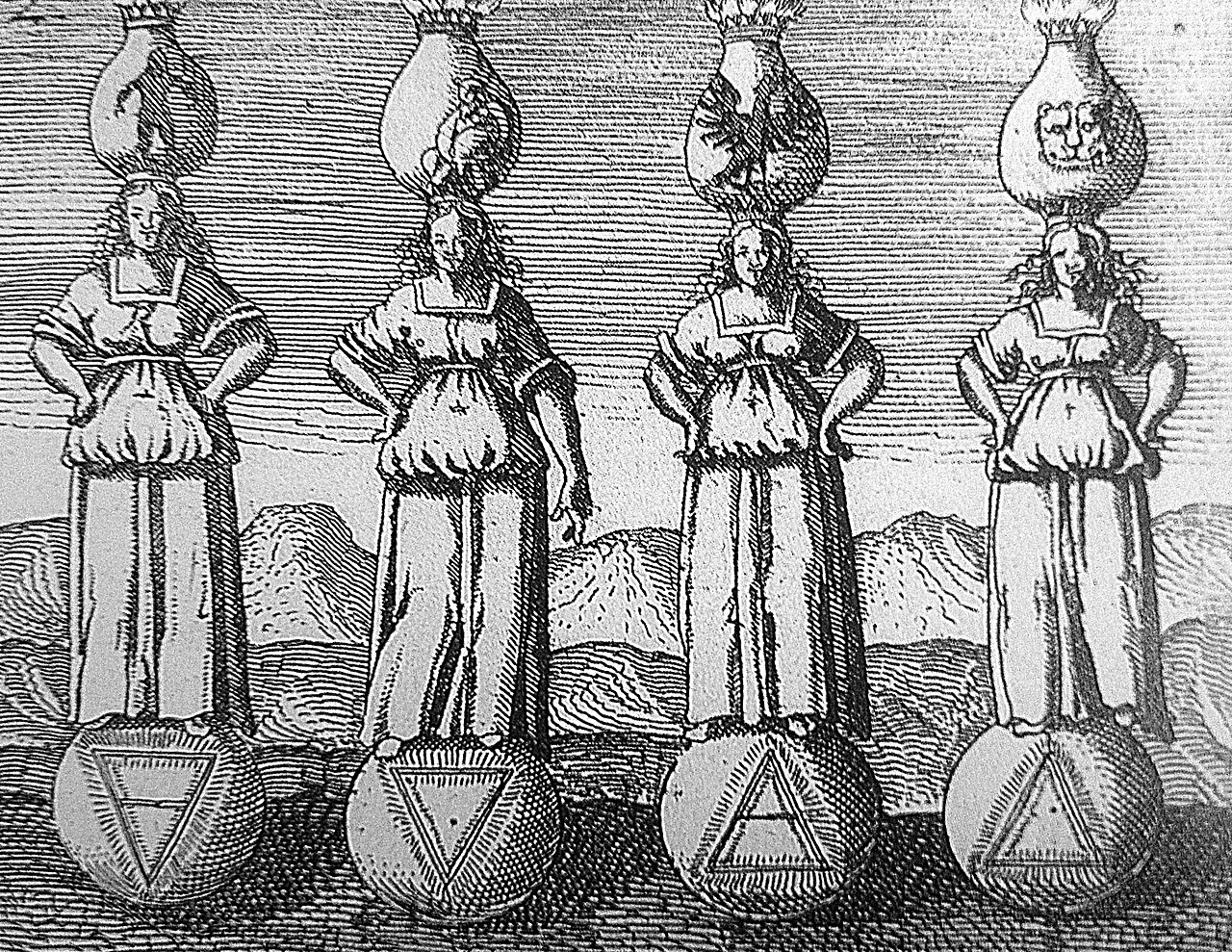
The doctrine of Four Elements encompasses esoteric concepts, entities, and relationships that weave together to form a profound philosophical framework. By examining the sympathies among these principles, substances, and concepts, we will uncover the hidden patterns and structures that underlie this enigmatic world.
The Unity of the Elements
Central to this hermetic lineage is the concept of the Four Elements: Earth, Water, Air, and Fire. These fundamental substances are not only tangible materials but also inhabited by mythical beings, such as sylphs, undines, gnomes, and salamanders. The Four Elements are central to the divine synthesis and analysis, representing the unity in multiplicity. The mage's imagination, functioning as a great magnetic agent, can assimilate reflections from the living light, including those of the elements, to create and see truth.
The Hierarchical Structure of the Celestial Realm
The celestial hierarchy, as represented by the C series, is a structured and layered system where each entity is derived from the previous one. The C series transforms into the D series, with each entity playing a essential part in the progression through Kabbalistic cosmology. The Firmament of the Fixed Stars and the Fiery Heaven are closely related entities that reflect the progressive nature of heavenly manifestations. The Wheels, as the final element in the hierarchy, signify the supreme or most advanced representation of the Four Elements.
The Balance of Virtues and Vices
The balance of elements is represented by the AE, with Virtues on the side of goodness and Vices on the side of evil. The three fundamental letters <א מ ש> correspond to the year, influencing its states and representing different parts of the human form. The Breastplate of the High Priest, adorned with twelve gemstones, symbolically represents the attributes of the planets, while the Shewbread, with its twelve loaves, represents the months of the year.
The Mystical Significance of the Candlestick
The Candlestick, with its seven branches and seven lamps, is a central focal point in the Holy Place, rich in astronomical and cosmological symbolism. Each lamp corresponds to the seven planets, and the inclusion of the seven colors underscores this celestial theme. The Candlestick represents the elevation of spiritual aspects, like the four elements and the planets, and is divided into parts to signify this elevation.
The Planets and Months
Months and planetary cycles are interconnected in the symbolic universe, with the moon representing the planets' cycles. Each planet's cycle is associated with an element, and the elevation of spiritual aspects is symbolized by the colors of the planets. The Decani, or seventy divisions of the planets, are symbolically represented by the branching out of the candlestick into seventy parts.
Bibliographia & Fontes
Primary Source Books Used in This Article
The doctrines, historical citations, and symbolic correspondences synthesized in this article are drawn from the following primary works and chapters:
- I.Manly P. Hall, The Secret Teachings of All Ages1928
An Encyclopedic Outline of Masonic, Hermetic, Qabbalistic and Rosicrucian Symbolical Philosophy
Chapters / Sections Consulted:Ch. “Fundamentals of Qabbalistic Cosmogony” · Ch. “The Tabernacle in the Wilderness” · Ch. “The Qabbalah, the Secret Doctrine of Israel” - II.Éliphas Lévi, Transcendental Magic: Its Doctrine and Ritual (Dogme et Rituel de la Haute Magie)1856 / 1896 trans.
Translated and Annotated by A. E. Waite
Chapters / Sections Consulted:Part I: The Doctrine of Transcendental Magic
Further Inquiry in This Cycle
Companion Studies & Disputations
3 Fundamental Letters: The Harmony of Virtues and Vices
The 3 Fundamental Letters tradition presents a network of esoteric concepts, entities, and relationships that reveal a profound philosophy on the balance…
The Celestial Hierarchy of Kokab
By examining the sympathy of Principalities, celestial spheres (C 7, C 8, C 9), and the World of Assiah (D 7, D 8, D 9), we gain insight into the…
The Celestial Hierarchy of Shemesh
By examining the hierarchical structures and derivations between these figures and symbols, this synthesis reveals a network of connections that…
Candlestick, Shewbread & Planet in Alchemy
The doctrine of Candlestick encompasses esoteric concepts, substances, and relationships that reveal a profound philosophy. This essay synthesizes the raw…
Cerubim: "Unveiling the Mystical Hierarchy
By analyzing the connections between Cerubim, the Holy Animals, C1, and D1, we gain insight into the mystical hierarchy of Kabbalistic cosmology. Our…
Wheels: The Celestial Hierarchy
Through a careful analysis of the classical sources and relationships, we will trace the underlying philosophical framework that governs the celestial…
Fiery Heaven & Firmament Of The Fixed Stars: Hierarchy
By examining the connections between Thrones, celestial spheres, and Kabbalistic cosmological structures, we will uncover the underlying philosophical…
The Interplay of Imagination and Reality
Through a careful analysis of key concepts and entities, we will uncover the underlying dynamics that govern the interplay between the mage's imagination…
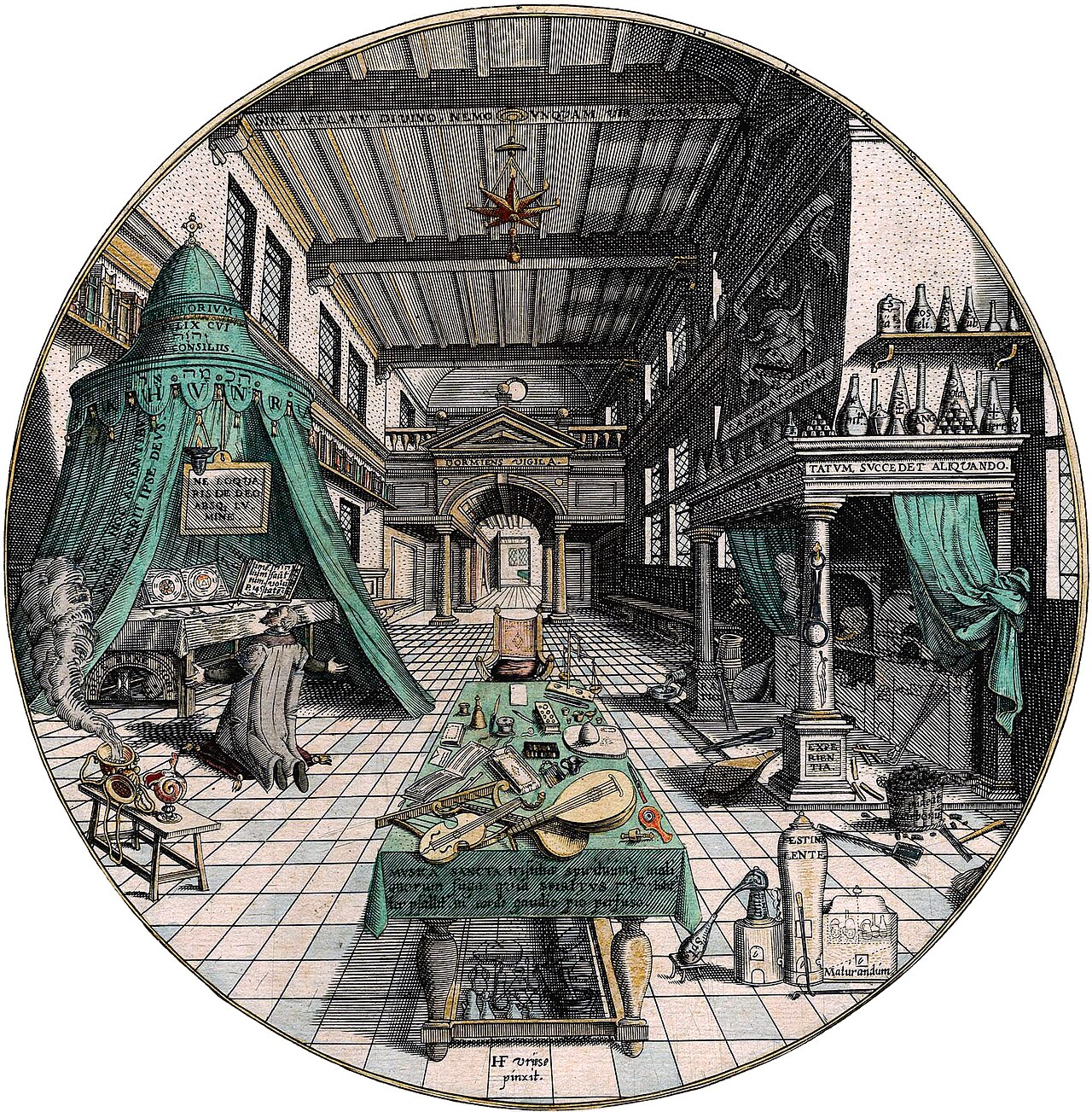
The Hermetic Museum: Restored and Enlarged (Waite Edition)
A compendium of twenty-two celebrated seventeenth-century alchemical treatises on the Philosopher’s Stone, the Tria Prima, and the Spagyric Art, translated and annotated by Arthur Edward Waite.