Our synthesis reveals the progression from the highest spiritual concepts to the lowest realms of the material world, highlighting the transformative journey of the celestial entities.
Historical & Symbolic Context
At the pinnacle of the celestial hierarchy lies the concept of Cerubim, also known as the Holy Animals. These spiritual entities are derived from C1, the third Wisdom in the World of Yetzirah. This relationship establishes C1 as the foundational element from which the Holy Animals, or Cerubim, emanate. The Holy Animals, in turn, represent a spiritual concept that is utilized to describe higher spiritual entities or hierarchies.
C1 is the first of ten spheres or levels of celestial hierarchy, serving as the starting point for the derivation of other hierarchies. This notion is further reinforced by its relationship with the Holy Animals, which are described as referring to the celestial hierarchy beginning with C1. This reciprocal connection emphasizes C1's role as the originating source of the spiritual concept embodied by the Holy Animals.
As we descend through the Kabbalistic cosmology, C1 undergoes a transformation, resulting in the emergence of D1. This progression signifies a shift from the highest spiritual realms to the lowest of the four worlds, Assiah. D1, as the initial sphere or level within the World of Assiah, represents the foundational element of the material world. This transformation from C1 to D1 affirms that the spiritual concepts of the higher realms are gradually materialized as we move down the celestial hierarchy.
The synthesis of these relationships reveals a complex, hierarchical structure, where spiritual concepts are gradually transformed and materialized as we progress from the highest realms to the lowest. The Cerubim, or Holy Animals, serve as a spiritual concept derived from C1, which is, in turn, transformed into D1. This mystical journey highlights the intricate relationships between celestial entities and substances, offering a glimpse into the esoteric realm of this hermetic lineage.
Bibliographia & Fontes
Primary Source Books Used in This Article
The doctrines, historical citations, and symbolic correspondences synthesized in this article are drawn from the following primary works and chapters:
- I.Manly P. Hall, The Secret Teachings of All Ages1928
An Encyclopedic Outline of Masonic, Hermetic, Qabbalistic and Rosicrucian Symbolical Philosophy
Chapters / Sections Consulted:Ch. “Fundamentals of Qabbalistic Cosmogony”
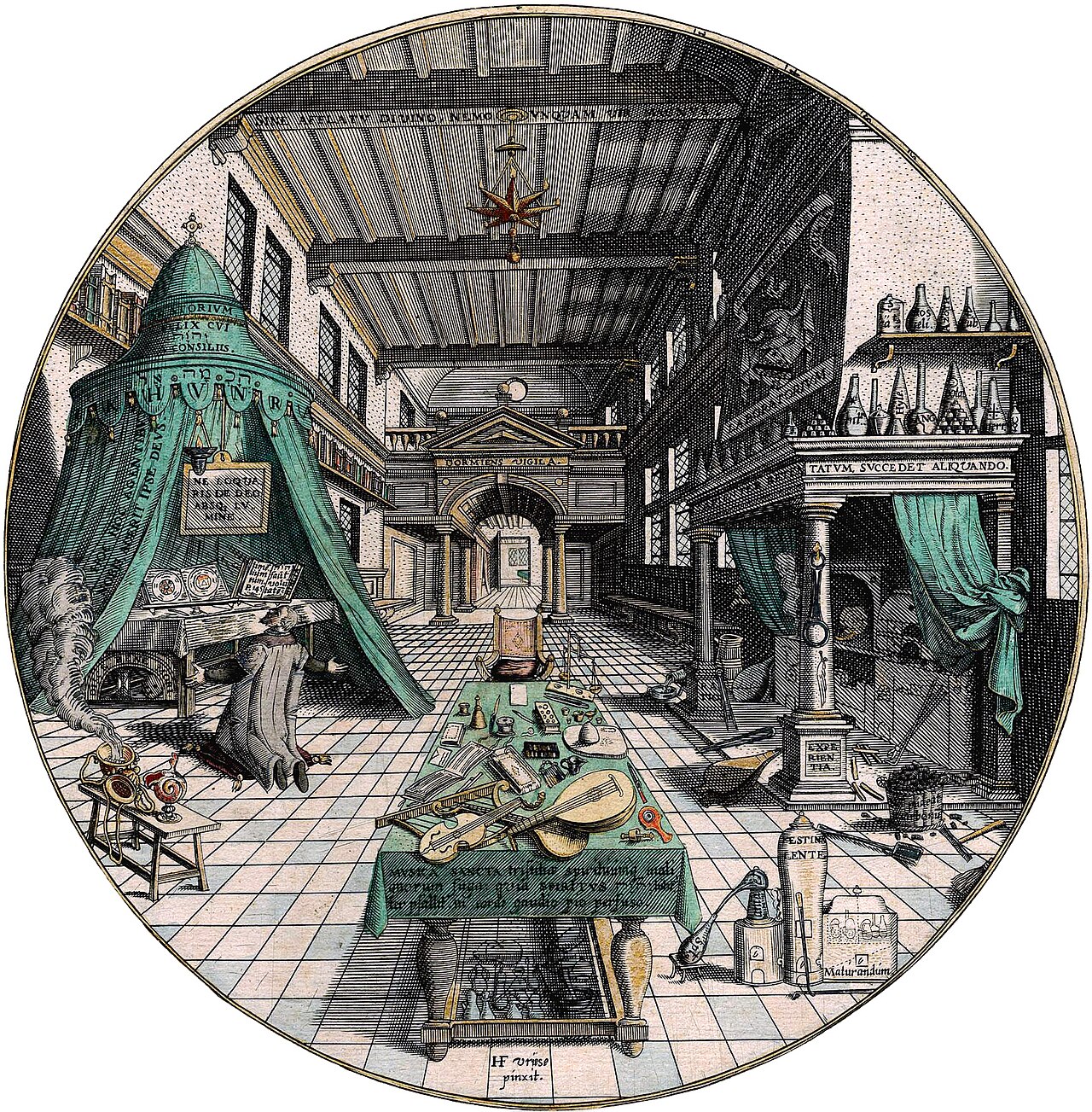
The Hermetic Museum: Restored and Enlarged (Waite Edition)
A compendium of twenty-two celebrated seventeenth-century alchemical treatises on the Philosopher’s Stone, the Tria Prima, and the Spagyric Art, translated and annotated by Arthur Edward Waite.