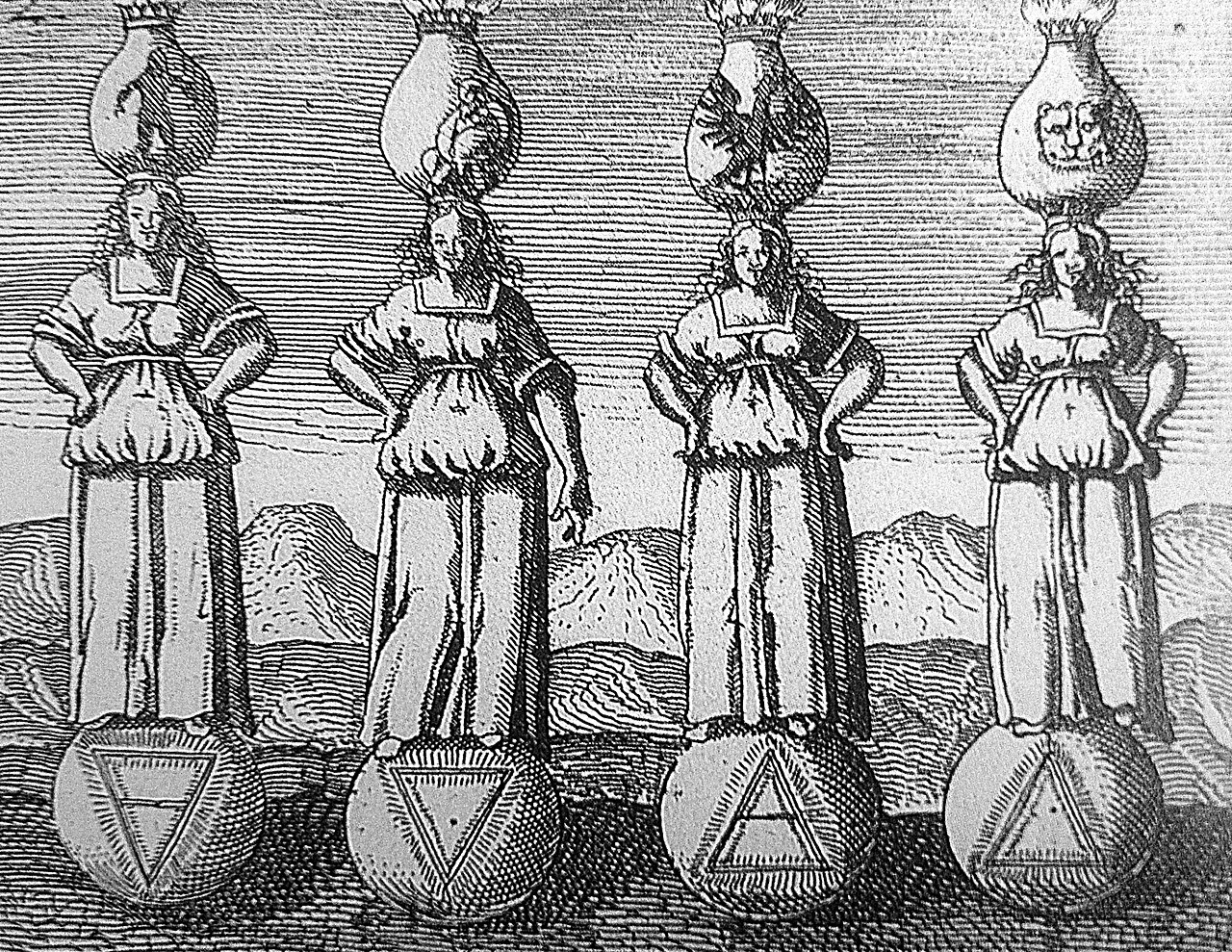
The community of concepts in the Fire tradition reveals a rich body of interconnected ideas, weaving together elements, substances, and spiritual principles. Central to this philosophy is the transformative power of fire, which symbolizes purification, transformation, and divine energy. Through its relationships with other entities, fire is revealed to be a crucial element in the alchemical process, spiritual practices, and the creation of new wisdom.
The Central Role of Fire
Fire is a fundamental element that holds significant importance in various contexts, symbolizing transformation, purification, and divine energy. Its association with the letter Shin (ש) and depiction in Figure 30 emphasize its role as a transformative and active energy in nature. Fire's linkage to the eight of pentacles highlights its connection to craftsmanship, skill, and ingenuity, while its relationship with hospitality attests to the necessity of warmth and generosity in interactions.
The Spiritus Universalis and Spiritus Mundi
The Spiritus Universalis and Spiritus Mundi are closely related concepts, both referring to the universal spirit of the world. These terms are synonymous, describing the divine spirit crucial to alchemy and spiritual practices. The Spiritus Universalis is described as a divine spirit or breath that emerges from the divine source and permeates all aspects of the material world. Its role in alchemical experiments is that of a driving force behind the transformation of matter.
Elements and Substances
The relationships between fire, Spiritus Universalis, and Spiritus Mundi reveal a deep sympathy between elements and substances. Fire, alongside water, transforms and purifies the Spiritus Universalis in alchemy. Similarly, the Spiritus Mundi acts as a transformative and purifying force in the universe, related to fire and the natural world. Grass and fields are both manifestations of the underlying essence of spirit, illustrating its pervasive influence over all forms of life.
The Role of Fire in Spiritual Practices and Alchemy
Fire is central to spiritual practices and the creation mythology, associated with the red dirt used to fashion the Adamic man. Its transformative power is essential for the process of impregnation and conception. In alchemy, fire plays a essential part as one of the four positive and visible magical elements, symbolizing the process of transformation and purification necessary to create the Philosopher's Stone.
The Birth of Philosophical Babies and the Eight of Pentacles
The birth of philosophical babies signifies the creation of new wisdom through the integration of the threefold spirit. Fire, as a concept, aids in this process, representing the transformative power of knowledge. The eight of pentacles, related to craftsmanship and skill, is also connected to the concept of hospitality and the Knight of Pentacles, representing utility, service, and financial advantages.
Bibliographia & Fontes
Primary Source Books Used in This Article
The doctrines, historical citations, and symbolic correspondences synthesized in this article are drawn from the following primary works and chapters:
- I.Manly P. Hall, The Secret Teachings of All Ages1928
An Encyclopedic Outline of Masonic, Hermetic, Qabbalistic and Rosicrucian Symbolical Philosophy
Chapters / Sections Consulted:Ch. “The Theory and Practice of Alchemy” · Ch. “The Chemical Marriage of Christian Rosenkreutz” · Ch. “Fifteen Rosicrucian and Qabbalistic Diagrams” - II.A. E. Thierens, The General Book of the Tarot1930
Containing the Astrological Key to the Esoteric Tradition of the Greater and Lesser Arcana (Intro. by A. E. Waite)
- III.Éliphas Lévi, Transcendental Magic: Its Doctrine and Ritual (Dogme et Rituel de la Haute Magie)1856 / 1896 trans.
Translated and Annotated by A. E. Waite
Chapters / Sections Consulted:Part II: The Ritual of Transcendental Magic - IV.Franz Hartmann, In the Pronaos of the Temple of Wisdom / Philosophy of the Rosicrucians and Alchemists1890
Containing the History of the True and the False Rosicrucians and the Principles of Alchemy
Further Inquiry in This Cycle
Companion Studies & Disputations
The Alchemical Dance of Transformation
At its core, this community revolves around the transformative power of fire, which permeates various aspects of existence, from spiritual practices to…
Spiritus Universalis & Spiritus Mundi: The Universal Spirit
This essay provides a comprehensive analysis of the esoteric data points extracted from the Spiritus Universalis tradition, focusing on the concept of the…
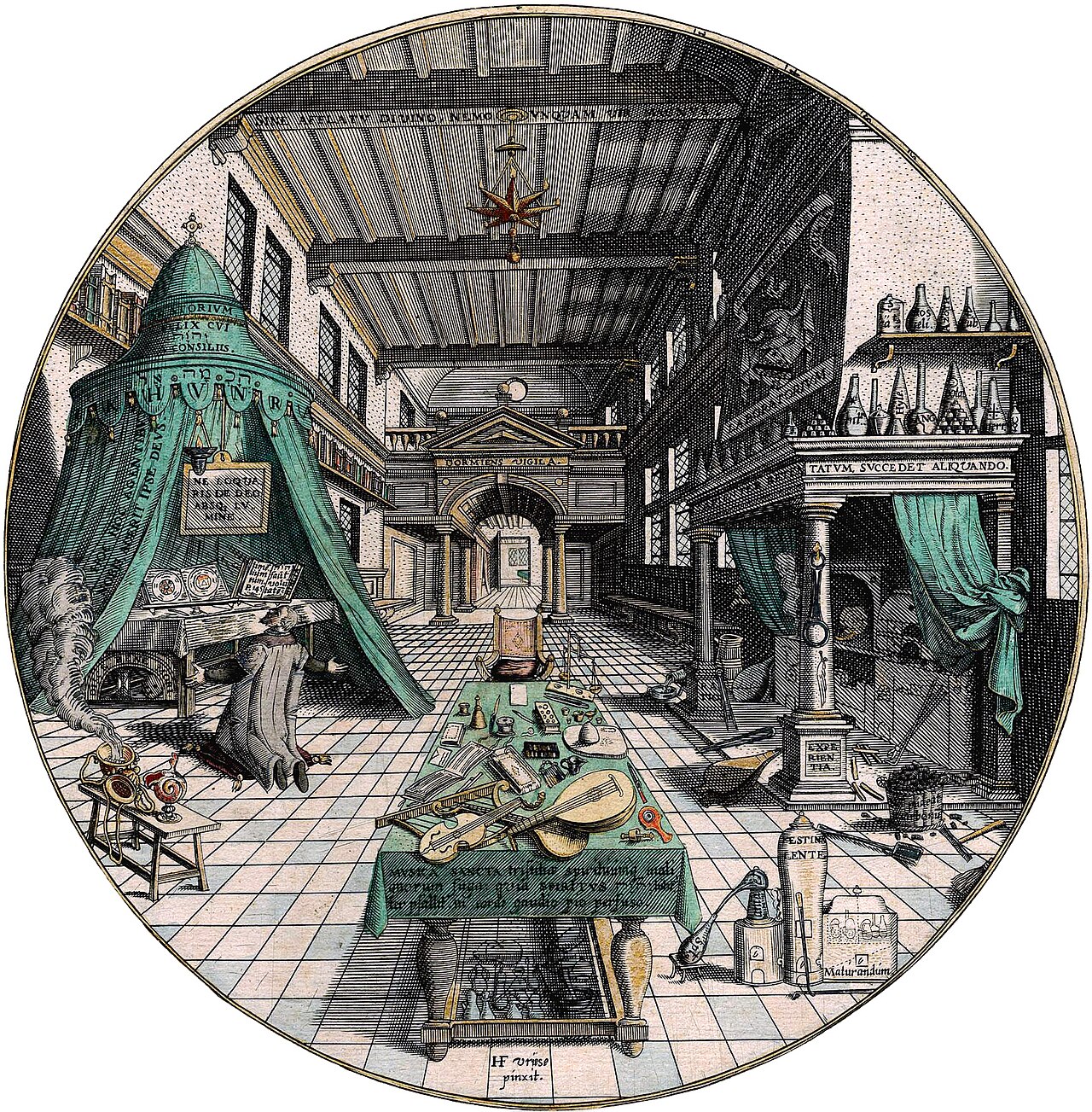
The Hermetic Museum: Restored and Enlarged (Waite Edition)
A compendium of twenty-two celebrated seventeenth-century alchemical treatises on the Philosopher’s Stone, the Tria Prima, and the Spagyric Art, translated and annotated by Arthur Edward Waite.