By examining the connections between Francis Bacon, Ben Jonson, and other key figures, this analysis reveals a rich body of intellectual pursuits, philosophical debates, and mystical traditions that underpin the community's esoteric landscape.
Historical & Symbolic Context
Central to this hermetic lineage is the enigmatic figure of Francis Bacon, a polymath whose contributions to the scientific revolution, philosophy, and literature continue to fascinate scholars. Bacon's involvement with Freemasonry, his use of numerical ciphers, and his possible authorship of the Shakespearean plays all contribute to an aura of mystery surrounding his life and work. His relationship with Ben Jonson, a prominent playwright and poet, highlights the close connections between intellectual and artistic pursuits in early modern England.
Bacon's connections to other entities within the community reveal a deeper philosophical landscape. His potential involvement with the Franklin Masonic Order and his use of ciphers to conceal information in the King James Version of the Bible suggest a keen interest in the symbolic and coded language of his time. The rituals of Freemasons, which may have been influenced by Bacon, represent a further intersection of esotericism and intellectual pursuits.
The relationships between Bacon and other philosophers, such as Thomas Aquinas and Scotus, demonstrate a network of influences and debates. Bacon's empirical method, which emphasizes the importance of observation and experimentation, challenges some of the philosophical underpinnings of Augustinianism, a Christian Platonism that emphasizes the supremacy of the church and its dogmas. Aquinas, who engaged with the thought of Irenaeus and Cyril of Alexandria, sought to create a philosophical bridge between empirical science and theological doctrine. Hobbes, who followed Bacon in the move toward empirical science, focused on the material world and scientific investigation, while also seeking to clarify the relationship between reason and faith.
The connections between these philosophers and concepts reveal a profound engagement with the nature of knowledge, reality, and human understanding. The opposition between Augustinianism and Pelagianism, which emphasizes the capability of mankind to achieve salvation through free will, represents a fundamental debate within Christian theology. The relationships between Bacon, Aquinas, and Hobbes demonstrate a shared concern with the relationship between reason and faith, as well as the importance of empirical evidence and logical analysis in understanding the world.
The esoteric landscape of this hermetic lineage represents a complex nexus of intellectual pursuits, philosophical debates, and mystical traditions. By examining the relationships between key figures and concepts, this analysis reveals a rich body of ideas and influences that underpin the community's esoteric landscape.
Bibliographia & Fontes
Primary Source Books Used in This Article
The doctrines, historical citations, and symbolic correspondences synthesized in this article are drawn from the following primary works and chapters:
- I.Manly P. Hall, The Secret Teachings of All Ages1928
An Encyclopedic Outline of Masonic, Hermetic, Qabbalistic and Rosicrucian Symbolical Philosophy
Chapters / Sections Consulted:Ch. “Bacon, Shakspere, and the Rosicrucians” · Ch. “Introduction to Symbolical Philosophy”
Further Inquiry in This Cycle
Companion Studies & Disputations
The Cryptic Legacy of Francis Bacon
This essay examines the complex and manifold world of Francis Bacon, a prominent figure in early modern England's intellectual landscape. Through an…
Thomas Aquinas & Hobbes: Scholastic Tradition
This essay provides a comprehensive analysis of the philosophical connections and intersections within this esoteric current, a network of influential…
The Esoteric Threads of Franklin Masonic Order
The Franklin Masonic Order tradition presents a fascinating compendium of esoteric concepts, weaving together the enigmatic Franklin Masonic Order and its…
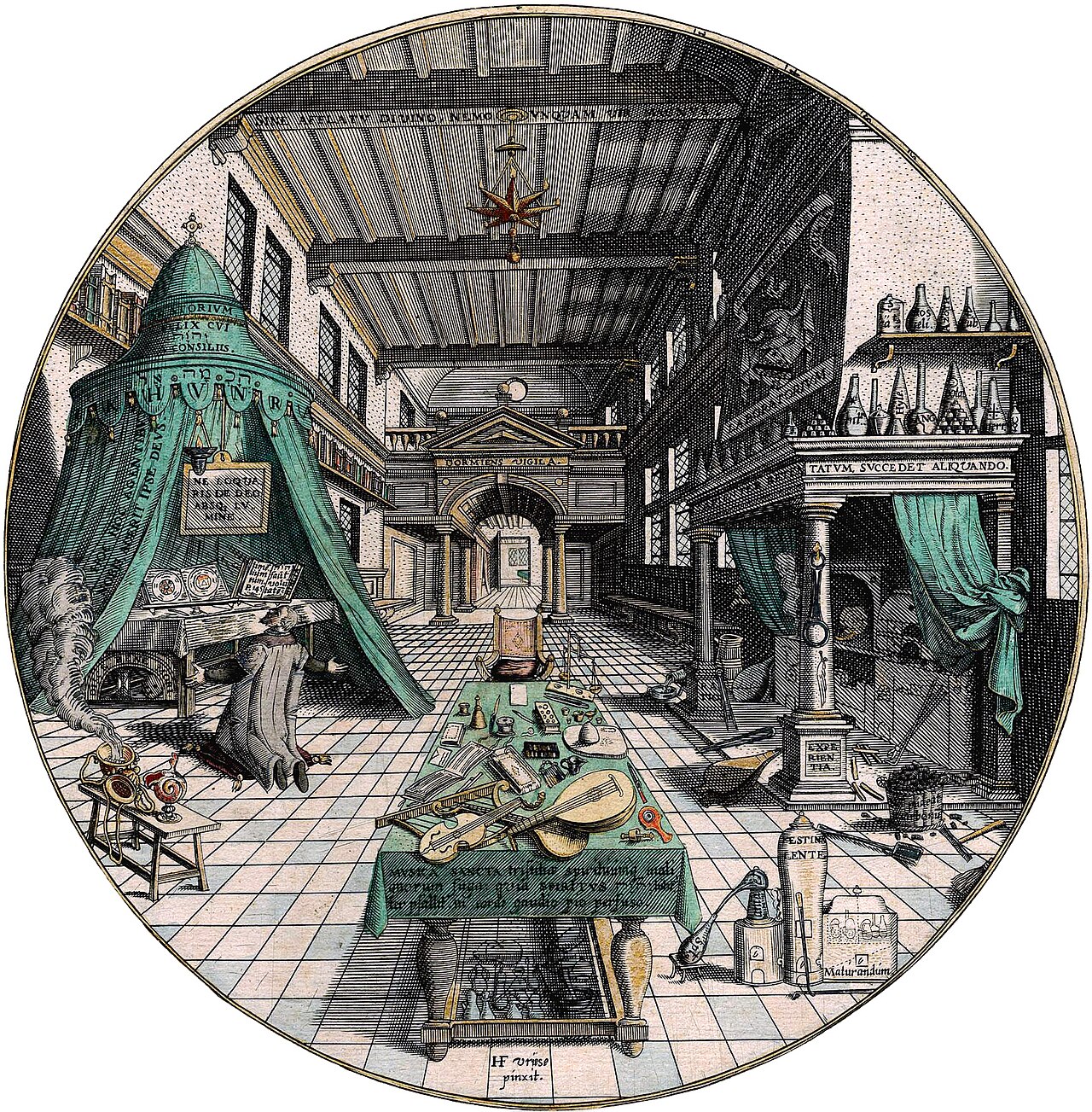
The Hermetic Museum: Restored and Enlarged (Waite Edition)
A compendium of twenty-two celebrated seventeenth-century alchemical treatises on the Philosopher’s Stone, the Tria Prima, and the Spagyric Art, translated and annotated by Arthur Edward Waite.