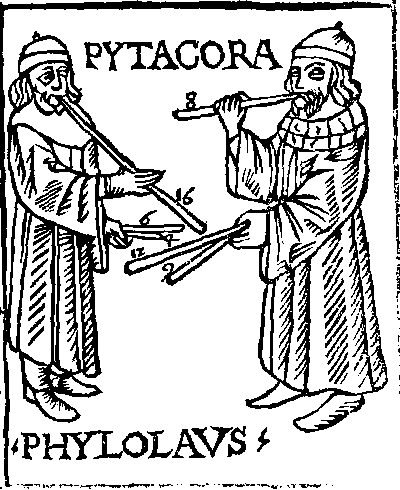
This synthesis reveals the profound impact of Pythagorean thought on Western philosophy and the enduring relevance of ancient wisdom in understanding the cosmos and our place within it.
Historical & Symbolic Context
The Pythagorean philosophy, as embodied by Pythagoras, is a rich body of mathematical, musical, and spiritual concepts that underpin the harmonies of the universe. At its core lies the notion of the monad, the fundamental unit of existence, which gives rise to the duad, the dyadic relationship between unity and duality. This dichotomy is reflected in the concepts of odd and even numbers, with the monad representing the odd numbers and the duad representing the even numbers.
The triad, a fundamental triadic structure, is another crucial aspect of Pythagorean philosophy, as seen in the works of Plato and the concept of the Ennead. The Ennead, a collection of numbers significant to ancient cultures, is associated with various deities and principles, highlighting the sympathy of the universe and the human experience.
The harmonic school, which opposed Pythagorean principles, focused on taste and instinct rather than reason and mathematics in music. In contrast, Pythagoras and his followers believed that music was a rational and mathematical discipline, with the modes and scales reflecting the underlying structure of the universe.
The concept of the music of the spheres, central to Pythagorean thought, is directly related to spheric harmony, as both embody the universal cosmic music of the planets. The ninefold division of the universe, a core concept in spheric harmony, is closely bound to the notion that the music from the spheres unites all existence.
The sympathies among these principles such as Fludd, the Mogul emperor, and the Babylonians highlight the significance of color and its representations in artistic expression and spiritual symbolism. The use of color in Tibetan mythology, where devils are depicted as black, gods as white, and goblins as red, demonstrates the complex and manifold nature of color symbolism.
The connections between speech, music, and color, as discussed by Plato and Fludd, reveal the profound impact of Pythagorean thought on Western philosophy. The law of the octave and the higher scope of the sense of hearing compared to sight are central to this discussion, highlighting the intricate relationships between the senses and the universe.
The concept of silver, signifying the regenerative and the purified human nature, reflects inner light and is used in the preparation of the white elixir. The relationships between silver, gold, and the red elixir demonstrate the complex and manifold nature of alchemical processes and symbolism.
The Ram, as a zodiacal sign, symbolizes lordship and authority, tied to the divine status of the sun and its influence over the cosmos. The connections between the Ram, humanity, and the annual cycle of rebirth and renewal highlight the significance of this sign in spiritual development and the human experience.
The relationships between distance, force, and the projectile demonstrate the physical attributes and relationships that govern the natural world. The projectile's return journey, equal in distance to its upward trajectory, implicates a relationship related to the physical attributes of the universe.
This synthesis reveals the profound impact of Pythagorean philosophy on Western thought and the enduring relevance of ancient wisdom in understanding the cosmos and our place within it. The intricate sympathies among these principles such as Pythagoras, Plato, and the concepts of music, geometry, and color demonstrate the complex and manifold nature of the universe and the human experience.
Bibliographia & Fontes
Primary Source Books Used in This Article
The doctrines, historical citations, and symbolic correspondences synthesized in this article are drawn from the following primary works and chapters:
- I.Manly P. Hall, The Secret Teachings of All Ages1928
An Encyclopedic Outline of Masonic, Hermetic, Qabbalistic and Rosicrucian Symbolical Philosophy
Chapters / Sections Consulted:Ch. “Pythagorean Mathematics” · Ch. “Introduction to Symbolical Philosophy” · Ch. “The Life and Philosophy of Pythagoras” · Ch. “The Pythagorean Theory of Music and Color” · Ch. “The Cryptogram as a Factor in Symbolic Philosophy” · Ch. “Freemasonic Symbolism” - II.Max Heindel, The Rosicrucian Mysteries: An Elementary Exposition of Their Secret Teachings1911
The Rosicrucian Fellowship
- III.Éliphas Lévi, Transcendental Magic: Its Doctrine and Ritual (Dogme et Rituel de la Haute Magie)1856 / 1896 trans.
Translated and Annotated by A. E. Waite
Chapters / Sections Consulted:Part I: The Doctrine of Transcendental Magic · Part II: The Ritual of Transcendental Magic - IV.A. E. Thierens, The General Book of the Tarot1930
Containing the Astrological Key to the Esoteric Tradition of the Greater and Lesser Arcana (Intro. by A. E. Waite)
- V.Arthur Edward Waite, The Pictorial Key to the Tarot1910
Being Fragments of a Secret Tradition under the Veil of Divination
- VI.Franz Hartmann, In the Pronaos of the Temple of Wisdom / Philosophy of the Rosicrucians and Alchemists1890
Containing the History of the True and the False Rosicrucians and the Principles of Alchemy
- VII.The Three Initiates, The Kybalion: A Study of the Hermetic Philosophy of Ancient Egypt and Greece1908
The Seven Hermetic Principles
Further Inquiry in This Cycle
Companion Studies & Disputations
The Harmonious Interplay of Force, Form, and Desire
By examining the interactions between entities such as FORCE, FORM, COLOR, DESIRE WORLD, and ARCHANGELS, this synthesis aims to reveal the underlying…
The Triadic Structure
By examining the traditional doctrines and substances associated with the Triad, including the Heavenly Zenith, Abyss, Latona, and others, we gain insight…
Scepticism: The Tapestry of Doubt and Inquiry
The doctrine of Scepticism encompasses philosophical concepts, entities, and relationships that weave together to form a complex landscape of doubt…
The Esoteric Architecture of the Human Soul
This essay examines the esoteric realm of this hermetic lineage, where the intersections of Greek mythology, Freemasonry, and cabalistic traditions reveal…
Framework of Duad: A Philosophical Synthesis
By examining the interconnected entities and relationships within this community, we uncover a rich body of ideas that reveal the fundamental nature of…
Elements, Tower Of Jupiter & Modes in Kabbalah, Numerology
The esoteric data points extracted from the Elements tradition reveal a network of relationships between ancient philosophical and alchemical concepts…
The Interplay of Ambition, Business, and Craftsmanship
By examining the sympathy of these concepts, we gain insight into the complexities of human nature, the importance of community, and the pursuit of…
Code: Synthesizing the Philosophical Underpinnings of Arbitrary
By examining the intricate web of connections between hieroglyphic figures, alchemical substances, and ancient ciphers, we uncover a rich body of symbolic…
The Evolution of Humanity
Through the lens of these interconnected ideas, we gain insight into the nature of humanity, its relationship with the divine, and the role of spiritual…
Archyta: The Atomic Pioneers
This essay examines the philosophical contributions of three Pre-Socratic thinkers, Democritus, Archytas, and Leucippus, who collectively laid the…
The Harmonious Convergence of Numbers and Spirit
By examining the intersections between Form, Aurelian Theory, Pythagorean Theory of Numbers, Hippasus, Leibnitz, and their respective relationships, we…
Travel: Labyrinth of Human Experience
By analyzing the intricate connections between these ideas, we gain insight into the human experience, revealing a rich body of themes that demonstrate the…
Ennead, Magical Science & Prometheus in Kabbalah, Numerology
The doctrine of Ennead encompasses esoteric entities and relationships, weaving together threads from Greek mythology, magical science, and philosophical…
Pythagoras: The Harmonics of the Universe
By examining the relationships among these traditions, including philosophers, lineages, and concepts, we uncover a profound synthesis of mathematics…
The Harmony of the Spheres: A Philosophical Synthesis
The classical sources and relationships reveal a complex philosophical framework that explores the sympathy of music, cosmic harmony, and the fundamental…
Plato & Music: The Harmony of Existence
Central to this framework is the philosophy of Plato, whose ideas on metaphysics, ethics, and the nature of existence serve as a foundation for the…
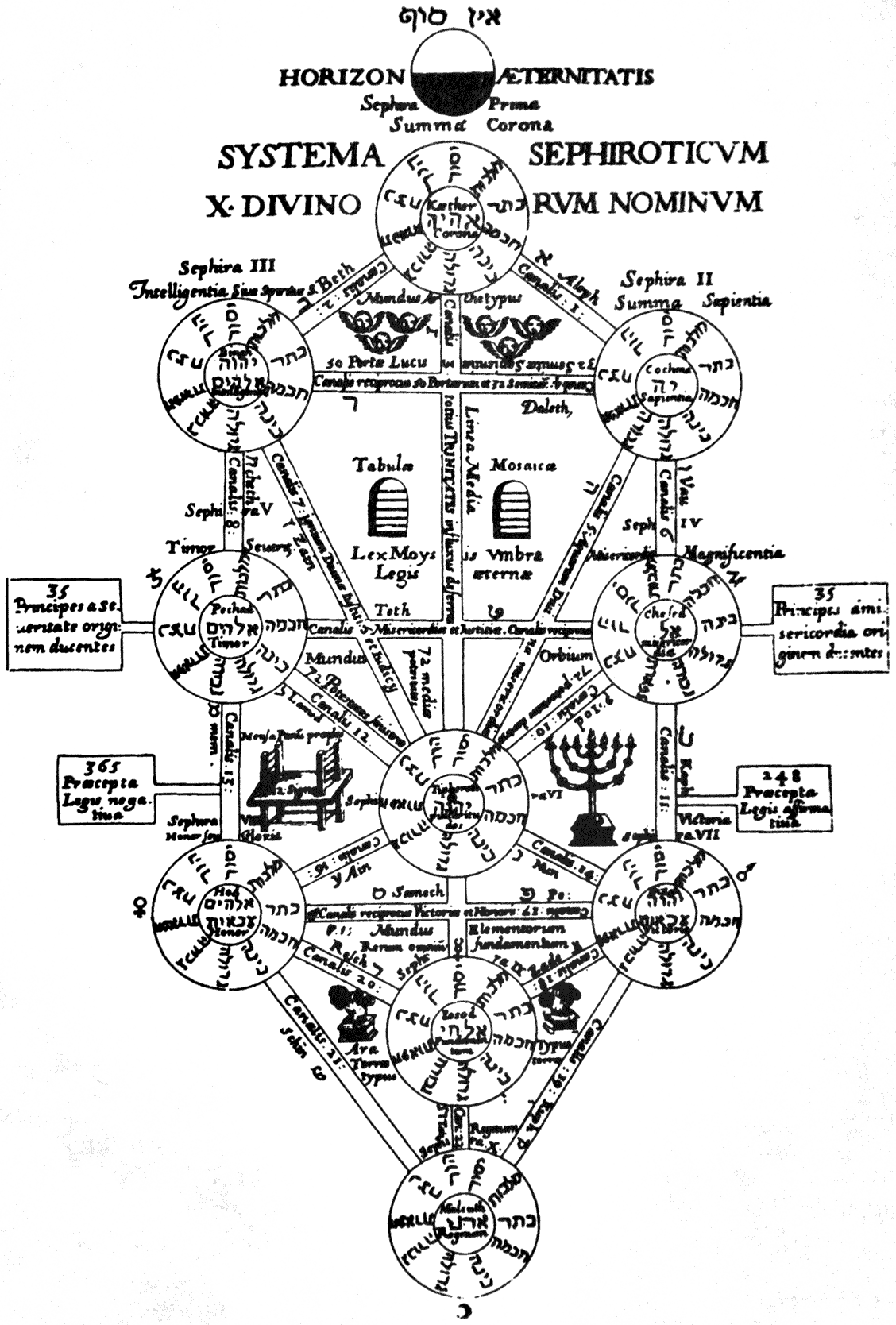
The Kabbalah Unveiled (S. L. MacGregor Mathers)
Containing the foundational translations and esoteric commentaries on the Book of Concealed Mystery, the Greater Holy Assembly, and the Lesser Holy Assembly from the Zohar.