In the study of the esoteric dimensions of Christ, exploring the manifold nature of this central figure in Christian tradition. Through an examination of traditional doctrines and relationships, this analysis reveals the profound symbolism, philosophical underpinnings, and mystical connotations associated with Christ. By synthesizing the surviving literature points, this essay aims to uncover the deeper meanings and connections that underlie the Christological narrative, ultimately shedding light on the esoteric significance of Christ.
The Multifaceted Nature of Christ
Christ, as a figure, embodies a complex and evolving character across various contexts and traditions. As the founder of a revealed esoteric tradition within Gnostic Christianity, Christ is often associated with the teachings of forgiveness through reform and the application of higher laws, opposing mere retribution based on natural laws. This emphasis on reform and higher laws demonstrates the transformative and redemptive aspects of Christ's mission.
The relationships between Christ and other entities, such as Emmaus, Mountain Top, Sepulchre, and Empty Tomb, highlight the continuation of His mission, spiritual challenges, and the triumph of divine life over death. These connections demonstrate the dynamic and manifold nature of Christ, who is not only a historical figure but also a powerful spiritual entity.
The Solar Spirit and the Cosmic Sacrifice
The Solar Spirit, symbolized by the grape and Christ, is an exoteric representation of the divine enthusiasm that underlies the Christological narrative. This connection between Christ and the Solar Spirit emphasizes the mystical and esoteric dimensions of Christ's nature. Irenaeus's views on the cosmic sacrifice of Christ, as described in "King's Gnostics and Their Remains," suggest that Christ's sacrifice is not merely a historical event but a cosmic and mystical phenomenon.
The idea of suffering and resurrection, as well as the crucifixion story, are also closely tied to Christ's nature. The Gnostic view of Christ's existence and sacrifice emphasizes the idea of his resurrection as a form of simulated resurrection rather than traditional death. This perspective demonstrates the mystical and esoteric aspects of Christ's nature, highlighting the complex and manifold character of this central figure.
The Oberammergau Stone and the Symbolism of Divine Favor
The Oberammergau Stone, with its striking resemblance to the face of Christ, is a naturally occurring symbol of divine favor. This unique natural formation has garnered considerable attention and reverence, underscoring its significance as a symbol of miraculous creation. The stone's ability to spontaneously form a likeness to Christ's face lends it a profound spiritual and mystical quality, further cementing its status as a notable example of a naturally occurring symbol with widespread recognition and appeal.
Creed, Reformation, and the Unity of Christ's Message
The concept of creed, often used to divide different factions of faith, is contrasted with Christ's message of unity and love. Christ's teachings about forgiveness of sin through reform and the application of higher law are essential for avoiding retribution based on natural laws. This emphasis on reform and higher laws highlights the transformative and redemptive aspects of Christ's mission, demonstrating the importance of unity and love in the face of division and creedal differences.
Bibliographia & Fontes
Primary Source Books Used in This Article
The doctrines, historical citations, and symbolic correspondences synthesized in this article are drawn from the following primary works and chapters:
- I.Manly P. Hall, The Secret Teachings of All Ages1928
An Encyclopedic Outline of Masonic, Hermetic, Qabbalistic and Rosicrucian Symbolical Philosophy
Chapters / Sections Consulted:Ch. “Stones, Metals, and Gems” · Ch. “Flowers, Plants, Fruits, and Trees” · Ch. “The Cross and the Crucifixion” · Ch. “The Ancient Mysteries and Secret Societies (Part II)” - II.Max Heindel, The Rosicrucian Mysteries: An Elementary Exposition of Their Secret Teachings1911
The Rosicrucian Fellowship
- III.Éliphas Lévi, Transcendental Magic: Its Doctrine and Ritual (Dogme et Rituel de la Haute Magie)1856 / 1896 trans.
Translated and Annotated by A. E. Waite
Chapters / Sections Consulted:Part II: The Ritual of Transcendental Magic
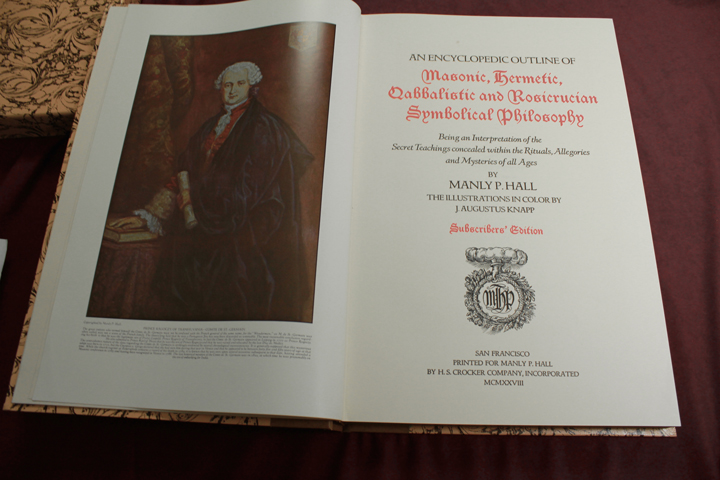
The Secret Teachings of All Ages (Manly P. Hall — Reader’s Edition)
An encyclopedic outline of Masonic, Hermetic, Qabbalistic, and Rosicrucian symbolical philosophy, detailing the rites of ancient mystery schools from Eleusis to the Rose Cross.