Paracelsus, a 16th-century Swiss physician and alchemist, was a pivotal figure in the Renaissance era, whose philosophical and medical contributions had a lasting impact on various fields.
Paracelsus' Philosophy
At the core of Paracelsus' philosophy lies the Hermetic arts, a comprehensive collection of esoteric knowledge and spiritual practices that encompass alchemy, magic, and the manipulation of the spiritual and physical realms. Paracelsus was initiated into the Hermetic arts in Constantinople and received instruction from Arabian adepts, demonstrating the transference of esoteric knowledge between cultures. His philosophical system was deeply influenced by Eastern philosophical traditions, neo-Platonic philosophy, and the works of Avicenna, which he later rejected in favor of his own theories.
Paracelsus' understanding of the natural world was characterized by his concept of nature spirits, which he believed played a essential part in the transformative processes and dynamics of nature. He claimed to have learned from Nature spirits, though the precise nature of his interactions is unclear. This emphasis on the spiritual aspects of nature is reflected in his use of herbs, such as tombstone fungus, to treat diseases based on his discovery of mumia.
The Unity of Nature and Human Well-being
Paracelsus' holistic approach to medicine and philosophy is exemplified in his development of Hermetic medicine, which integrated philosophical thought with practical application in medical practices. He applied Hermetic principles to his work, blending traditional wisdom with emerging scientific concepts to offer holistic treatment solutions. This approach emphasized the sympathy of the spiritual, mental, and physical aspects of health and illness.
Paracelsus' concept of the astrum and the archæus, fundamental life principles, played a essential part in his understanding of disease and healing. He believed that the astrum, or vital spirit, and the archæus, or fundamental life principle, were key elements in diagnosing and healing diseases. This holistic approach to medicine is reflected in his use of natural substances, such as herbs and tombstone fungus, to restore health and balance.
The Influence of Paracelsus' Teachings
Paracelsus' teachings had a significant impact on various fields, from alchemy and medicine to magic and astrology. His philosophical and medical contributions influenced later philosophers, scholars, and practitioners to varying degrees. His emphasis on the sympathy of nature and human well-being, as well as his holistic approach to medicine, continue to inspire contemporary thought and practice.
Paracelsus' philosophical system, as synthesized from the classical sources and relationships, reveals a comprehensive understanding of the sympathy of nature, human well-being, and the spiritual and physical realms. His emphasis on the Hermetic arts, natural philosophy, and holistic medicine continues to inspire contemporary thought and practice, offering a profound understanding of the unity of nature and human experience.
Bibliographia & Fontes
Primary Source Books Used in This Article
The doctrines, historical citations, and symbolic correspondences synthesized in this article are drawn from the following primary works and chapters:
- I.Manly P. Hall, The Secret Teachings of All Ages1928
An Encyclopedic Outline of Masonic, Hermetic, Qabbalistic and Rosicrucian Symbolical Philosophy
Chapters / Sections Consulted:Ch. “Alchemy and Its Exponents” · Ch. “Hermetic Pharmacology, Chemistry, and Therapeutics” · Ch. “The Elements and Their Inhabitants” · Ch. “The Sun, a Universal Deity” · Ch. “Atlantis and the Gods of Antiquity” - II.Éliphas Lévi, Transcendental Magic: Its Doctrine and Ritual (Dogme et Rituel de la Haute Magie)1856 / 1896 trans.
Translated and Annotated by A. E. Waite
Chapters / Sections Consulted:Part I: The Doctrine of Transcendental Magic · Part II: The Ritual of Transcendental Magic
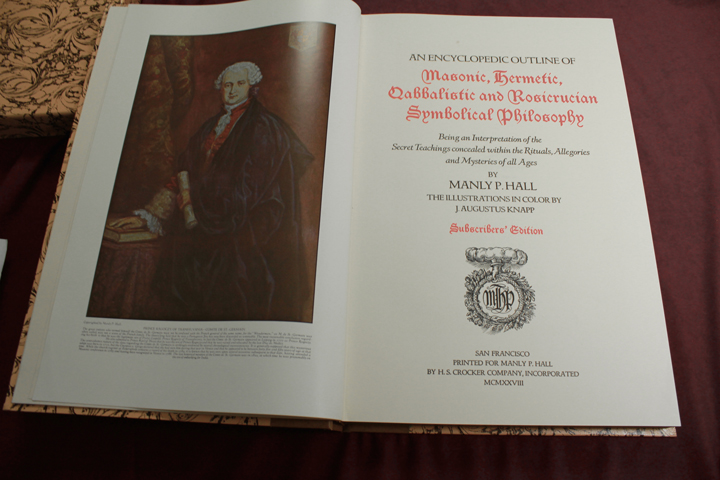
The Secret Teachings of All Ages (Manly P. Hall — Reader’s Edition)
An encyclopedic outline of Masonic, Hermetic, Qabbalistic, and Rosicrucian symbolical philosophy, detailing the rites of ancient mystery schools from Eleusis to the Rose Cross.