The Paracelsus tradition presents a complex network of entities, relationships, and concepts that weave together to form a rich body of esoteric knowledge and philosophical inquiry. Central to this tradition is the figure of Paracelsus, a 16th-century Swiss physician, alchemist, and natural philosopher who sought to reform traditional medical practices and challenge conventional wisdom. Through his connections with various individuals, texts, and concepts, Paracelsus' philosophy emerges as a dynamic synthesis of mystical, philosophical, and scientific thought.
Paracelsus' Philosophy
Paracelsus' philosophical system is deeply rooted in his connections with various individuals, including Majorcan Raymond Lully, a 13th-century alchemical scholar and philosopher. Both figures shared an interest in alchemy and magical practices, although their approaches and timelines differ. This link between the two scholars highlights the transmission of esoteric knowledge across centuries and geographical boundaries.
Paracelsus' work on the Pentagram, a significant magical symbol, demonstrates his nuanced understanding of mystical and alchemical teachings. The Pentagram's role in Paracelsus' philosophy extends beyond its mystical representation, serving as a practical tool for measuring the proportions of the Athanor, a crucial component in the creation of alchemical substances.
The connections between Paracelsus and other figures, such as Isaac of Holland, a writer whose works inspired Paracelsus' drive to reform medical science, and the Brahmins of India, from whom Paracelsus claimed to have learned spiritual and transformative knowledge, demonstrate the significance of cultural exchange and the transmission of esoteric knowledge.
The Influence of Hermetic Arts and Eastern Philosophical Traditions
Paracelsus' philosophy is deeply influenced by the Hermetic arts, a comprehensive collection of esoteric knowledge and spiritual practices that have their roots in ancient Egypt. His initiation into the Hermetic arts in Constantinople and his receipt of Hermetic instruction from Arabian adepts highlight the importance of these traditions in shaping his thought.
Paracelsus' connections with Eastern philosophical traditions, such as the teachings of Avicenna and the concept of Nature spirits, demonstrate his broad intellectual curiosity and his belief in the transference of esoteric knowledge between cultures.
Mystical and Philosophical Thought
Paracelsus' philosophy represents a dynamic synthesis of mystical, philosophical, and scientific thought. His use of neo-Platonic philosophy as a basis for his medical theories and his opposition to Galenic practices and methods reflect his commitment to challenging conventional wisdom and seeking new approaches to understanding the natural world.
The connections between Paracelsus and other figures, such as Albertus Magnus, a mentor to Paracelsus in alchemy and philosophy, and Solomon Trismosin, an early teacher of Paracelsus and influential figure in alchemy, highlight the transmission of esoteric knowledge and the evolution of philosophical thought over time.
Bibliographia & Fontes
Primary Source Books Used in This Article
The doctrines, historical citations, and symbolic correspondences synthesized in this article are drawn from the following primary works and chapters:
- I.Manly P. Hall, The Secret Teachings of All Ages1928
An Encyclopedic Outline of Masonic, Hermetic, Qabbalistic and Rosicrucian Symbolical Philosophy
Chapters / Sections Consulted:Ch. “Alchemy and Its Exponents” · Ch. “Hermetic Pharmacology, Chemistry, and Therapeutics” · Ch. “The Elements and Their Inhabitants” · Ch. “The Sun, a Universal Deity” · Ch. “Atlantis and the Gods of Antiquity” - II.Éliphas Lévi, Transcendental Magic: Its Doctrine and Ritual (Dogme et Rituel de la Haute Magie)1856 / 1896 trans.
Translated and Annotated by A. E. Waite
Chapters / Sections Consulted:Part I: The Doctrine of Transcendental Magic · Part II: The Ritual of Transcendental Magic
Further Inquiry in This Cycle
Companion Studies & Disputations
The Initiatory Lineage of the Druids
By examining the relationships between these figures and symbols, we will uncover the underlying philosophical framework that governs their interactions.
The Esoteric Synthesis of Paracelsus and the Hermetic Arts
Paracelsus, a 16th-century Swiss physician and alchemist, was a pivotal figure in the Renaissance era, whose philosophical and medical contributions had a…
Homoeopathy & Mesmer: The Vital Force Paradigm
This essay examines the philosophical intersections between Mesmerism and Homoeopathy, two distinct yet related practices that emerged in the 18th century.
The Alchemical Legacy of Albertus Magnus: A Philosophical Synthesis
The Albertus Magnus tradition presents a network of entities and relationships that reveal a rich body of alchemical thought and philosophical inquiry.
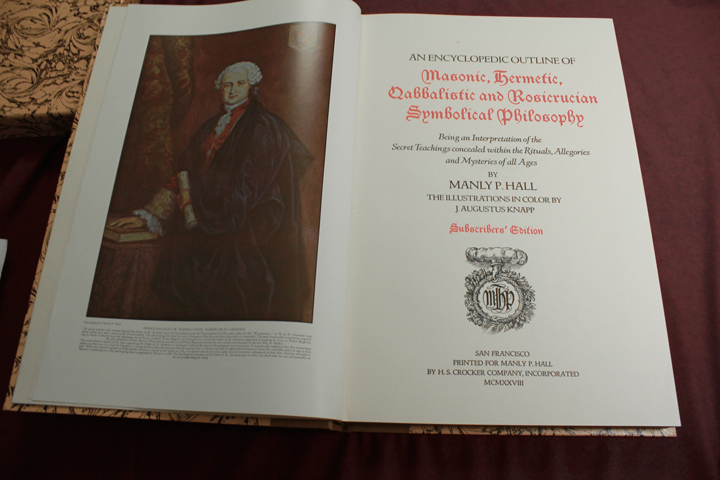
The Secret Teachings of All Ages (Manly P. Hall — Reader’s Edition)
An encyclopedic outline of Masonic, Hermetic, Qabbalistic, and Rosicrucian symbolical philosophy, detailing the rites of ancient mystery schools from Eleusis to the Rose Cross.