
The Socratic circle, comprised of Socrates and his followers, including Xenophon, Æschines, Crito, Simon, Glauco, Simmias, and Cebes, forms a complex network of philosophical thought and relationships. Through their interactions and writings, this tradition of thinkers explored the nature of justice, ethics, and knowledge, laying the groundwork for Western philosophical tradition.
The Pursuit of Wisdom and Knowledge
Central to the Socratic circle is the pursuit of wisdom and knowledge. Socrates, as the central figure, emphasized the importance of questioning and dialogue in the quest for understanding. His methodology, as recorded by Xenophon, involves a systematic process of questioning to stimulate critical thinking and expose contradictions. This approach, as seen in his dialogues with Euthyphra, reflects Socrates' contributions to ethical philosophy and the exploration of justice.
The Socratic sect, comprising of students and followers, shared this pursuit of wisdom. Æschines, Crito, Simon, Glauco, Simmias, and Cebes all played significant roles in spreading Socrates' teachings and engaging in philosophical discussions. Their involvement in the Socratic circle attests to the necessity of community and collaboration in the pursuit of knowledge.
Knowledge, Virtue, and Utility
Socrates' philosophy centered on the sympathy of knowledge, virtue, and utility. He believed that only the Whole—a complete and wise individual—is truly wise. This concept is reflected in the works of Cebes, particularly in "Theban Tablet," which symbolizes the journey of human life towards enlightenment and truth.
The relationships within the Socratic circle demonstrate this sympathy. Damon of Athens, a musical instructor and close friend of Socrates, shared intellectual discussions and philosophical ideas with him. Their differing opinions on the role of music in society illustrate the diversity of perspectives within their social and intellectual circles.
Socratic Methodology and Its Significance
Socratic methodology, as pioneered by Socrates, is fundamental to ethical and philosophical inquiry. This approach, based on questioning and dialogue, guides philosophical inquiries and teachings. The significance of Socratic methodology lies in its ability to stimulate critical thinking, expose contradictions, and foster a deeper understanding of complex concepts.
The Socratic circle's emphasis on Socratic methodology reflects the importance of rigorous inquiry and intellectual curiosity. Through their engagement with Socratic thought, the members of the Socratic sect contributed to the evolution of philosophical discourse, often symbolizing an emblem of rigorous inquiry and wisdom in the ancient world.
Bibliographia & Fontes
Primary Source Books Used in This Article
The doctrines, historical citations, and symbolic correspondences synthesized in this article are drawn from the following primary works and chapters:
- I.Manly P. Hall, The Secret Teachings of All Ages1928
An Encyclopedic Outline of Masonic, Hermetic, Qabbalistic and Rosicrucian Symbolical Philosophy
Chapters / Sections Consulted:Ch. “Introduction to Symbolical Philosophy” · Ch. “The Mysteries and Their Emissaries” · Ch. “The Pythagorean Theory of Music and Color”
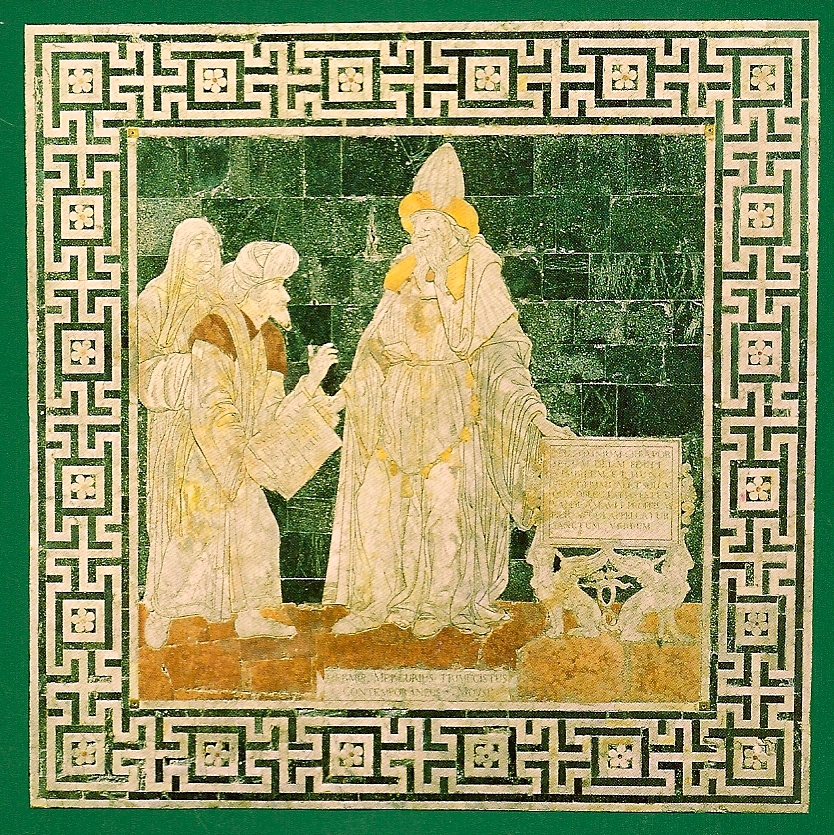
Corpus Hermeticum & Asclepius (Copenhaver Critical Edition)
The definitive scholarly translation of the Greek and Latin Hermetica attributed to Hermes Trismegistus, foundational to Renaissance Neoplatonism and Western esotericism.