Through a synthesis of the classical sources and relationships, this essay explores the core philosophies and values that defined the Socratic school of thought, including the pursuit of wisdom, virtue, and self-inquiry. By examining the lives and teachings of prominent figures such as Xenophon, Æschines, Crito, Simon, Glauco, Simmias, Cebes, Antisthenes, and Damon of Athens, this essay highlights the significant contributions of the Socratic circle to Western philosophical thought.
The Pursuit of Wisdom and Virtue
Central to the Socratic circle is the pursuit of wisdom and virtue. Socrates, the renowned Greek philosopher, believed that true wisdom can only be achieved through self-inquiry and the contemplation of God and the intellect. This philosophy is reflected in the writings of Xenophon, who captured the essence of Socrates' character and teachings in his works. Æschines, Crito, Simon, Glauco, Simmias, and Cebes, all prominent students of Socrates, embodied this pursuit of wisdom and virtue in their own lives and teachings.
The Socratic methodology, pioneered by Socrates, emphasized the importance of questioning and dialogue in philosophical inquiry. This approach is evident in the works of Cebes, who wrote "Theban Tablet," a dialogue that symbolizes the journey of human life and its ultimate end towards enlightenment and truth. Through this methodology, the Socratic circle sought to cultivate a deeper understanding of the human condition and the nature of justice, as explored in Socrates' dialogues with Euthyphra.
The Influence of Socratic Thought
The Socratic circle had a profound impact on Western philosophical thought, influencing the development of various philosophical schools, including the Cynics. Antisthenes, a disciple of Socrates, founded the Cynics sect, which practiced extreme individualism and advocated for a simple way of living. This philosophy, shaped by Socratic teachings, emphasized self-reliance, personal freedom, and the renunciation of worldly possessions.
The Cynics' rejection of material possessions and societal constraints reflects the influence of Socratic thought on the importance of living in accordance with nature and rejecting external influences. Diotimes, implied to be the wife of Antisthenes, lived a poverty-driven existence with her husband, exemplifying the Cynic philosophy. Diophilus, a pupil of Antisthenes, inherited this philosophy, further solidifying the transmission of Socratic thought to subsequent generations.
The Intersection of Music and Philosophy
Damon of Athens, a musical instructor and close friend of Socrates, played a significant role in shaping the intellectual landscape of Athens. His views on music, which contrasted with those of Plato, emphasized the importance of stricter control over the types of music and scales introduced into society. This debate highlights the diverse perspectives within the Socratic circle, where music was recognized as a powerful tool for shaping moral and social values.
Bibliographia & Fontes
Primary Source Books Used in This Article
The doctrines, historical citations, and symbolic correspondences synthesized in this article are drawn from the following primary works and chapters:
- I.Manly P. Hall, The Secret Teachings of All Ages1928
An Encyclopedic Outline of Masonic, Hermetic, Qabbalistic and Rosicrucian Symbolical Philosophy
Chapters / Sections Consulted:Ch. “Introduction to Symbolical Philosophy” · Ch. “The Mysteries and Their Emissaries” · Ch. “The Pythagorean Theory of Music and Color”
Further Inquiry in This Cycle
Companion Studies & Disputations
The Cynic School: A Philosophy of Individualism and Self-Sufficiency
The Cynic school, founded by Antisthenes, a disciple of Socrates, was a philosophical sect that emphasized individualism, self-reliance, and the rejection…
Socrates & Damon Of Athens: The Socratic Circle
The Socratic circle, comprised of Socrates and his followers, including Xenophon, Æschines, Crito, Simon, Glauco, Simmias, and Cebes, forms a complex…
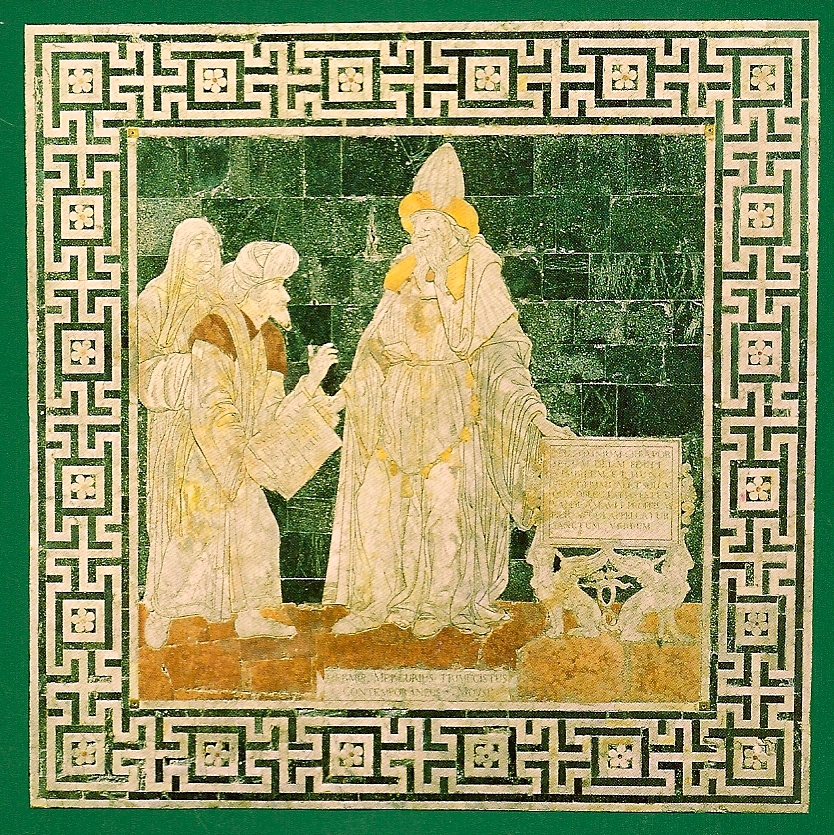
Corpus Hermeticum & Asclepius (Copenhaver Critical Edition)
The definitive scholarly translation of the Greek and Latin Hermetica attributed to Hermes Trismegistus, foundational to Renaissance Neoplatonism and Western esotericism.