The classical sources and relationships form a network of esoteric concepts, centered around the ancient Egyptian goddess Isis.
Historical & Symbolic Context
Central to this esoteric web is Isis, a manifold goddess embodying the principles of life, fertility, and universal wisdom. Her association with the sistrum, a metallic musical instrument symbolizing perpetual motion and agitation, underscores her connection to the dynamic interplay between chaos and order. The sistrum's ability to dispel Typho, a symbol of corruption and chaos, highlights Isis's role in maintaining balance and order in the natural world.
The Isis Crown, adorned with a mirror-like orb, represents the goddess's elevated status and position, symbolizing her connection to the moon and reflective knowledge. The orb's reflective properties serve as a counterbalance to the chaos represented by Typho, emphasizing the importance of wisdom and clarity in maintaining order.
Isis's relationship with Nephthys, her sister and consort of Osiris, is significant in understanding their roles within the mythological context. Aroueris (Thoth, or Mercury), the god of wisdom and writing, is another key figure alongside Isis, representing intellectual aspects and the pursuit of knowledge.
The concept of the Pantomorphic IYNX, a symbol of the Universal Being, is closely tied to Isis, representing the feminine aspect of creation or manifestation. The Ophionian Triad, which includes the Hebrew Yod, is related to IYNX, forming a complete Kabbalistic or ritual symbol. The Three Mother Letters from the Egyptian and Hebrew alphabets, represented by the Ibimorphic and Serapian triads, further emphasize the connections between Isis, IYNX, and the mystical underpinnings of this esoteric community.
The practice of mummification, associated with the worship of Isis, symbolizes the preservation of the spirit and the salvation of the soul. Euphantus's oration provides valuable insights into the ancient practices of mummification, highlighting the intricate methods and significant cultural and religious aspects associated with the preservation of bodies in ancient Egyptian society.
The solar virgin, a symbol of wisdom and solar luminosity, is associated with Isis, emphasizing her connection to the sun and her role as a mediator between the celestial and terrestrial realms. The occult and magical arts, represented by Isis, symbolize hidden knowledge and power, demonstrating the importance of mystical and symbolic understanding in this esoteric community.
The esoteric web of Isis reveals a complex network of mystical and symbolic connections, centered around the goddess's manifold nature and attributes.
Bibliographia & Fontes
Primary Source Books Used in This Article
The doctrines, historical citations, and symbolic correspondences synthesized in this article are drawn from the following primary works and chapters:
- I.Manly P. Hall, The Secret Teachings of All Ages1928
An Encyclopedic Outline of Masonic, Hermetic, Qabbalistic and Rosicrucian Symbolical Philosophy
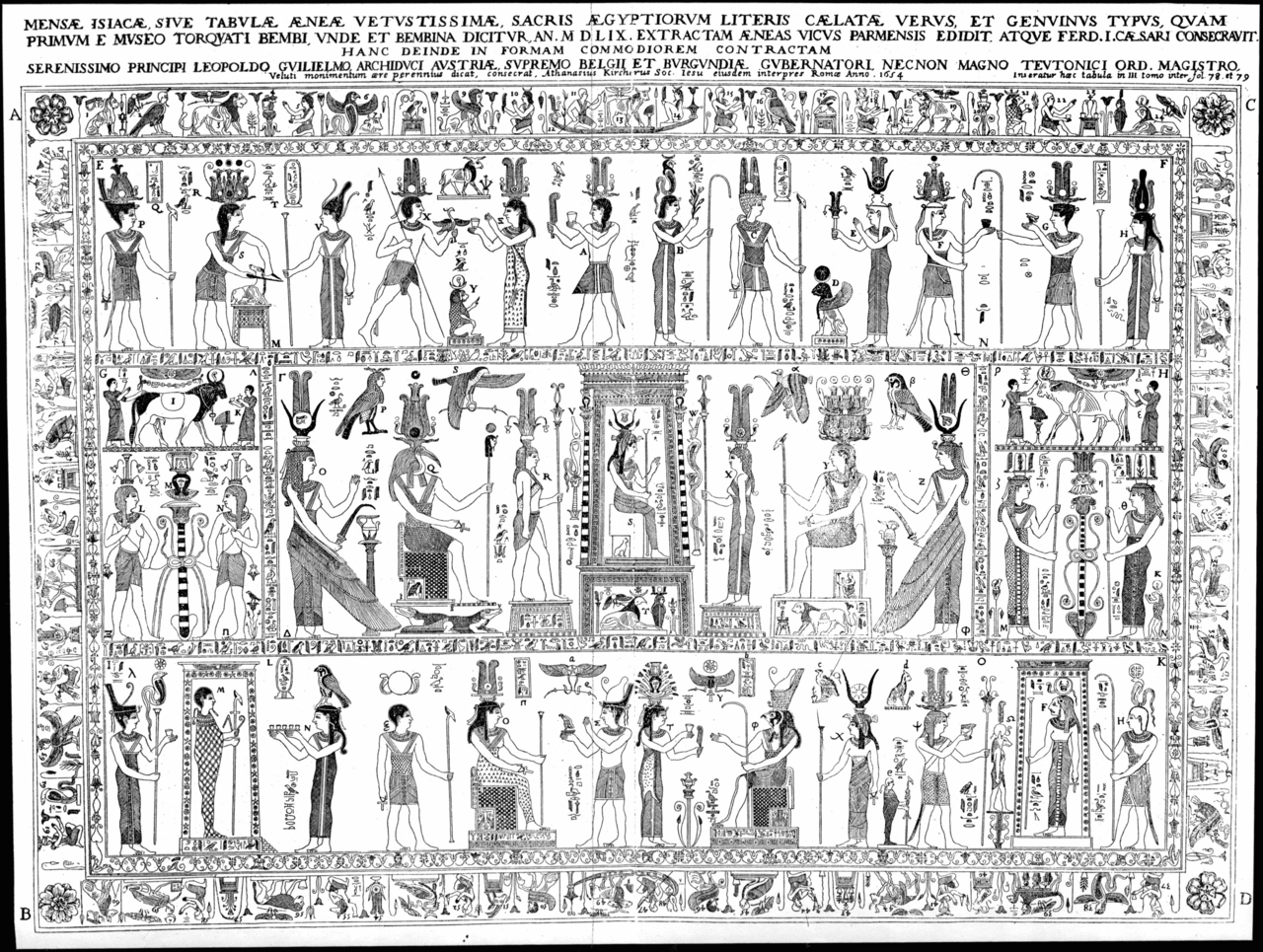
Chapters / Sections Consulted:Ch. “Isis, the Virgin of the World” · Ch. “The Bembine Table of Isis”
Further Inquiry in This Cycle
Companion Studies & Disputations
The Esoteric Essence of Isis
Isis, the ancient Egyptian goddess, embodies a rich body of mystical, philosophical, and cultural significance. By examining the intricate web of…
Mummification & Salvation Of The Soul: The Eternal Pursuit
The practice of mummification in ancient Egyptian culture holds profound esoteric significance, extending beyond mere preservation of the physical body.
The Harmonious Interplay of Chaos and Order
The esoteric data points extracted from the Isis Crown tradition reveal a network of symbolism, centered around the concepts of chaos, order, and…
The Unity of Polymorphous Being: A Philosophical Synthesis of Iynx
In the Iynx tradition, a rich body of esoteric concepts converges to reveal a profound philosophical framework. Central to this framework is the Hebrew…
Isis Unveiled: A Master-Key to the Mysteries of Ancient and Modern Science and Theology
H. P. Blavatsky’s monumental two-volume comparative synthesis of Egyptian, Hermetic, Chaldean, and Hindu cosmogonies and ancient mystery traditions.