In the study of the philosophical and esoteric concepts presented in the raw data points of this hermetic lineage. The analysis reveals a network of relationships among these traditions, including mystics, mythological figures, alchemical substances, and philosophical concepts. The synthesis highlights the sympathy of these figures and symbols, demonstrating a profound exploration of the human condition, spiritual growth, and the pursuit of knowledge and wisdom.
The Mystic and the Great Secret
The mystic, a seeker of divine wisdom and knowledge, is central to the philosophical and esoteric traditions of this hermetic lineage. The mystic's journey is often depicted through mythological narratives, symbolizing the pursuit of the Great Secret, a central concept in both the Great Work and the mythological narratives. The Knower of the Great Secret, an individual with knowledge of the Great Secret, is a key figure in this context, embodying the wisdom and understanding sought by the mystic.
Mythology and the Mystical Journey
Mythology serves an essential office in preserving and transmitting cultural and philosophical wisdom across generations. The mythological narratives and characters, such as Oedipus and Psyche, are utilized to convey concepts of knowledge, wisdom, and the divine. These narratives are used to provide deeper meaning and context, especially concerning floral and plant symbols, offering moral and philosophical lessons.
Alchemy and the Lapis Philosophorum
The Lapis Philosophorum, a legendary substance in alchemical tradition, is central to the philosophical and esoteric practices of this hermetic lineage. This substance is believed to have the power to transform base metals into gold and to be a key element in the achievement of a state of spiritual enlightenment. The Lapis Philosophorum is associated with various benefits, including the preservation of a healthy mind and body, the facilitation of benevolence and charity, and the elevation of the mind to divine understanding.
Elementals and the Natural World
Elementals, a category of mythological beings, are an integral part of the broader mythological and philosophical tradition of this hermetic lineage. These beings are closely associated with nature spirits and contribute to the cultural understanding of elementals as entities embodying natural forces. The concept of ethr, a spiritual essence, is a crucial defining factor for the elemental nature, distinguishing elementals from human spirits.
The Supreme Mind and the Creation Narrative
The Supreme Mind, a manifestation of the divine, is central to the creation narrative of this hermetic lineage. The Light, a guiding principle for the Heavenly Man, enables him to create harmoniously, while the Dragon, representing the Supreme Mind, lovingly creates the Heavenly Man and entrusts Him with the control of the universe.
Bibliographia & Fontes
Primary Source Books Used in This Article
The doctrines, historical citations, and symbolic correspondences synthesized in this article are drawn from the following primary works and chapters:
- I.Manly P. Hall, The Secret Teachings of All Ages1928
An Encyclopedic Outline of Masonic, Hermetic, Qabbalistic and Rosicrucian Symbolical Philosophy
Chapters / Sections Consulted:Ch. “Alchemy and Its Exponents” · Ch. “Introduction to Symbolical Philosophy” · Ch. “An Analysis of Tarot Cards” · Ch. “Ceremonial Magic and Sorcery” · Ch. “The Chemical Marriage of Christian Rosenkreutz” · Ch. “Flowers, Plants, Fruits, and Trees” - II.Éliphas Lévi, Transcendental Magic: Its Doctrine and Ritual (Dogme et Rituel de la Haute Magie)1856 / 1896 trans.
Translated and Annotated by A. E. Waite
Chapters / Sections Consulted:Part II: The Ritual of Transcendental Magic · Part I: The Doctrine of Transcendental Magic - III.Arthur Edward Waite, The Pictorial Key to the Tarot1910
Being Fragments of a Secret Tradition under the Veil of Divination
- IV.Franz Hartmann, In the Pronaos of the Temple of Wisdom / Philosophy of the Rosicrucians and Alchemists1890
Containing the History of the True and the False Rosicrucians and the Principles of Alchemy
- V.A. E. Thierens, The General Book of the Tarot1930
Containing the Astrological Key to the Esoteric Tradition of the Greater and Lesser Arcana (Intro. by A. E. Waite)
- VI.Max Heindel, The Rosicrucian Mysteries: An Elementary Exposition of Their Secret Teachings1911
The Rosicrucian Fellowship
Further Inquiry in This Cycle
Companion Studies & Disputations
Substance, Etteilla & Raymond Lully in Ancient Mythology
By synthesizing the connections between alchemical figures, philosophical concepts, and symbolic representations, this analysis reveals a profound…
Vienna: Transmutation and Royal Patronage
The community of concepts known as the Vienna tradition presents a fascinating array of entities and relationships that converge on the themes of alchemy…
Urban Grandier, Paracelsius & Stigmatas in Ancient Mythology
By examining the connections between Urban Grandier, Charlotte Corday, Paracelsus, and other key figures, we uncover an intricate system of supernatural…
The Philosophical Paradigm of Lapis Philosophorum
The doctrine of Lapis Philosophorum encompasses concepts, entities, and relationships that collectively form a philosophical paradigm centered around the…
Justice: The Interplay of Virtues and Concepts
In this essay, we examine the philosophical underpinnings of this hermetic lineage, exploring the intricate relationships between various esoteric…
Idealism & Pagan Thought: The Idealistic Paradigm
We explore how Idealism seeks to supplant physicality with abstract spiritual concepts, its connection to Plato's Allegory of the Cave, and the…
Illuminating the Interconnectedness of Globe
The doctrine of Globe encompasses esoteric concepts that, when analyzed and synthesized, reveal a profound philosophy on the nature of power, leadership…
Elementals: The Hierarchy of Spiritual Realms
The community of concepts known as the Elementals tradition presents a hierarchical structure of spiritual realms, where higher planes are inhabited by…
Heraldic Devices: The Emblematic Threads of Lineage
This essay examines the esoteric realm of this hermetic lineage, where the concepts of heraldic devices, heraldry, and family trees intersect. This…
Mythology, Ethr & Sokrates in Ancient Mythology
Central to this web is the mystical journey, a pursuit of divine wisdom and knowledge symbolized by mythological narratives and guided by entities such as…
Royal Bodies & Kettle-like Receptacle: Dissolving the Royal
Through a philosophical analysis of these figures and symbols and their interactions, we will uncover the underlying themes of transformation, substance…
Heavenly Man: The Supreme Mind's Creative Tapestry
Through the interplay of entities and relationships, we gain insight into the mystical fabric of existence, where truth, enlightenment, and positivity…
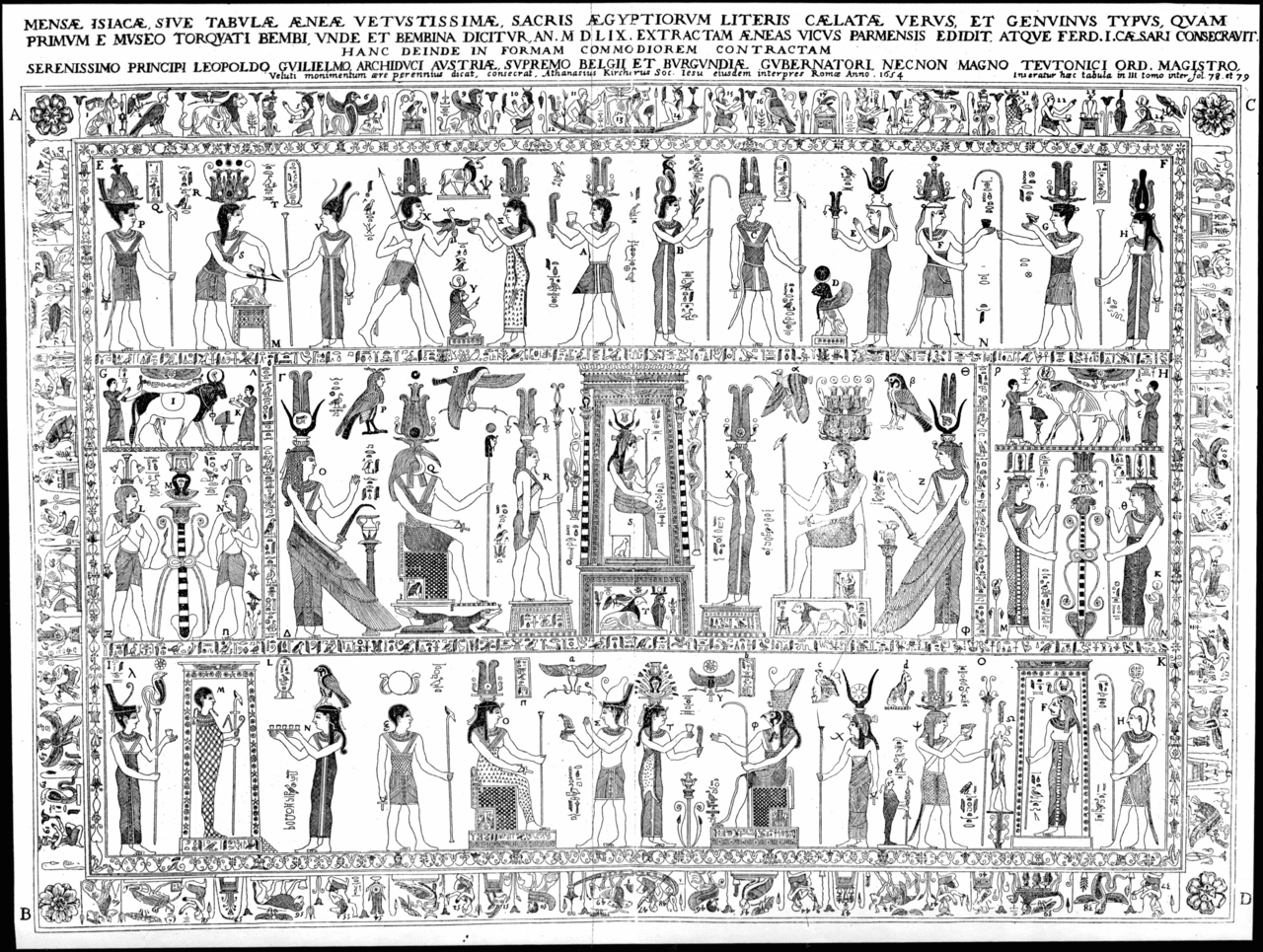
Isis Unveiled: A Master-Key to the Mysteries of Ancient and Modern Science and Theology
H. P. Blavatsky’s monumental two-volume comparative synthesis of Egyptian, Hermetic, Chaldean, and Hindu cosmogonies and ancient mystery traditions.