By examining the intricate web of connections between the Enchiridion of Leo III, the Veuillot Brothers, De Falloux, De Montalembert, and De Mirville, this analysis aims to illuminate the philosophical underpinnings of this tradition's fascination with devil-making magic and its implications for our understanding of the human condition.
Historical & Symbolic Context
The Enchiridion of Leo III, a book of instructions or practices, serves as a pivotal entity in the Devil-making Magic tradition, bridging the gap between magic and religious practices. Its connection to devil-making magic suggests a preoccupation with the darker aspects of the human experience, where the boundaries between the sacred and the profane are blurred. This fascination with the devil, a symbol of chaos and rebellion, may indicate a desire to confront and understand the unknown, the unconscious, or the repressed aspects of human nature.
The Veuillot Brothers, De Falloux, De Montalembert, and De Mirville, all figures associated with writings on magic and its impact on religious practices, form a constellation of thinkers that reinforce this notion. Their works, which may allude to or describe aspects of devil-making magic, collectively contribute to a discourse that seeks to comprehend the complex interplay between the mystical and the mundane. By exploring the intersections of magic and religiosity, these thinkers aim to grasp the underlying dynamics that govern human existence, particularly in relation to the unknown, the divine, or the transcendent.
The relationships between these figures and symbols reveal a network of ideas that demonstrate the significance of devil-making magic in the Devil-making Magic tradition. The Veuillot Brothers' writings, for instance, may reference devil-making magic, implying a consideration of its role in shaping human understanding of the world and their place within it. De Falloux's, De Montalembert's, and De Mirville's works, which may describe or discuss aspects of devil-making magic, demonstrate a sustained interest in the esoteric dimensions of human experience.
This philosophical inquiry into the mysteries of devil-making magic and its connections to religious practices can be seen as a manifestation of the human quest for meaning, transcendence, and self-discovery. By probing the unknown, the unknowable, or the unspeakable, the Devil-making Magic tradition's thinkers engage in a profound exploration of the human condition, one that acknowledges the complexities, paradoxes, and contradictions that underlie human existence.
This synthesis of this hermetic lineage's esoteric data points reveals a rich body of ideas that converge on the nexus of magic, religiosity, and the human experience. As we navigate the intricate web of relationships between these figures and symbols, we gain insight into the philosophical and existential concerns that animate this tradition, concerns that reflect a deep-seated desire to comprehend the mysteries of the universe and our place within it.
Bibliographia & Fontes
Primary Source Books Used in This Article
The doctrines, historical citations, and symbolic correspondences synthesized in this article are drawn from the following primary works and chapters:
- I.Éliphas Lévi, Transcendental Magic: Its Doctrine and Ritual (Dogme et Rituel de la Haute Magie)1856 / 1896 trans.
Translated and Annotated by A. E. Waite
Chapters / Sections Consulted:Part II: The Ritual of Transcendental Magic
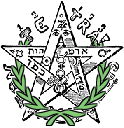
Transcendental Magic: Its Doctrine and Ritual (Éliphas Lévi)
The cornerstone of modern occultism and ceremonial magic, expounding the equilibrium of the Astral Light, the Pentagram, and the correspondence of the Twenty-Two Arcana.