The doctrine of Lineage encompasses esoteric concepts that demonstrate the importance of lineage, spiritual energy, and mystical practices.
The Lineage of Ancient Custodians
The concept of Lineage & Lore is a pervasive thread throughout the community's teachings and practices. The text implies the existence of a lineage of ancient custodians who have maintained and transmitted magical practices and sacerdotal arts over time. This transmission of knowledge and practices suggests a structured and continuous lineage of wise beings or spirits. The narrator and the spirits' lineage can be inferred from the context, emphasizing the idea that teachings and development often result from the study and learning guided by a teacher. Senior missionaries, who provided instructions and presided over ritual ceremonies, are part of this lineage, affirming the role of guidance and mentorship in the mystical tradition.
Chakras and Churches
The concept of Chakras is closely wedded with the idea of Lineage. Chakras are spiritual energy vortexes located along the spinal column, symbolized by seven lotus blossoms with varying numbers of petals. These energy centers are used as a spiritual model representing physical locations within the human body, each corresponding to a symbolic meaning. The seven chakras are interconnected, each symbolizing different aspects of the human personality, ranging from physical and emotional to spiritual. The Seven Churches of Asia, which symbolize spiritual or racial divisions, are also connected to the chakras, with each church corresponding to a different set of people or spiritual concepts. This sympathy highlights the idea that spiritual energy centers are not isolated entities, but rather part of a larger web of mystical concepts.
Necromancers and the Counterfeit Sabbaths
The presence of Necromancers, who held counterfeit Sabbaths with horrible rites and abominable potions, serves as a counterpoint to the lineage of ancient custodians. While the Necromancers' practices are antithetical to the mystical tradition, they also demonstrate the idea that the transmission of knowledge and practices can be subverted or corrupted. This reveals the place of discernment and guidance in the mystical tradition, emphasizing the need for a clear understanding of the lineage and its teachings.
Bibliographia & Fontes
Primary Source Books Used in This Article
The doctrines, historical citations, and symbolic correspondences synthesized in this article are drawn from the following primary works and chapters:
- I.Manly P. Hall, The Secret Teachings of All Ages1928
An Encyclopedic Outline of Masonic, Hermetic, Qabbalistic and Rosicrucian Symbolical Philosophy
Chapters / Sections Consulted:Ch. “Flowers, Plants, Fruits, and Trees” - II.Éliphas Lévi, Transcendental Magic: Its Doctrine and Ritual (Dogme et Rituel de la Haute Magie)1856 / 1896 trans.
Translated and Annotated by A. E. Waite
Chapters / Sections Consulted:Part II: The Ritual of Transcendental Magic
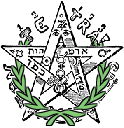
Transcendental Magic: Its Doctrine and Ritual (Éliphas Lévi)
The cornerstone of modern occultism and ceremonial magic, expounding the equilibrium of the Astral Light, the Pentagram, and the correspondence of the Twenty-Two Arcana.