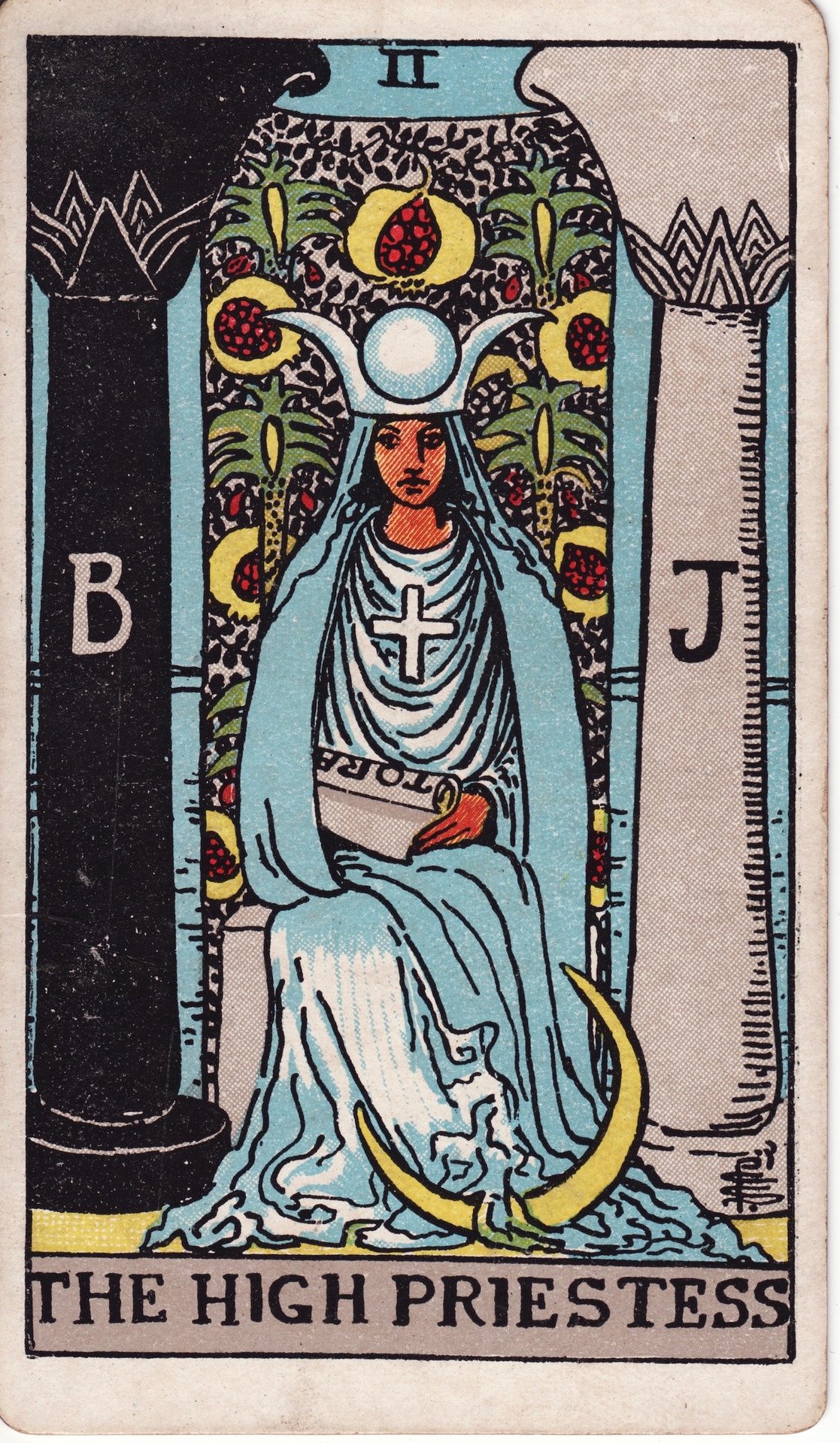
The doctrine of Pentacles encompasses esoteric concepts, entities, and relationships that warrant a comprehensive philosophical analysis. Through a meticulous synthesis of the principles and correspondences, this analysis reveals a cohesive philosophical framework that attests to the necessity of spiritual growth, responsibility, and the pursuit of wisdom.
The Unity Principle and the Magician
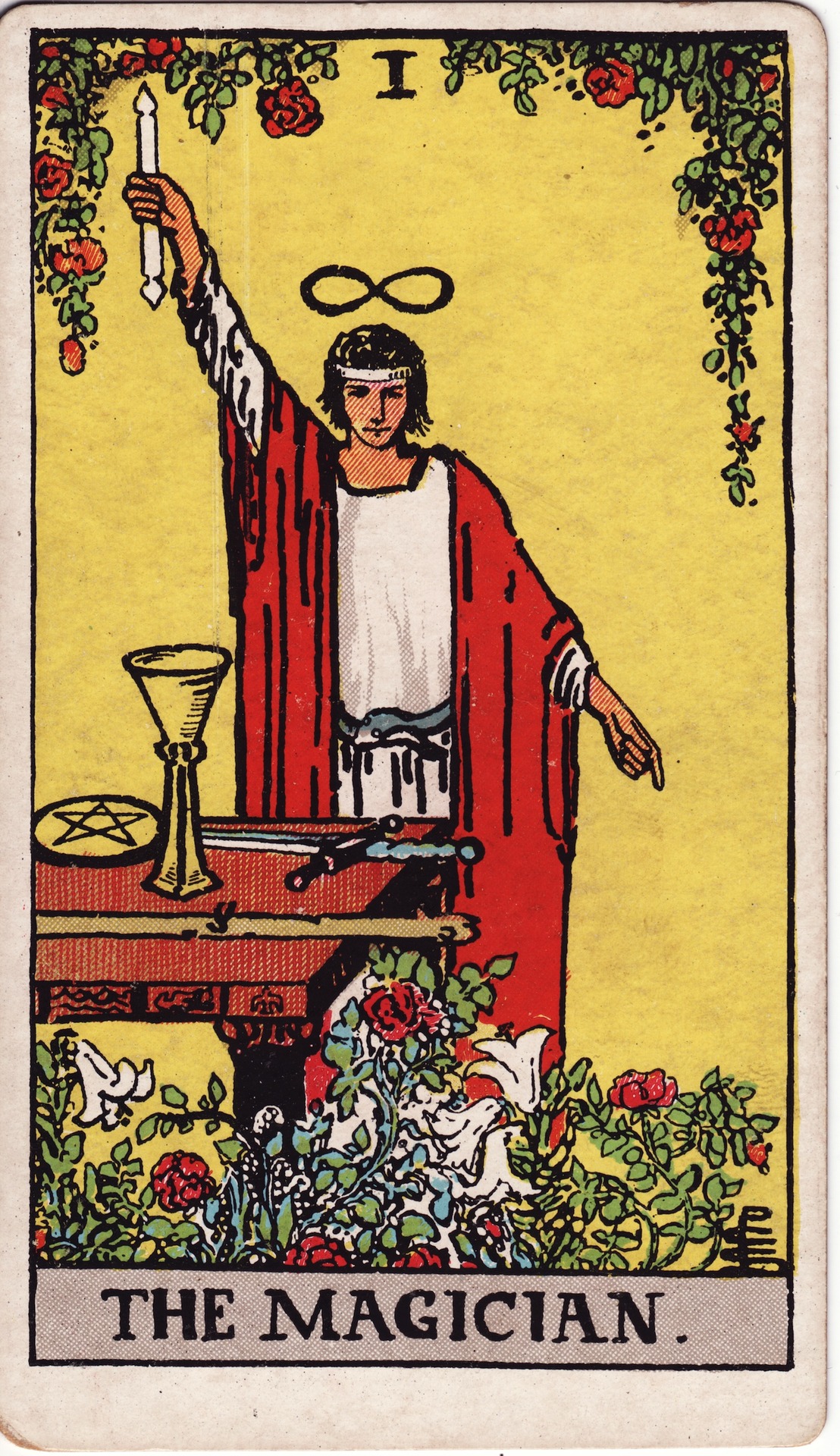
Central to this hermetic lineage is the Unity principle, an impenetrable concept that represents the will that precedes action. This principle is embodied by the Magician, a figure who wields control over the four elements and symbolizes the divine motive within human will. The Magician's tools – the sceptre, cup, sword, and pentacle – correspond to the physical objects that govern reality, demonstrating the sympathy of the material and spiritual realms.
The Magician's association with the Unity principle and the number 8, a symbol of eternity and the Holy Spirit, solidifies their connection to the eternal and unifying force. This relationship is further reinforced by the Magician's link to Martinism, a philosophical and spiritual movement that recognizes the number 8 as a significant symbol of Christ.
Pentacles and the Material Realm
The suit of Pentacles, corresponding to the element of Earth, represents material wealth, stability, and practical matters. This suit is closely bound to the Magician, who wields control over the physical world. The Pentacles' association with rectitude, utility, and responsibility attests to the necessity of balancing spiritual pursuits with practical, real-world considerations.
The relationships between Pentacles and the concepts of utility, responsibility, and interest highlight the significance of tangible, beneficial outcomes in various scenarios. The Pentacles' connection to the culture of aspiration, symbolized by lilies, suggests a striving for excellence and spiritual growth.
The Interplay between Entities and Concepts
The Fool, representing the uninitiate or ordinary man, is juxtaposed with the Magician, who embodies the culmination of the spiritual journey. This contrast illustrates the transformation from ignorance to enlightenment, demonstrating the importance of spiritual growth and self-awareness.
The sign of the Holy Spirit, symbolized by an endless cord forming the figure 8, represents eternity and the spirit's attainment. This sign is associated with the Magician, reinforcing their connection to the eternal and unifying force.
Bibliographia & Fontes
Primary Source Books Used in This Article
The doctrines, historical citations, and symbolic correspondences synthesized in this article are drawn from the following primary works and chapters:
- I.A. E. Thierens, The General Book of the Tarot1930
Containing the Astrological Key to the Esoteric Tradition of the Greater and Lesser Arcana (Intro. by A. E. Waite)
- II.Arthur Edward Waite, The Pictorial Key to the Tarot1910
Being Fragments of a Secret Tradition under the Veil of Divination
- III.P. D. Ouspensky, The Symbolism of the Tarot: Philosophy of Occultism in Pictures and Numbers1913
Translated by A. L. Pogossky
Further Inquiry in This Cycle
Companion Studies & Disputations
The Unity of Heaven and Earth: A Philosophical Synthesis of Magician
This essay synthesizes the esoteric data points from the Magician tradition, revealing a complex philosophical framework that explores the unity of heaven…
The Harmonious Balance of Practicality and Responsibility
The doctrine of Pentacles encompasses esoteric concepts, intertwined through complex relationships that reveal a profound philosophical narrative. Central…
The Tarot of the Bohemians (Papus / Gérard Encausse)
The absolute key to occult science: the classic nineteenth-century treatise uniting the twenty-two Major Arcana with Kabbalistic Hebrew letters, tetragrammaton progressions, and astrological synthesis.