Central to this esoteric framework is the concept of Experience, which serves as a transformative catalyst for personal growth and spiritual development. Associated with the element of water, Experience is the typical function of Water People, who embody emotional and intuitive characteristics. This journey of Experience is depicted as a struggle, navigating the practical aspects of human life, and is symbolized by the second horseman's sword.
Historical & Symbolic Context
The hierarchy of court cards, comprising Knave and Becaso, reveals a nuanced understanding of the human condition. Knave, as a secondary figure, attests to the necessity of Experience in ascending to higher ranks, such as that of a Knight. Becaso, as a servant of the Knight, occupies a lower position, highlighting the need for humility and service in the pursuit of spiritual growth.
The Four Elements – earth, air, fire, and water – serve as the foundation for this esoteric framework. Represented by the symbol I A A T, these elements signify distinct aspects of reality, which are woven together to form a comprehensive compendium of existence. The Four Horsemen of the Apocalypse, with their sequential stages, embody this narrative, traversing the realms of Spiritual State, Experience, Physical Expression, and ultimately, Philosophic Death.
Philosophic Death, as a transformative process, marks a profound transition, where the individual undergoes spiritual purification, leading to rebirth and deeper wisdom. This regeneration is accompanied by the divine light and power of Solar Energy, which permeates the journey of the Four Horsemen. The final stage of this journey, symbolized by the fourth horseman, represents the ultimate stage of human existence, where mortality serves as a gateway to the highest spiritual spheres.
The relationships between these figures and symbols reveal a profound understanding of human existence, spiritual growth, and the cyclical nature of reality. The journey of the Four Horsemen, with its distinct stages, serves as a powerful allegory for the human condition, demonstrating the importance of Experience, spiritual growth, and the pursuit of wisdom.
This synthesis of esoteric concepts offers a rich and nuanced understanding of the human experience, spiritual growth, and the mysteries of the Four Horsemen.
Bibliographia & Fontes
Primary Source Books Used in This Article
The doctrines, historical citations, and symbolic correspondences synthesized in this article are drawn from the following primary works and chapters:
- I.Manly P. Hall, The Secret Teachings of All Ages1928
An Encyclopedic Outline of Masonic, Hermetic, Qabbalistic and Rosicrucian Symbolical Philosophy
Chapters / Sections Consulted:Ch. “The Hermetic and Alchemical Figures of Claudius de Dominico Celentano (1606)” · Ch. “The Mystery of the Apocalypse” - II.Arthur Edward Waite, The Pictorial Key to the Tarot1910
Being Fragments of a Secret Tradition under the Veil of Divination
- III.A. E. Thierens, The General Book of the Tarot1930
Containing the Astrological Key to the Esoteric Tradition of the Greater and Lesser Arcana (Intro. by A. E. Waite)
Further Inquiry in This Cycle
Companion Studies & Disputations
Experience: The Hierarchy of Personal Growth
Through a careful examination of these figures and symbols and their relationships, we will uncover a rich body of ideas that speak to the human journey of…
Four Horsemen Of The Apocalypse: The Odyssey of Human Existence
The Four Horsemen Of The Apocalypse tradition presents a rich body of esoteric concepts that, when woven together, reveal a profound narrative of human…
Nexus: I A A T and the Four Elements in Four Elements
In the esoteric realm of this hermetic lineage, a profound symbolic connection exists between the substance I A A T and the Four…
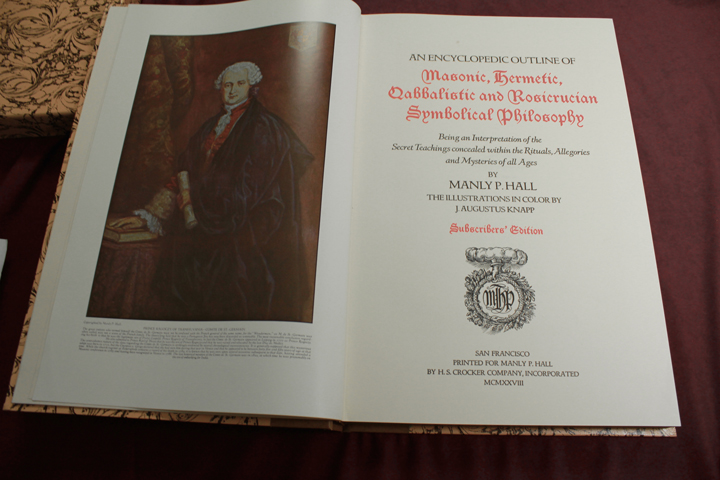
The Secret Teachings of All Ages (Manly P. Hall — Reader’s Edition)
An encyclopedic outline of Masonic, Hermetic, Qabbalistic, and Rosicrucian symbolical philosophy, detailing the rites of ancient mystery schools from Eleusis to the Rose Cross.