The entity "CHILD" is a manifold symbol that represents various aspects of spiritual transformation, philosophical growth, and personal development. Through its relationships with other entities and concepts, the child embodies the continuation of ancient traditions, illustrates the power of belief, and undergoes significant transformations during adolescence. This essay synthesizes the esoteric data points to reveal the profound significance of the child in the context of spiritual and philosophical exploration.
The Child as a Symbol of Spiritual Transformation
The child is introduced as an exemplar for illustrating the teachings of rebirth within a Mystery School, highlighting its role as a vessel for understanding complex spiritual concepts. This educational setting suggests that the child is a key figure in the transmission of knowledge related to reincarnation and spiritual transformation. The child's association with speculation, a substance representing creativity and hopeful beginnings, reinforces its connection to new prospects and positive outcomes. This relationship demonstrates the child's significance in the context of spiritual growth and renewal.
Inheritance and Continuity of Ancient Traditions
The child is also linked to the alchemical tradition, representing the continuation or inheritance of these traditions across generations. This connection to a historical and mythological lineage emphasizes the child's role in preserving and transmitting ancient wisdom. The child's embodiment of the inheritance of alchemical traditions suggests a deeper, perhaps occult or ceremonial significance, affirming the role of preserving and honoring the past.
The Power of Belief and Personal Development
The child is used to illustrate the power of belief and its impact on personal development. The child's innocence and receptivity demonstrate the effective transmission of belief and the influence of such beliefs on the formation of one's worldview. This portrayal emphasizes the importance of early experiences and the role of belief in shaping individual perspectives. The child's association with sunshine, a metaphor for the happiness and joy they bring to families, highlights the positive impact of their presence and the significance of their emotional and psychological well-being.
Adolescence and Self-Assertion
The child's transition into the fourth period, marked by the birth of the desire body and the assertion of self, signals a significant transformation in their development. The emergence of self-assertion, characterized by the feeling of "I AM MYSELF," marks a shift towards greater independence and reduced reliance on external authority. This transition is further underscored by the onset of puberty, a rite of passage marking the beginning of adolescence. The child's relationships with the concepts of self-assertion and puberty highlight the complexities and challenges of this developmental stage.
Bibliographia & Fontes
Primary Source Books Used in This Article
The doctrines, historical citations, and symbolic correspondences synthesized in this article are drawn from the following primary works and chapters:
- I.Max Heindel, The Rosicrucian Mysteries: An Elementary Exposition of Their Secret Teachings1911
The Rosicrucian Fellowship
- II.A. E. Thierens, The General Book of the Tarot1930
Containing the Astrological Key to the Esoteric Tradition of the Greater and Lesser Arcana (Intro. by A. E. Waite)
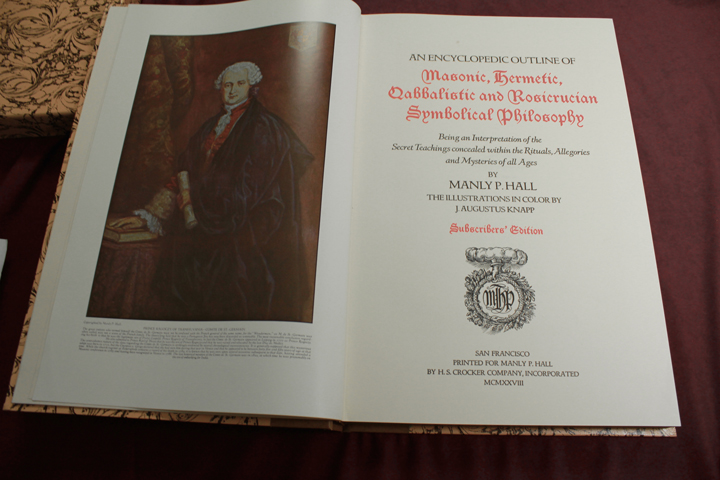
The Secret Teachings of All Ages (Manly P. Hall — Reader’s Edition)
An encyclopedic outline of Masonic, Hermetic, Qabbalistic, and Rosicrucian symbolical philosophy, detailing the rites of ancient mystery schools from Eleusis to the Rose Cross.