The community revolves around Immanuel Kant's critical philosophy, which laid the groundwork for subsequent philosophers such as Johann Gottlieb Fichte, Johann Gottfried von Schelling, Georg Wilhelm Friedrich Hegel, and Arthur Schopenhauer. Through a detailed examination of the relationships between these thinkers and their concepts, this essay reveals the development of German idealism and its central ideas, including the nature of reality, the role of the mind, and the relationship between the individual and the world.
The Critique of Pure Reason and the Emergence of German Idealism
Immanuel Kant's "Critique of Pure Reason" (1781) marks a pivotal moment in the history of philosophy, as it fundamentally reshapes our understanding of knowledge construction and the relationship between the mind and the external world. Kant's critical philosophy introduces a paradigm shift, separating the mind from the external world and emphasizing the mind's active role in shaping and organizing sensory inputs into coherent perceptions. This work not only delineates the boundaries within which reason can operate but also establishes the mind's active role in constructing knowledge.
Kant's ideas on the role of the mind align with Schopenhauer's views on will, as expressed in the concept "Thoughts as the Expression of Will." Schopenhauer's metaphor, "Will as a Strong Blind Man," highlights the relationship between the will and the intellect, demonstrating the idea that thoughts are the manifestation of will. This connection between Kant and Schopenhauer demonstrates the continuity of ideas within German idealism, as later philosophers built upon and expanded Kant's foundational concepts.
The Development of Absolute Idealism
Johann Gottlieb Fichte, Johann Gottfried von Schelling, and Georg Wilhelm Friedrich Hegel each contributed to the development of German idealism, with Hegel's philosophical system being particularly influential. Hegel's concept of "Absolute Development" centers around the idea of the Absolute unfolding over time, which was influenced by Schelling's concept of "Even Development." This unfolding process represents the Absolute's self-realization, highlighting the dynamic and dialectical nature of reality.
Hegel's work took influence from Schelling's ideas, and his philosophical system was fundamentally shaped by and extended upon Kant's critical philosophy. This mutual influence demonstrates the evolution of philosophical thought in the German idealism tradition, with Kant providing the foundational critical philosophy that Hegel built upon and expanded.
Bibliographia & Fontes
Primary Source Books Used in This Article
The doctrines, historical citations, and symbolic correspondences synthesized in this article are drawn from the following primary works and chapters:
- I.Manly P. Hall, The Secret Teachings of All Ages1928
An Encyclopedic Outline of Masonic, Hermetic, Qabbalistic and Rosicrucian Symbolical Philosophy
Chapters / Sections Consulted:Ch. “Introduction to Symbolical Philosophy”
Further Inquiry in This Cycle
Companion Studies & Disputations
Thomas Kant & Critique Of Pure Reason: Kantian Paradigm
The the Thomas Kant tradition dataset presents a rich body of philosophical concepts, entities, and relationships that warrant a deep dive into the realm…
The Evolution of Absolute Idealism
We examine how Herbart's reaction against the idealism of Schelling and Friedrich Fichte led to a new understanding of the Absolute, and how Schelling's…
Georg Wilhelm Friedrich Hegel & Absolute Development
This essay examines the philosophical ideas of Georg Wilhelm Friedrich Hegel, a prominent figure in the history of philosophy, and his concept of Absolute…
Thoughts: A Schopenhauerian Perspective
This essay examines the philosophical concepts of the Thoughts As The Expression Of Will tradition, specifically exploring the relationship between…
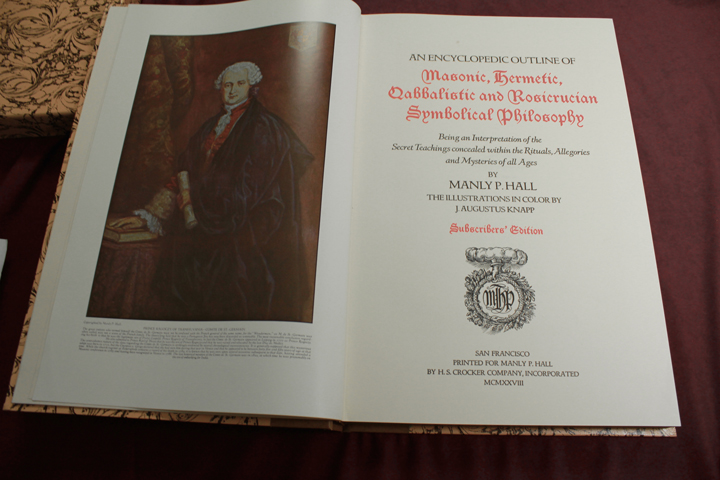
The Secret Teachings of All Ages (Manly P. Hall — Reader’s Edition)
An encyclopedic outline of Masonic, Hermetic, Qabbalistic, and Rosicrucian symbolical philosophy, detailing the rites of ancient mystery schools from Eleusis to the Rose Cross.