In the study of the intricate world of Gnosticism, a complex and manifold philosophical tradition that has been shrouded in mystery for centuries. By examining the relationships among these traditions, concepts, and figures, we will attempt to distill the essence of Gnostic thought, revealing a rich body of esoteric knowledge that weaves together Christian, pagan, and alchemical elements. Our inquiry will navigate the interconnected realms of Abraxas, the Luminous Pentagram, the Winged Dragon, and other symbolic entities, as well as the lives and teachings of influential figures such as Simon Magus, Basilides, and Ludovic Cambriel.
The Cosmological Framework of Abraxas
Central to Gnostic thought is the enigmatic figure of Abraxas, a symbol of the cyclical nature of the year, comprising 365 aeons or Spirits of the Days. This complex entity embodies a profound cosmological and mythological significance, reflecting the manifold understanding of the universe in Gnostic traditions. Abraxas is also associated with a collection of ancient talismans, suggesting its role in esoteric and magical practices. The Luminous Pentagram, a key alchemical symbol, is closely tied to Abraxas, representing the incarnation of the sovereign sun in human form.
The Sovereign Intelligence of the Winged Dragon
The Winged Dragon, a symbol of the sovereign intelligence of light and life, is intricately connected to the Luminous Pentagram. This entity embodies the Christ of Khunrath, representing the pinnacle of spiritual evolution and enlightenment. The Winged Dragon is also closely tied to the philosophical and alchemical work of LIVIDUS, a philosopher and alchemist who sought to unlock the secrets of the universe.
The Alchemical Quest for the Philosophical Stone
The pursuit of the Philosophical Stone, a central theme in alchemical practice, is deeply connected to the concepts of Metal Analysis and Synthesis, and the recomposition of metals. Ludovic Cambriel, an alchemist who achieved notable successes despite his lack of formal training, was influenced by LIVIDUS's research and philosophical approach. The abbeyss of goldbrigeade, a key alchemical concept, serves an essential office in the metal analysis and synthesis process, ultimately leading to the attainment of the Philosophical Stone.
The Gnostic Lineage and the Theosophic Controversies
The Gnostics, a group associated with early Christianity, claimed possession of secret or esoteric doctrines that incorporated pagan symbolism. Simon Magus, a significant figure in Gnosticism, was directly involved in the theosophic controversies with St. Peter, highlighting the differing beliefs and doctrines between these two traditions. The Syrian Cult, a school of Gnosticism characterized by its strong Simonian influence, was deeply connected to the teachings of Simon Magus. Basilides, an early Christian gnostic, was influenced by Simon Magus's teachings and used similar concepts in his own school of Gnosticism.
The Interconnected Web of Gnostic Thought
The relationships between the traditional doctrines and concepts within this esoteric current reveal a complex and intricate web of esoteric knowledge. The Alexandrian Cult, influenced by the Syrian Cult, adopted a more pantheistic philosophy, integrating multiple aspects of the divine within the material world. Menander, a disciple of Simon Magus, continued his master's teachings, while Basilides formulated the concept of Abraxas, a composite symbol representing the Supreme Being. The pursuit of gnosis, or spiritual knowledge, is a unifying thread throughout the Gnostic tradition, reflecting a profound quest for transcendental wisdom and enlightenment.
Our inquiry into the world of Gnosticism has revealed a rich and complex compendium of esoteric knowledge, weaving together Christian, pagan, and alchemical elements. The relationships between the traditional doctrines and concepts within this tradition reflect a profound pursuit of spiritual evolution and enlightenment, ultimately leading to the attainment of the Philosophical Stone.
Bibliographia & Fontes
Primary Source Books Used in This Article
The doctrines, historical citations, and symbolic correspondences synthesized in this article are drawn from the following primary works and chapters:
- I.Manly P. Hall, The Secret Teachings of All Ages1928
An Encyclopedic Outline of Masonic, Hermetic, Qabbalistic and Rosicrucian Symbolical Philosophy
Chapters / Sections Consulted:Ch. “The Ancient Mysteries and Secret Societies (Part II)” - II.Éliphas Lévi, Transcendental Magic: Its Doctrine and Ritual (Dogme et Rituel de la Haute Magie)1856 / 1896 trans.
Translated and Annotated by A. E. Waite
Chapters / Sections Consulted:Part II: The Ritual of Transcendental Magic
Further Inquiry in This Cycle
Companion Studies & Disputations
The Alchemical Pursuit of the Great Work
By synthesizing the classical sources and relationships, we gain insight into the pursuit of the Great Work and the central role of the Philosophical…
Lividus, Abraxas & Basilides in Initiatic Orders
By examining the intersections and correspondences between these figures and symbols, we gain insight into the profound philosophical and esoteric…
The Esoteric Pursuits of Simon Magus
By analyzing the relationships between key entities, including the Gnostics, Simon Magus, Menander, and the concept of Christian and Pagan Gnosticism, we…
Alexandrian Cult & Syrian Cult: The Gnostic Paradox
By examining the Simonian influence on the Syrian Cult and the Basilidian roots of the Alexandrian Cult, we will synthesize the fundamental differences in…
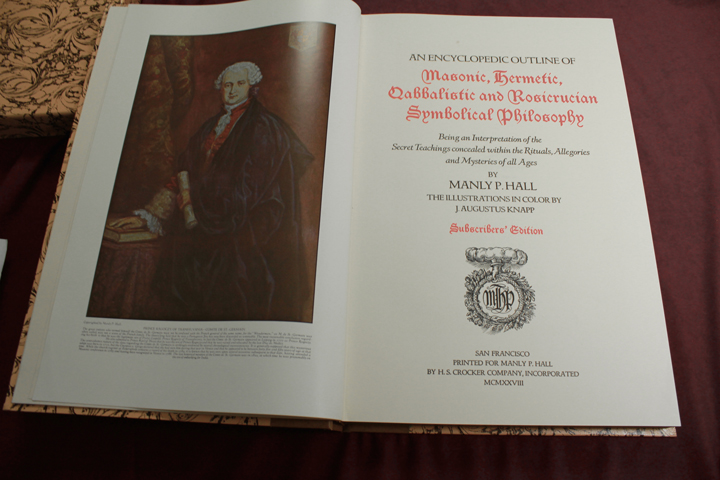
The Secret Teachings of All Ages (Manly P. Hall — Reader’s Edition)
An encyclopedic outline of Masonic, Hermetic, Qabbalistic, and Rosicrucian symbolical philosophy, detailing the rites of ancient mystery schools from Eleusis to the Rose Cross.