The data points extracted from the Free_masonry_high_degrees tradition provide a glimpse into the mystical and symbolic dimensions of Freemasonry, Rosicrucianism, and occult philosophy. By analyzing the sympathies among these principles such as symbols, numbers, chemistry, and cryptography, this essay aims to synthesize the underlying philosophical currents that govern these esoteric traditions.
The Symbolic Language of the Esoteric
Central to the esoteric web is the concept of symbols. Symbols are manifold representations of abstract or concrete concepts, often used in rituals to convey deeper truths and connect to spiritual or universal meanings. The term "SYMBOLS" encompasses a wide array of signs and images, which are prevalent not only in Freemasonry and Rosicrucianism but also across various esoteric and spiritual traditions. These symbols are integral to Masonic practices, where they hold significant spiritual and philosophical importance. However, it is noted that symbols in Freemasonry are sometimes misinterpreted or misused, often removed from their original spiritual context, which can lead to a disconnect between the intended profound meanings and their actual application.
The Rosicrucian influence is evident in the perpetuation of certain symbols within Freemasonic rituals, indicating a historical and cultural exchange of spiritual and symbolic meaning. Masonic symbols, such as the square and compasses, the all-seeing eye, and aprons, among others, are deeply rooted in esoteric traditions and are employed to evoke a sense of spirituality, ethical values, and a universal quest for wisdom. These symbols are designed to facilitate a deeper connection to the metaphysical realm and encourage self-reflection and moral improvement among initiates.
The Interplay of Numbers and Cryptography
Numbers play a central part in both practical and symbolic domains. In cryptographic systems, numbers are fundamental, serving as essential components in encoding and frequency analysis processes. These mathematical entities are used to create secure codes and ciphers, ensuring the confidentiality and integrity of information.
Numbers hold significant importance in kabalistic and magical practices, where they are imbued with symbolic meanings and mystical significance. Specific numbers, such as 666 and 12, are particularly notable. The number 666 is often associated with the concept of the "Number of the Beast," derived from religious texts, and is frequently used in symbolic and magical contexts. On the other hand, the number 12 appears in the Pantacle, a symbol laden with magical and kabalistic significance.
The Convergence of Chemistry and Esoteric Philosophy
Chemistry, in its various forms, holds a rich body of historical and philosophical significance. This science, closely tied to the Hermetic tradition, encompasses both mystic and practical elements. In the context of mystics and alchemists, chemistry serves as a cryptic language, with terms and symbols representing spiritual and philosophical concepts.
The broader Hermetic framework integrates chemistry with pharmacology, focusing on the composition and properties of substances. This holistic approach suggests that chemistry is not merely about experimenting with chemical reactants but is also embedded within a larger web of cosmic and spiritual relationships.
The Cryptographic Web of High-Degree Freemasonry
High-degree Freemasonry uses specific cryptographic practices and symbols, like the angelic writing, to maintain its secret and esoteric knowledge. These practices and cryptic alphabets serve as integral elements of the fraternity, fostering a sense of unity and preserving ancient traditions.
The members of this lineage within High-degree Freemasonry engage in activities and rituals that utilize these symbolic alphabets, which are central to their shared heritage and secretive knowledge. The use of Morse code, code books, and other cryptographic methods ensures the confidentiality and integrity of their communications and texts.
Esoteric Traditions
The sympathies among these principles such as symbols, numbers, chemistry, and cryptography reveal a network of esoteric traditions and philosophies. The use of algebraic expressions, frequency analysis, and other cryptographic methods highlights the deep connections between advanced cryptographic practices and the symbolic tradition found within high-degree Freemasonry.
The integration of botanical symbols, terms, and concepts into cryptographic writings demonstrates the rich intellectual and cultural exchanges during the Moorish period, where botany played a essential part in the advancement of knowledge across various disciplines.
The incorporation of physiological symbols and concepts into cryptographic systems reflects the complex, multi-layered nature of the organization's symbolic and cryptographic systems.
Bibliographia & Fontes
Primary Source Books Used in This Article
The doctrines, historical citations, and symbolic correspondences synthesized in this article are drawn from the following primary works and chapters:
- I.Manly P. Hall, The Secret Teachings of All Ages1928
An Encyclopedic Outline of Masonic, Hermetic, Qabbalistic and Rosicrucian Symbolical Philosophy
Chapters / Sections Consulted:Ch. “The Fraternity of the Rose Cross” · Ch. “The Cryptogram as a Factor in Symbolic Philosophy” - II.Éliphas Lévi, Transcendental Magic: Its Doctrine and Ritual (Dogme et Rituel de la Haute Magie)1856 / 1896 trans.
Translated and Annotated by A. E. Waite
Chapters / Sections Consulted:Part II: The Ritual of Transcendental Magic - III.Heinrich Cornelius Agrippa, De Occulta Philosophia Libri Tres1533
Classical Primary Source Referenced in Text
Further Inquiry in This Cycle
Companion Studies & Disputations
Cryptography, Science, and Spirituality
The Free_masonry_high_degrees tradition presents a network of esoteric concepts, entities, and relationships that weave together cryptography, science, and…
Philosophy of Ocult_philosophy
The Ocult_philosophy tradition presents a network of esoteric concepts, entities, and relationships that warrant a deeper exploration. At its core, this…
Deeper Truths of Symbols
The doctrine of Symbols encompasses esoteric concepts, weaving together the intricate relationships between Idols, Symbols, and Allegories. This…
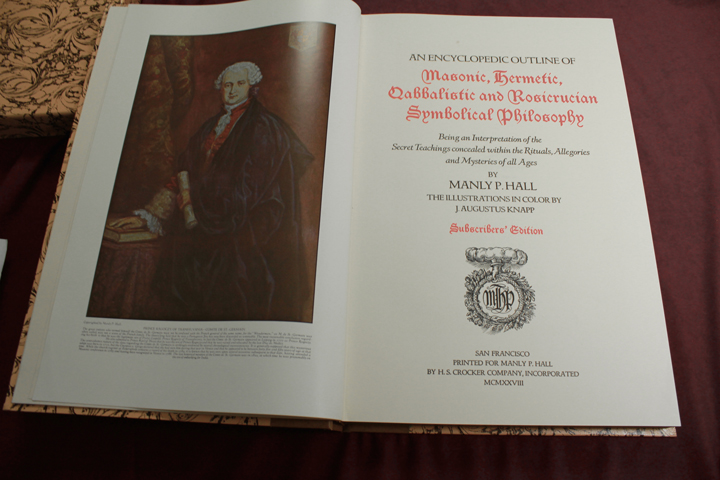
The Secret Teachings of All Ages (Manly P. Hall — Reader’s Edition)
An encyclopedic outline of Masonic, Hermetic, Qabbalistic, and Rosicrucian symbolical philosophy, detailing the rites of ancient mystery schools from Eleusis to the Rose Cross.