Through a careful analysis of the surviving literature points, we will explore the symbolic representations, philosophical underpinnings, and conceptual parallels that bind these concepts together, ultimately illuminating the triadic harmony that pervades the fabric of existence.
The Trinity: A Paradigm of Unity and Interconnectedness
The Trinity, a central concept in Christian theology, represents the unity of three distinct yet intimately related persons: the Father, the Son, and the Holy Spirit. This triadic structure is echoed in various symbolic representations, such as the shamrock, which illustrates the three-in-one nature of the Trinity. The Trinity serves as a profound theological and spiritual symbol, embodying the complex ideas of unity, distinction, and interrelation in the context of divine essence.
Grammar and the Liberal Arts: A Foundation for Understanding
Grammar, a fundamental pillar of the Liberal Arts, encompasses the rules and principles governing the structure and use of language. The personification of the verb into three distinct persons (first, second, and third person) reflects a triadic concept in linguistic creation, analogous to the Trinity. The Liberal Arts, comprising disciplines such as grammar, logic, rhetoric, and the sciences, provide a framework for understanding and mastering the intricacies of language and linguistic rules.
The Dionysian Trio and the Pomense: Reflections of the Trinity
The Dionysian trio, consisting of the father, mother, and child, reflects the trinity in various fields, including theology and magic. The Pomense, a complex concept within the Liberal Arts, represents a broader idea that encompasses grammar, logic, rhetoric, and the sciences. These reflections of the Trinity demonstrate the unity and sympathy of the divine and human experiences.
The Shamrock and the Fourth Leaf: Symbolic Representations of the Trinity
The shamrock, a three-leafed plant, holds significant religious and cultural importance as a symbol of the Trinity. The addition of a fourth leaf, symbolizing human inclusion in the doctrine of the Trinity, adds a nuanced layer to the symbolism. This representation highlights the potential for redemption or a fourth aspect, demonstrating the complex and manifold nature of the Trinity.
The Tree of Alchemy and the Human Hand: Interdependence and Natural Growth
The Tree of Alchemy, symbolizing the interdependence of metals and elements, reflects the singular trunk (solar life) sustaining them, much like the three parts of the Trinity. The natural growth of metals, without human hand, parallels the growth of plants from seeds, illustrating the sympathy of the natural world.
Bibliographia & Fontes
Primary Source Books Used in This Article
The doctrines, historical citations, and symbolic correspondences synthesized in this article are drawn from the following primary works and chapters:
- I.Manly P. Hall, The Secret Teachings of All Ages1928
An Encyclopedic Outline of Masonic, Hermetic, Qabbalistic and Rosicrucian Symbolical Philosophy
Chapters / Sections Consulted:Ch. “Flowers, Plants, Fruits, and Trees” - II.Arthur Edward Waite, The Pictorial Key to the Tarot1910
Being Fragments of a Secret Tradition under the Veil of Divination
- III.Éliphas Lévi, Transcendental Magic: Its Doctrine and Ritual (Dogme et Rituel de la Haute Magie)1856 / 1896 trans.
Translated and Annotated by A. E. Waite
Chapters / Sections Consulted:Part I: The Doctrine of Transcendental Magic
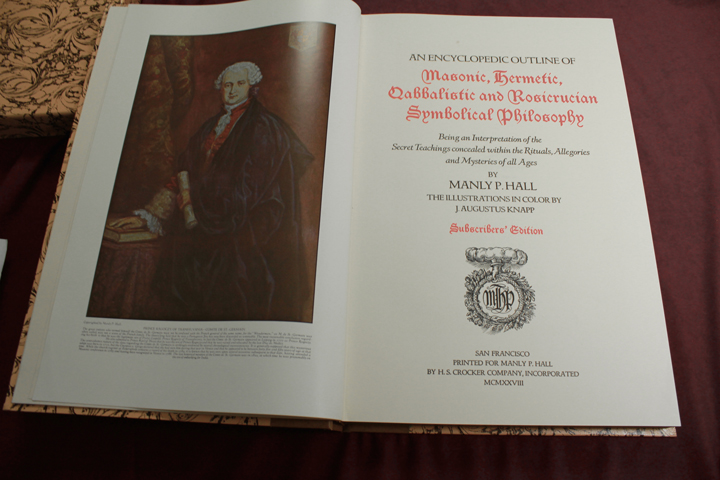
The Secret Teachings of All Ages (Manly P. Hall — Reader’s Edition)
An encyclopedic outline of Masonic, Hermetic, Qabbalistic, and Rosicrucian symbolical philosophy, detailing the rites of ancient mystery schools from Eleusis to the Rose Cross.