The philosophical tapestry woven by the principles and correspondences within this esoteric current offers a profound exploration of the human condition, examining the complexities of wisdom, morality, and the consequences of mortal sins. This intricate web of concepts reveals the sympathy of knowledge, intuition, and the pursuit of understanding, while also highlighting the dangers of unchecked pride, ambition, and desires.
Historical & Symbolic Context
Central to this esoteric community is the concept of **Gnosis**, a profound and direct understanding or insight into cosmic truths. Gnosis is characterized by a deeper, intuitive form of knowledge that transcends formalized science and empirical approaches. This comprehensive and personal approach to knowledge is closely tied to the concept of **Wisdom**, which encompasses the highest form of knowledge and truth. Wisdom is associated with wise living, good health, and organic life, and is symbolized by the union of complementary principles.
The relationship between Gnosis and Wisdom is one of mutual enrichment, as Gnosis involves the union of principles to form Wisdom. This synergy is further reflected in the connection between Wisdom and the **Purity of the Lips**, which symbolizes a deep wisdom and understanding that cannot be communicated in words. The **Husband** entity, representing the active principle of creation and initiation, plays a transformative role in the process of Gnosis.
In contrast, the concepts of **Pride**, **Adultery**, and **Rage and Envy** are intertwined as mortal sins that lead to physical and spiritual death. Pride, in particular, is identified as a complex and manifold concept that can manifest physically and spiritually, potentially leading to self-indulgence and illness. The historical examples of Alexander the Great and Francis I serve as cautionary tales about the dangers of unchecked pride and desires.
The relationships between these concepts reveal a nuanced understanding of the human condition. **Agonism**, or the opposition of competitive rivals, can arise from the plurality of gods and affect individual relationships and identities. **Prominent Antipathy** is a specific form of rivalry that often arises from the most intense emotional states, including love turned to hate. The connections between Adultery, Rage and Envy, and Mortal Sins highlight the notion that emotional and moral conflicts can have tangible physical repercussions.
The **Fallen Ambition** concept serves as a warning against the dangers of uncontrolled desires and excessive pride, suggesting that such ambitions can lead to dire consequences for individuals and those in their orbit. Conversely, **Wisdom** is described as a preserver and prolonger of life, counteracting the effects of mortal sins.
The philosophical web of this hermetic lineage presents a rich and complex exploration of the human condition, emphasizing the importance of intuition, wisdom, and the pursuit of understanding. By navigating the intricate relationships between these concepts, we may gain a deeper understanding of the profound truths that underlie our existence.
Bibliographia & Fontes
Primary Source Books Used in This Article
The doctrines, historical citations, and symbolic correspondences synthesized in this article are drawn from the following primary works and chapters:
- I.Éliphas Lévi, Transcendental Magic: Its Doctrine and Ritual (Dogme et Rituel de la Haute Magie)1856 / 1896 trans.
Translated and Annotated by A. E. Waite
Chapters / Sections Consulted:Part I: The Doctrine of Transcendental Magic - II.The Three Initiates, The Kybalion: A Study of the Hermetic Philosophy of Ancient Egypt and Greece1908
The Seven Hermetic Principles
Further Inquiry in This Cycle
Companion Studies & Disputations
Agonism & Prominent Antipathy: The Agonistic Paradox
By synthesizing these concepts, we reveal a paradoxical dynamic where intense emotional connections can foster both profound love and deep-seated…
The Interconnected Nature of Mortal Sins
Pride, as represented by the entity "PRIDE," is a complex and manifold concept that can manifest both physically and spiritually. While it can lead to…
The Union of Wisdom and Silence
The union of wisdom and silence is revealed as a profound state of understanding that transcends ordinary communication, highlighting the significance of…
Gnosis: The Union of Intuitive Understanding
By analyzing the dynamics between these figures and symbols, we uncover a profound understanding of the nature of knowledge, intuition, and the…
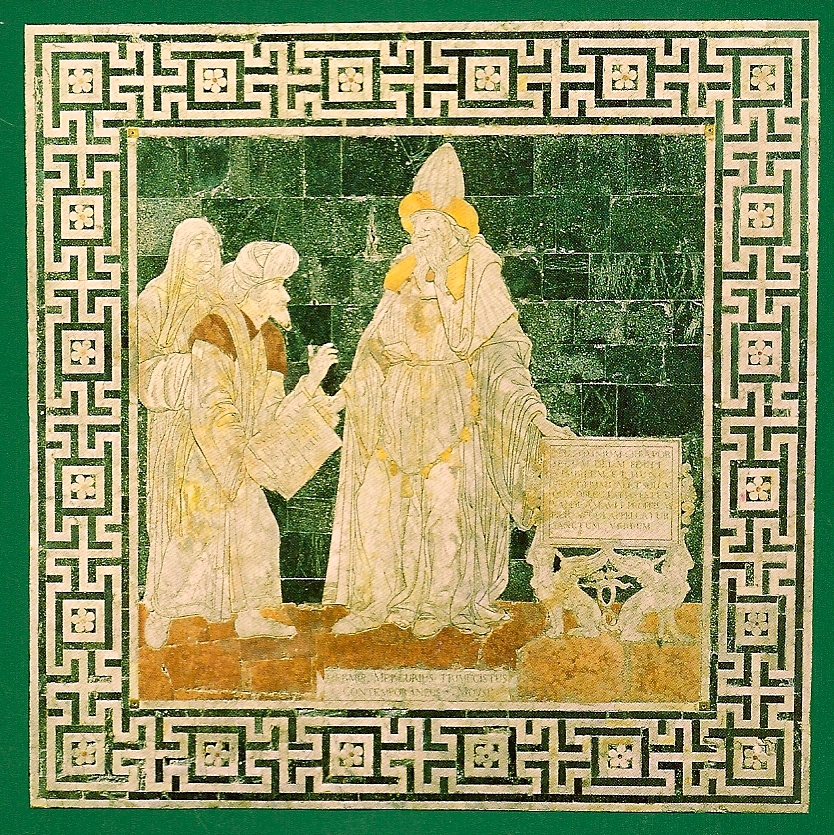
Corpus Hermeticum & Asclepius (Copenhaver Critical Edition)
The definitive scholarly translation of the Greek and Latin Hermetica attributed to Hermes Trismegistus, foundational to Renaissance Neoplatonism and Western esotericism.