Through a detailed analysis of the classical sources and relationships, we will explore the intricate dance between truth and deception, the role of art and nature in understanding reality, and the transformative power of self-discovery and spiritual growth.
The Labyrinth of Truth and Deception
Central to this hermetic lineage is the concept of truth, a manifold and dynamic entity that is both an objective reality and a subjective journey. The Axiomata Hermetica, a set of seven principles, serves as a guiding framework for understanding the nature of truth and its relationship to art, nature, and the human experience. Principle 1, for instance, emphasizes the simplicity of truth, while Principle 2 highlights the necessity of long suffering in the pursuit of understanding.
The relationship between lies and truth is also a crucial aspect of this tradition. Lies are often used to hide the truth, but this deception can also serve as a catalyst for growth and transformation. The ship, a symbol of prxnesis, navigates through the waters of truth, guided by the principles of the Axiomata Hermetica. The hen, representing nurturing and protection, creates new life and protects wisdom, echoing the core truths of Rosicrucianism.
The Interplay of Art and Nature
Art and nature are intimately connected in the Truth tradition, with art serving as a tool to augment and perfect the natural world. The Axiomata Hermetica Principle 3 highlights the interplay between nature and art, emphasizing that art can enhance and perfect the natural world in ways that nature alone cannot achieve. This harmony between art and nature is reflected in the philosophical framework of Friedrich Schelling, where art is seen as an exemplification of the unity of the noumenal and phenomenal realms.
The Journey of Self-Discovery and Spiritual Growth
The journey of self-discovery and spiritual growth is a central theme in the Truth tradition. The concept of self-will must cease for the divine will to enter the heart, as emphasized in Principle 9 of the Axiomata Hermetica. This transformation is often accompanied by suffering and pain, as symbolized by the almighty crocodile and the golgotha.
The Voice of Truth guides or embodies the concept of truth for the protagonist, speaking to or influencing the person experiencing the transformation of The Hanged Man card. This transformation is a sacrifice or transformation towards understanding truth, often involving a departure from the blessings of paradise.
The Trials of the Journey
The journey to truth is not without its challenges. The dusty road, a symbol of hardship and perseverance, is fraught with obstacles and illusions. Dealing with deceit, represented by the black cube, is a part of the spiritual journey towards truth. Temporary states of enlightenment, like the illusionary chariot, are also part of the process towards true understanding.
The altar with magic symbols serves as a tool for spiritual growth and transformation, a place where one can reach from earth to heaven. The use of this altar is a part of the trials on the dusty road to truth, often accompanied by suffering and pain.
Bibliographia & Fontes
Primary Source Books Used in This Article
The doctrines, historical citations, and symbolic correspondences synthesized in this article are drawn from the following primary works and chapters:
- I.Franz Hartmann, In the Pronaos of the Temple of Wisdom / Philosophy of the Rosicrucians and Alchemists1890
Containing the History of the True and the False Rosicrucians and the Principles of Alchemy
- II.P. D. Ouspensky, The Symbolism of the Tarot: Philosophy of Occultism in Pictures and Numbers1913
Translated by A. L. Pogossky
- III.Manly P. Hall, The Secret Teachings of All Ages1928
An Encyclopedic Outline of Masonic, Hermetic, Qabbalistic and Rosicrucian Symbolical Philosophy
Chapters / Sections Consulted:Ch. “The Life and Teachings of Thoth Hermes Trismegistus” - IV.Éliphas Lévi, Transcendental Magic: Its Doctrine and Ritual (Dogme et Rituel de la Haute Magie)1856 / 1896 trans.
Translated and Annotated by A. E. Waite
Chapters / Sections Consulted:Part I: The Doctrine of Transcendental Magic
Further Inquiry in This Cycle
Companion Studies & Disputations
The Odyssey of Truth: A Philosophical Synthesis of Sunny_dusty-road
Through a meticulous analysis of the classical sources and relationships, this synthesis will elucidate the odyssey of truth, highlighting the necessary…
Truth, Hen & Almighty_crocodile in Hermeticism
Through a careful analysis of the classical sources and relationships, this synthesis aims to uncover the deeper connections and insights that underlie…
Art and Nature: An Exegesis of Axiomata Hermetica and its
Through an examination of the relationships between Axiomata Hermetica, Art, and Self-Will, this analysis reveals the intricate harmony between art and…
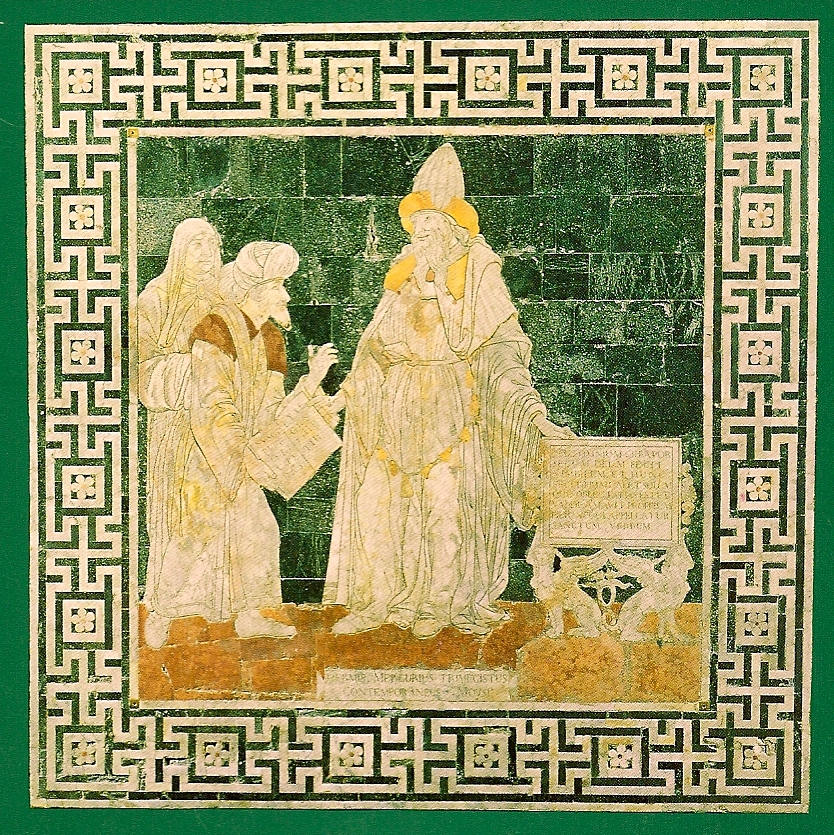
Corpus Hermeticum & Asclepius (Copenhaver Critical Edition)
The definitive scholarly translation of the Greek and Latin Hermetica attributed to Hermes Trismegistus, foundational to Renaissance Neoplatonism and Western esotericism.