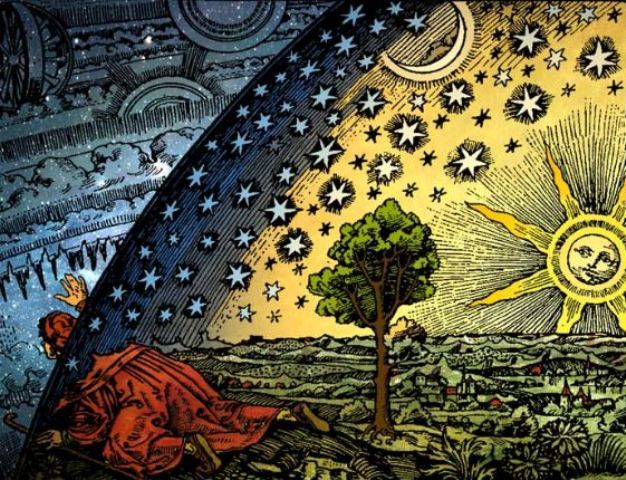
The concept of SPIRIT is a manifold and profound entity that transcends physical existence, encompassing the highest conception of Infinite Living Mind and the real essence of the universe. Through this analysis, we gain a deeper understanding of the SPIRIT's role in human consciousness, existence, and the larger cosmic order.
The Nature of SPIRIT
SPIRIT is an intangible entity separate from the physical body, capable of influencing choices and actions. It is the essential life-force or consciousness that moves through the cyclic path from the invisible world to the physical world and back. As a divine superessential light, SPIRIT exists on a higher plane, containing the necessary will for external substance development and the unfolding of power. In spiritual and magical practices, SPIRIT is integral, guiding and influencing the lower vehicles (dense and vital bodies) towards ultimate goals and destiny.
Relationships with Other Concepts
The relationships between SPIRIT and other concepts reveal its manifold nature. Budhi, the spiritual knowledge from previous incarnations, needs to unite with Manas, the knowledge from the present life, to gain full knowledge. This unity is crucial for achieving enlightenment, as it symbolizes the path towards spiritual understanding and higher consciousness. Monistic Theory believes that SPIRIT is bound to the physical realm, born and returning to it, while Dualistic Theory states that SPIRIT exists beyond the physical realm, independent of physical life.
The Great Western Mystery School of the Rosicrucian Order provides insights about the spiritual journey of the SPIRIT, highlighting its role in the processes of alchemy. The SPIRIT's understanding of concepts like distance and form is necessary for spiritual growth, as it navigates the riddle of life and death. Oliver Wendell Holmes' poem beautifully captures the aspiration of eternal progress and growth of the Soul, which is an intrinsic part of the journey of the SPIRIT.
The Role of SPIRIT in Human Consciousness and Existence
The SPIRIT serves an essential office in human consciousness and existence. Through the cycles of reincarnation and conscious growth, the SPIRIT develops its consciousness and learns from its experiences in the Desire and World of Concrete Thought. The SPIRIT's state during trances appears to be a continuation of its experiences in the physical realm, albeit in a fundamentally different state. This suggests that the SPIRIT carries forward certain aspects of its consciousness or memories, even as it explores realms beyond the physical.
The relationship between the SPIRIT and Invisible Helpers reveals the importance of linguistic accomplishments, as these skills extend the usefulness of Invisible Helpers. The SPIRIT's connection to the Mind of THE ALL, the source of spirit, highlights its role in the creation of mental universes.
Bibliographia & Fontes
Primary Source Books Used in This Article
The doctrines, historical citations, and symbolic correspondences synthesized in this article are drawn from the following primary works and chapters:
- I.Max Heindel, The Rosicrucian Mysteries: An Elementary Exposition of Their Secret Teachings1911
The Rosicrucian Fellowship
- II.The Three Initiates, The Kybalion: A Study of the Hermetic Philosophy of Ancient Egypt and Greece1908
The Seven Hermetic Principles
- III.Franz Hartmann, In the Pronaos of the Temple of Wisdom / Philosophy of the Rosicrucians and Alchemists1890
Containing the History of the True and the False Rosicrucians and the Principles of Alchemy
Further Inquiry in This Cycle
Companion Studies & Disputations
The Essence of Spirit: A Philosophical Synthesis
At the core of this framework lies the concept of SPIRIT, a manifold and profound entity that transcends physical existence. Through an examination of the…
Linguistic Accomplishments and the Agency of Invisible Helpers
In the esoteric community of 1408, two concepts emerge as crucial components of a philosophical framework: Linguistic Accomplishments and Invisible…
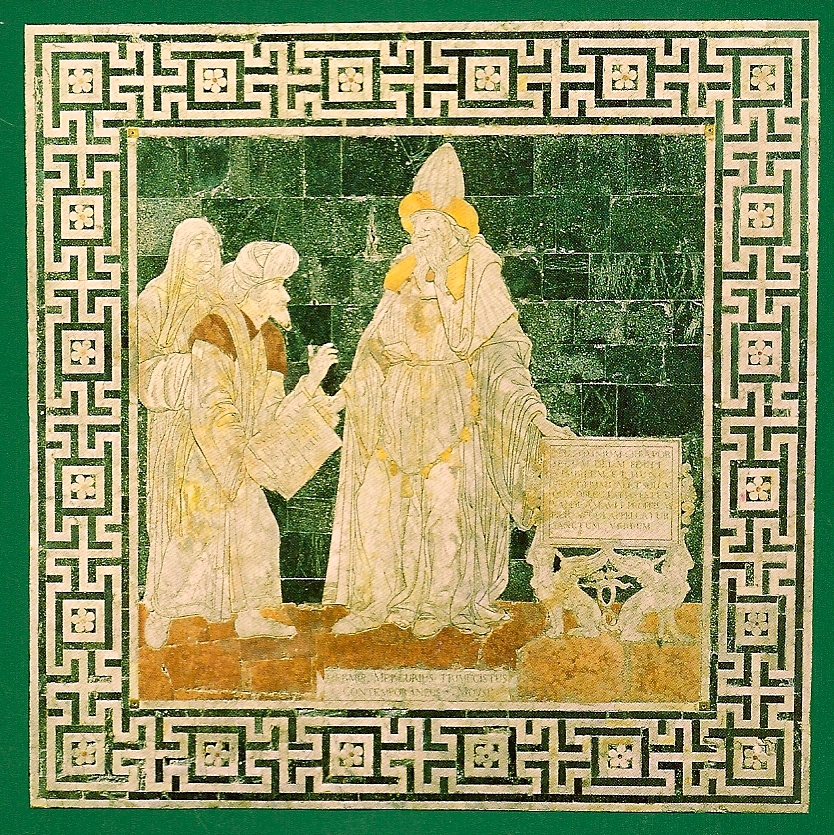
Corpus Hermeticum & Asclepius (Copenhaver Critical Edition)
The definitive scholarly translation of the Greek and Latin Hermetica attributed to Hermes Trismegistus, foundational to Renaissance Neoplatonism and Western esotericism.