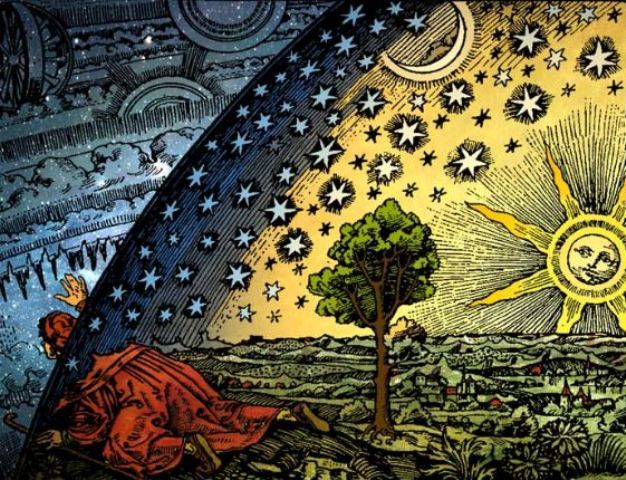
By examining the principles and correspondences presented, we can discern a rich body of interconnected ideas that span various philosophical traditions, including positivism, utilitarianism, Hegelianism, and Darwinism. This synthesis reveals a network of thought that attests to the necessity of empirical evidence, rational inquiry, and the pursuit of knowledge.
Historical & Symbolic Context
Central to this hermetic lineage is the concept of the **Positive State**, a philosophical framework that emphasizes the importance of empirical evidence and scientific methodology in understanding the world. This approach is closely tied to the ideas of **Locke**, **Hume**, and **Darwin**, who all contributed to the development of empiricism and the scientific method. The Positive State's focus on empirical facts and laws is also reflected in its relationship with **Historical Facts**, which form the core of its methodology.
The Positive State's emphasis on empirical evidence is also seen in its connection to **Darwinism**, which relies on empirical and historical evidence to explain evolution. This alignment attests to the necessity of observation, experimentation, and the formulation of hypotheses in understanding the natural world. The Positive State's commitment to empirical science is also reflected in its relationship with **Biological Science**, which relies on systematic observation, measurement, and experimentation to gather data and derive conclusions.
However, the Positive State's approach is not without its critics. **Berkeley's idealism**, for example, opposes positivism's emphasis on empirical and material evidence, affirming the role of subjective experience and the role of the mind in shaping our understanding of reality. Similarly, **Traditionalism** is opposed to the Positive State's emphasis on empirical evidence, instead valuing established beliefs and traditions.
In contrast, **Utilitarianism** shares the Positive State's focus on empirical evidence and practical outcomes. This philosophical approach centers around the idea that actions and policies should be evaluated based on their ability to maximize happiness and minimize suffering for the majority. The Positive State's emphasis on empirical evidence and scientific methodology is also reflected in its connection to **Voltairism**, which emphasizes the importance of reason and skepticism in understanding the world.
The Positive State's relationship with **Neo-Hegelianism** is also noteworthy. While both approaches prioritize rational thinking and empirical evidence, Neo-Hegelianism seeks to integrate Hegel's idealism with modern scientific and rationalist thought. This synthesis reflects the ongoing tension between idealism and empiricism, highlighting the complex and manifold nature of philosophical inquiry.
Finally, the entities **Hegel** and **Darwin** serve as important touchstones for the philosophical ideas presented in the Positive State tradition. Hegel's influence can be seen in the ideas of Neo-Hegelianism, which seeks to adapt and refine his philosophical thought for modern contexts. Darwin's theory of evolution, meanwhile, provides a foundational framework for understanding the natural world and the importance of empirical evidence in scientific inquiry.
The philosophical concepts and relationships within this esoteric current present a rich and complex web of ideas that span various philosophical traditions. By examining these figures and symbols and relationships, we can discern a deeper understanding of the importance of empirical evidence, rational inquiry, and the pursuit of knowledge in shaping our understanding of the world.
Bibliographia & Fontes
Primary Source Books Used in This Article
The doctrines, historical citations, and symbolic correspondences synthesized in this article are drawn from the following primary works and chapters:
- I.Manly P. Hall, The Secret Teachings of All Ages1928
An Encyclopedic Outline of Masonic, Hermetic, Qabbalistic and Rosicrucian Symbolical Philosophy
Chapters / Sections Consulted:Ch. “Introduction to Symbolical Philosophy”
Further Inquiry in This Cycle
Companion Studies & Disputations
Positive State: The Evolution of Thought
The entities and relationships presented here demonstrate a profound emphasis on the scientific method, empirical evidence, and the importance of…
Neo-hegelianism & Hegel: Reviving the Absolute
Neo-Hegelianism, a philosophical revival of Georg Wilhelm Friedrich Hegel's idealism, seeks to reexamine and reinterpret the German philosopher's work in a…
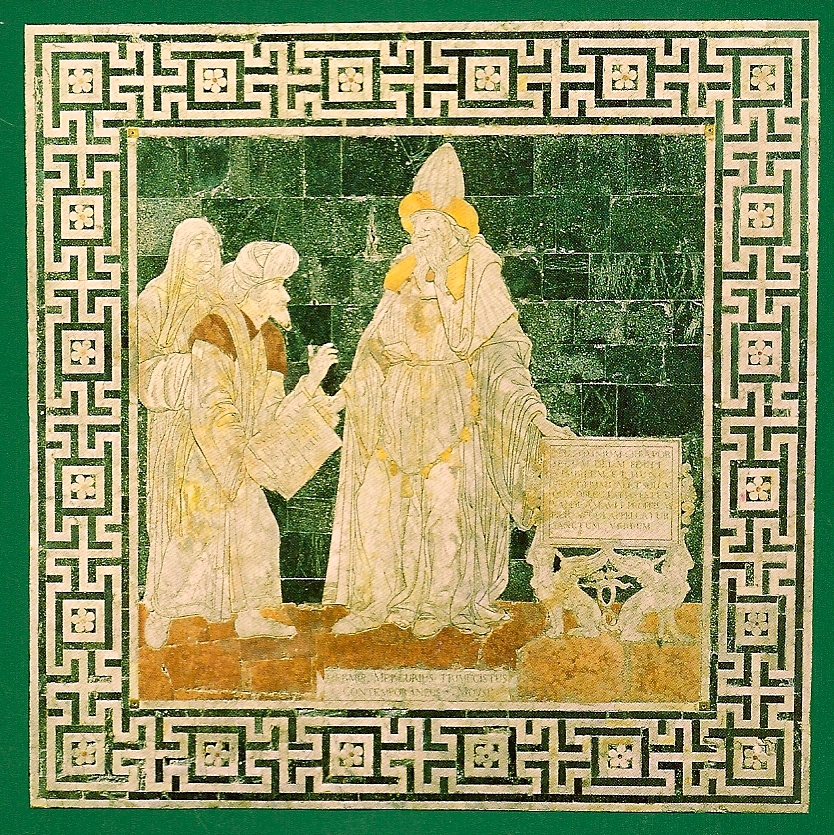
Corpus Hermeticum & Asclepius (Copenhaver Critical Edition)
The definitive scholarly translation of the Greek and Latin Hermetica attributed to Hermes Trismegistus, foundational to Renaissance Neoplatonism and Western esotericism.