In the study of the philosophical landscape of Stoicism, a school of thought founded by Zeno, a philosopher from Northern Greece.
Historical & Symbolic Context
The philosophical tradition of Stoicism, founded by Zeno, is characterized by its emphasis on reason, self-control, and indifference to external events. As the founder of Stoicism, Zeno's philosophical ideas laid the groundwork for the school's core principles. His teachings, though not extensively documented, are believed to have focused on the attainment of inner strength and wisdom through the cultivation of reason and the rejection of external influences.
The relationship between Zeno and Antipater is pivotal in understanding the evolution of Stoic thought. Antipater, who succeeded Chrysippus as the head of the Stoic school, continued the tradition established by Zeno. This succession indicates a deliberate effort to preserve and build upon the philosophical foundations laid by Zeno. Antipater's continuation of this hermetic lineage suggests a shared commitment to the school's core principles, including the pursuit of wisdom, the rejection of external desires, and the cultivation of inner strength.
The succession of Antipater after Chrysippus also reveals the place of continuity and tradition within the Stoic school. This continuity is a testament to the enduring appeal of Stoic philosophy, which has captivated scholars and thinkers for centuries. The fact that Antipater continued the Stoic tradition after Chrysippus implies a shared recognition of the significance of Zeno's ideas and a collective effort to further develop and refine them.
The relationship between Zeno and Antipater attests to the necessity of mentorship and knowledge transmission within the Stoic school. Antipater's succession of Chrysippus and continuation of Zeno's tradition suggest a deliberate effort to preserve and transmit the philosophical knowledge and ideas of the school's founders. This emphasis on knowledge transmission highlights the value placed on the preservation and dissemination of Stoic ideas, ensuring their continued relevance and influence.
The synthesis of Zeno and Antipater's philosophical contributions offers a nuanced understanding of this hermetic lineage. The continuity of this hermetic lineage, the emphasis on knowledge transmission, and the shared commitment to the school's core principles all testify to the profound influence of Zeno's ideas and the lasting appeal of Stoic philosophy.
Bibliographia & Fontes
Primary Source Books Used in This Article
The doctrines, historical citations, and symbolic correspondences synthesized in this article are drawn from the following primary works and chapters:
- I.Manly P. Hall, The Secret Teachings of All Ages1928
An Encyclopedic Outline of Masonic, Hermetic, Qabbalistic and Rosicrucian Symbolical Philosophy
Chapters / Sections Consulted:Ch. “Introduction to Symbolical Philosophy”
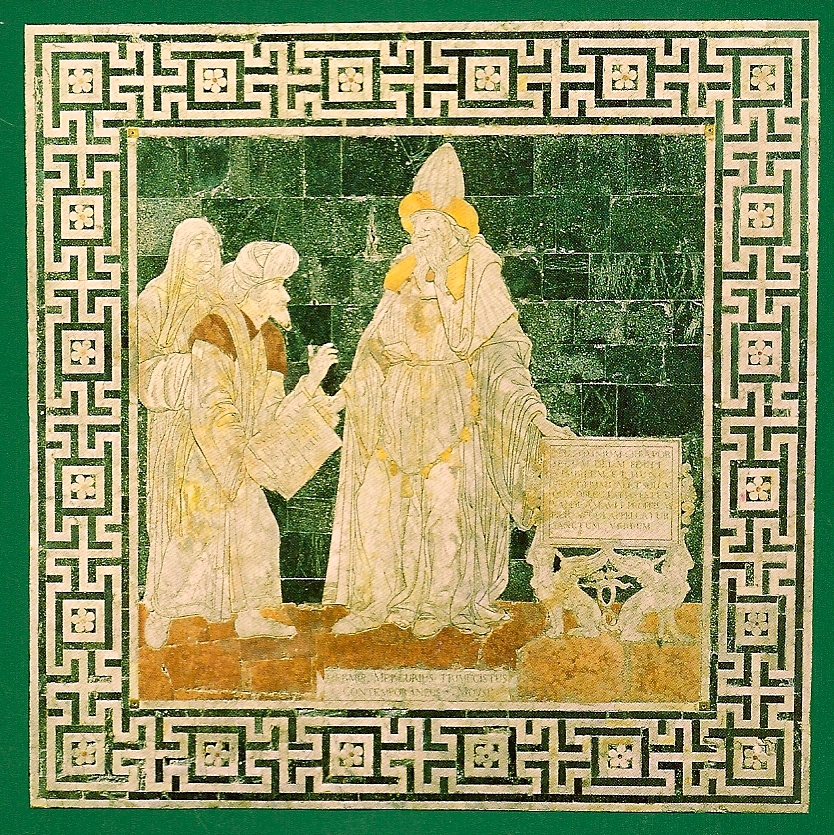
Corpus Hermeticum & Asclepius (Copenhaver Critical Edition)
The definitive scholarly translation of the Greek and Latin Hermetica attributed to Hermes Trismegistus, foundational to Renaissance Neoplatonism and Western esotericism.