The doctrine of Hypopneuma encompasses philosophical thought, woven from the contributions of various individuals and their relationships. this tradition encompasses a range of philosophical traditions, from the Platonic Academy to the Cynics and Stoics. By examining the connections between key figures and their philosophical leanings, we can distill the core principles and values that underpin this intellectual landscape.
Philosophical Lineages and Influences
The Platonic Academy, founded by Plato, serves as a cornerstone of this tradition. Speusippus, a pupil of Plato, played a significant role in the evolution of Platonic philosophy, ensuring its continuation and potential advancement. His pupil, Zenocrates, further developed these teachings, while Arcesilaus, who founded the Middle Academy, introduced skepticism as a crucial aspect of the Academy's philosophical framework. The New Academy, established by Carneades, continued this philosophical lineage.
In contrast, the Cynics, with their emphasis on living in accordance with nature, renouncing material possessions, and embracing simplicity, offer a distinct philosophical perspective. Crates, a prominent Cynic philosopher, influenced Hipparchus, who, in turn, shaped the thoughts of his companions. Theophrastus, a pupil of Aristotle, contributed to the development of various philosophical schools, including the Cynics.
Diet and Lifestyle as Philosophical Expressions
A common thread throughout this tradition is the emphasis on simple living and dietary practices. The concept of Hypopneuma, or simple diet, is closely tied to the Cynics' philosophy, which advocates for a life of virtue, self-sufficiency, and rejection of luxury. Crates, Hipparchus, and Metronikus, all associated with the Cynics, would have adhered to this simple and austere lifestyle, including a minimalistic approach to diet. Similarly, Speusippus, Arcesilaus, and Carneades, while not directly affiliated with the Cynics, engaged in discussions on diet and simple living, reflecting the broader philosophical interest in this topic.
Intersections and Influences
The relationships between these philosophers and their schools reveal a network of influences and intersections. Crantor, a pupil of Speusippus, engaged in philosophical discussions on diet, potentially bridging the gap between Platonic and Cynic thought. Bion, associated with the Cyrenaic movement, contributed to the discourse on simple living and dietary practices, while Theophrastus, as a pupil of Aristotle, participated in discussions on diet, highlighting the connections between various philosophical traditions.
Bibliographia & Fontes
Primary Source Books Used in This Article
The doctrines, historical citations, and symbolic correspondences synthesized in this article are drawn from the following primary works and chapters:
- I.Manly P. Hall, The Secret Teachings of All Ages1928
An Encyclopedic Outline of Masonic, Hermetic, Qabbalistic and Rosicrucian Symbolical Philosophy
Chapters / Sections Consulted:Ch. “Introduction to Symbolical Philosophy”
Further Inquiry in This Cycle
Companion Studies & Disputations
The Interconnected Pursuit of Virtue and Knowledge
The doctrine of Hypopneuma encompasses philosophers, their relationships, and their philosophical pursuits. By examining the lives, teachings, and…
Speuseppus: The Evolution of Platonic Philosophy
This essay examines the philosophical contributions of Speusippus and Zenocrates, two pivotal figures in the Platonic tradition. As a pupil of Plato and a…
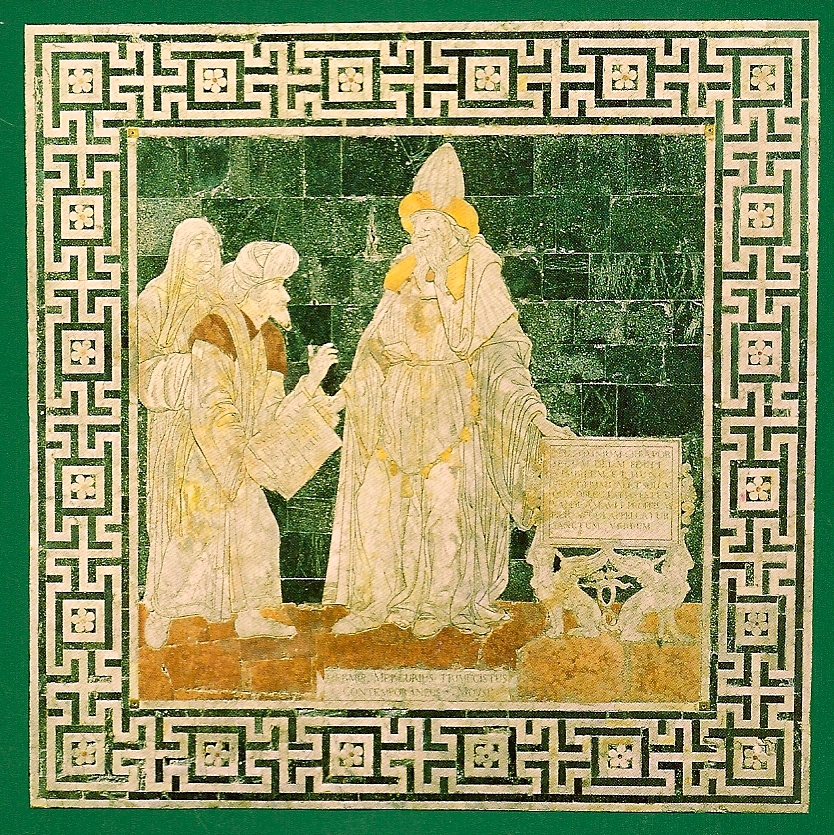
Corpus Hermeticum & Asclepius (Copenhaver Critical Edition)
The definitive scholarly translation of the Greek and Latin Hermetica attributed to Hermes Trismegistus, foundational to Renaissance Neoplatonism and Western esotericism.