By examining the interplay between these ideas, we gain insight into the fundamental nature of existence, human development, and the pursuit of autonomy. The synthesis of these concepts reveals a nuanced understanding of the human condition, highlighting the tensions between suffering and empowerment, passivity and action, and the quest for knowledge and understanding.
The Essence of Life and the Will to Live
The concept of Life, as understood by Schopenhauer, is a fundamental force that imbues forms with existence, motion, and vitality. It is both the opposite of death and a symbol of wisdom, riches, fertility, power, peace, and grace. Life is seen as an intrinsic, divine gift, embodying the eternal and spiritual essence of being. Schopenhauer's philosophy revolves around the concept of the "will to live," which drives the manifestation of life, catalyzing the emergence of both joy and suffering. The will to live is a central theme in Schopenhauer's philosophical system, highlighting the paradoxical interplay between positive and negative aspects of existence.
The Transformation of the Will to Live into the Will to Power
Nietzsche's philosophy transforms the will to live into the "will to power," a more dynamic and affirmative force. The will to power emerges as a reaction against the suffering inherent in the will to live, aiming not merely to transcend pain but to rise above it by achieving greater power and autonomy. This transformation suggests a new perspective on the inherent struggles of life, shifting the focus from mere endurance of suffering to a proactive engagement with life's challenges and the pursuit of power and autonomy. The will to power is closely bound to the concept of the superman, a powerful individual who has transcended the limitations of the common man and achieved the pinnacle of individual development and autonomy.
The Relationship between Positivism and the Philosophies of Life, Will, and Power
Comte's positivism challenges the traditional theological and metaphysical approaches to the concept of life, focusing instead on the empirical study of natural laws. This shift can be understood as a reaction against or a rejection of the will's dominance over the intellect as proposed by Schopenhauer's philosophy. Positivism seeks to replace the speculative and often dogmatic methods of understanding life with a more grounded and scientific approach. However, positivism can also be seen as a reaction against the will to power in Nietzsche's philosophy, emphasizing instead the empirical study of natural laws over the active pursuit of power and autonomy.
The Interplay between Bergsonism and Positivism
Bergsonism, a philosophical theory of creative evolution, aims to understand the nature of reality through a different method than positivism. While positivism focuses on the empirical study of natural laws, Bergsonism emphasizes the importance of intuition and the direct experience of reality. The interplay between these two philosophical approaches highlights the complexities of understanding existence and the human condition.
Bibliographia & Fontes
Primary Source Books Used in This Article
The doctrines, historical citations, and symbolic correspondences synthesized in this article are drawn from the following primary works and chapters:
- I.Manly P. Hall, The Secret Teachings of All Ages1928
An Encyclopedic Outline of Masonic, Hermetic, Qabbalistic and Rosicrucian Symbolical Philosophy
Chapters / Sections Consulted:Ch. “Introduction to Symbolical Philosophy”
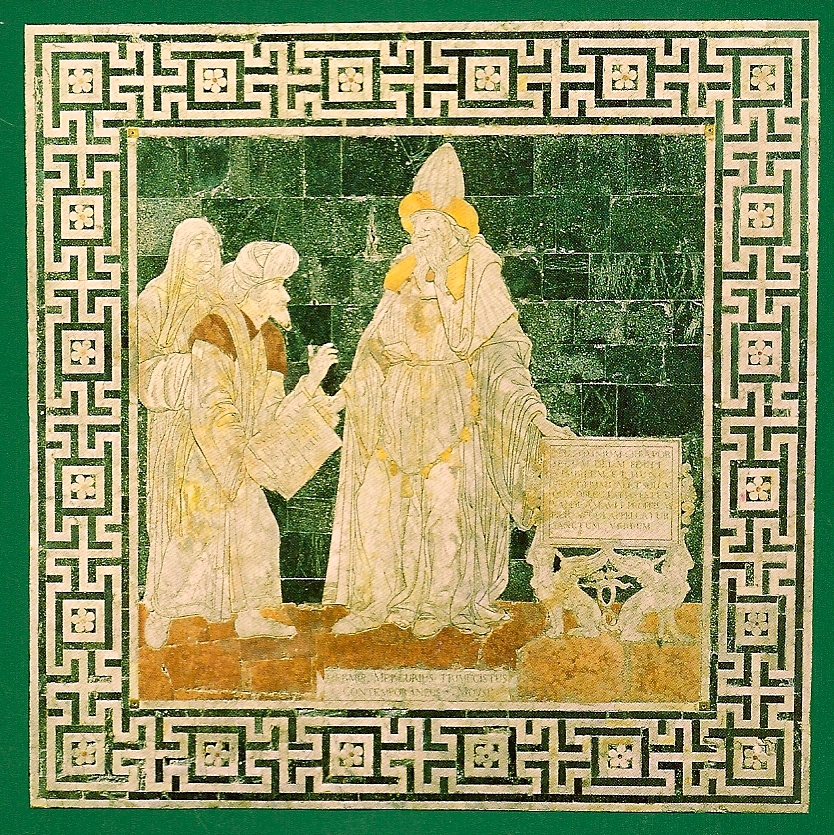
Corpus Hermeticum & Asclepius (Copenhaver Critical Edition)
The definitive scholarly translation of the Greek and Latin Hermetica attributed to Hermes Trismegistus, foundational to Renaissance Neoplatonism and Western esotericism.