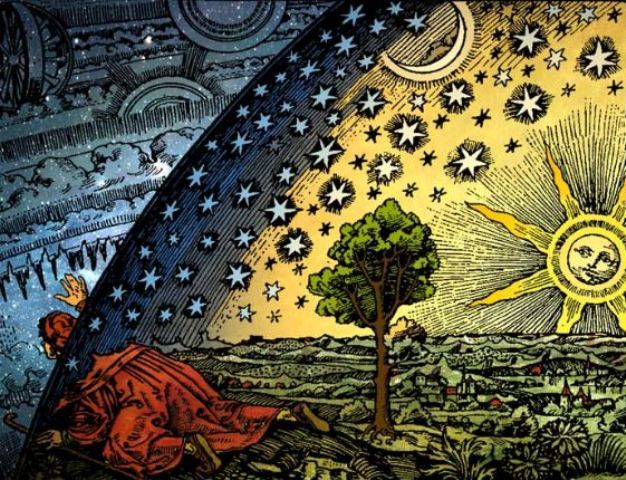
The concepts presented within this esoteric current reveal a profound philosophical framework that weaves together the threads of existence, knowledge, and spiritual refinement. Central to this tapestry is the assertion "Ego sum qui sum" (I am who I am), which embodies the fundamental statement of existence and serves as a foundation for the interconnected entities of the Holy Kingdom, True Science, Evidence, and Purity.
Existence: Ego, Kingdom, and the Quest for Knowledge
The phrase "Ego sum qui sum" stands as a testament to the direct and unmediated assertion of being, echoing the divine declaration in the Book of Exodus. This fundamental statement of existence serves as a cornerstone for the Holy Kingdom, a realm where divine principles and governance converge. The Holy Kingdom, in turn, is inextricably linked to True Science, which represents a rigorous and direct path to knowledge and truth, unencumbered by the uncertainties of false science.
The relationship between the Holy Kingdom and True Science is one of reciprocity, where the former provides a foundation for the latter, and the latter seeks to embody the principles of the former. True Science, guided by the principles of reason and direct experience, strives to understand the world in a manner that is both rational and unmediated. This pursuit of knowledge is, in turn, grounded in the assertion "Ego sum qui sum," which represents a commitment to direct and rational understanding.
The Interplay of Evidence and Purity
The concept of Evidence, or proof, is intricately tied to the assertion "Ego sum qui sum," which mandates a direct and rational examination of evidence and experience as the path to ultimate truth. This approach to knowledge is mirrored in the concept of Purity, which symbolizes a state of spiritual and moral refinement. Purity, in this context, is not merely a physical or external condition but a deeper, internal state of being – a reflection of one's true self.
The relationship between Ego and Purity is one of symbiosis, where the former serves as a foundation for the latter. The principle of "Ego sum qui sum" symbolizes a state of purity and sanctity, which is indispensable for the practice of True Science and the attainment of ultimate knowledge. This purity acts as a foundation for scientific inquiry, allowing for unmarred observation and understanding.
Bibliographia & Fontes
Primary Source Books Used in This Article
The doctrines, historical citations, and symbolic correspondences synthesized in this article are drawn from the following primary works and chapters:
- I.Éliphas Lévi, Transcendental Magic: Its Doctrine and Ritual (Dogme et Rituel de la Haute Magie)1856 / 1896 trans.
Translated and Annotated by A. E. Waite
Chapters / Sections Consulted:Part I: The Doctrine of Transcendental Magic
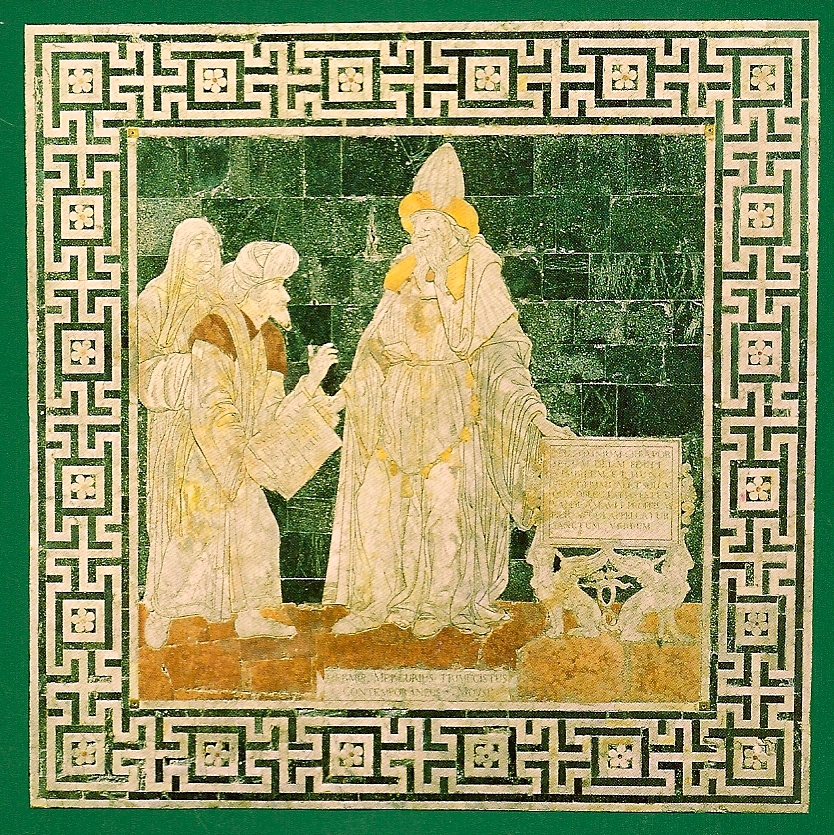
Corpus Hermeticum & Asclepius (Copenhaver Critical Edition)
The definitive scholarly translation of the Greek and Latin Hermetica attributed to Hermes Trismegistus, foundational to Renaissance Neoplatonism and Western esotericism.