In the realm of this hermetic lineage, we find a rich body of esoteric concepts, entities, and relationships that weave together to form a profound philosophical framework. Central to this tradition is Hermetic Philosophy, an ancient wisdom tradition that seeks to reconcile the contradictions of life, mind, and matter. Through the lens of Hermeticism, we explore the sympathy of concepts such as the Hierophant, Initiates, the Seven Hermetic Principles, and the Perpetual Lamp of Wisdom.
The Unity of Hermetic Philosophy
Hermetic Philosophy, as embodied in the teachings of Hermes Trismegistus, forms the foundation of this hermetic lineage. This ancient wisdom tradition combines elements from Egyptian and Greek philosophies, focusing on the mental nature of the universe and the power of the mind to influence reality. The Seven Hermetic Principles, which include Mentalism, Correspondence, Vibration, and Polarity, among others, serve as the core teachings of Hermetic Philosophy. These principles provide a philosophical and metaphysical framework for comprehending the universe and our place within it.
The Role of the Hierophant and Initiates
The Hierophant, a grand ritual leader, serves an essential office in revealing the doctrine to initiates. The Hierophant card symbolizes mysticism, esoteric insight, and the traditional teachings of initiatory paths, serving as a bridge between the divine and the initiated. Initiates, who are members of secret societies or organizations, embark on a profound journey of spiritual and intellectual growth and transformation. They are tasked with maintaining the Perpetual Lamp of Wisdom, ensuring the continuous transmission of Hermetic knowledge. The Three Initiates, anonymous authors of "The Kybalion," are exemplary figures who have contributed significantly to the perpetuation of Hermetic wisdom.
Concepts
The relationships within this esoteric current reveal a network of sympathy. The Kabalists' Doctrine, for instance, forms a significant part of the Hierophant's teachings and rituals. The Hierophant teaches and guides initiates on the Path to Truth and Light, which is illuminated by the Perpetual Lamp of Wisdom. The Seven Hermetic Principles are foundational to Hermetic Philosophy, guiding its core teachings and serving as a framework for initiates to learn and adhere to. The Path, a spiritual advancement journey, is the roadmap for attaining higher states of existence and spiritual enlightenment, ultimately guiding individuals to a deeper understanding of Hermetic teachings.
The Unity of Hermetic Wisdom
The philosophy of this hermetic lineage reveals a profound unity and harmony among its various concepts and relationships. Hermetic Philosophy, with its Seven Hermetic Principles, serves as the foundation for this tradition, guiding the understanding of the universe and our place within it. The Hierophant, Initiates, and the Perpetual Lamp of Wisdom all play crucial roles in the transmission and perpetuation of Hermetic wisdom. Through the lens of Hermeticism, we find a network of sympathy, revealing the mysteries of this hermetic lineage and the profound wisdom that lies within.
Bibliographia & Fontes
Primary Source Books Used in This Article
The doctrines, historical citations, and symbolic correspondences synthesized in this article are drawn from the following primary works and chapters:
- I.The Three Initiates, The Kybalion: A Study of the Hermetic Philosophy of Ancient Egypt and Greece1908
The Seven Hermetic Principles
Chapters / Sections Consulted:Introduction & Seven Hermetic Axioms - II.P. D. Ouspensky, The Symbolism of the Tarot: Philosophy of Occultism in Pictures and Numbers1913
Translated by A. L. Pogossky
- III.Éliphas Lévi, Transcendental Magic: Its Doctrine and Ritual (Dogme et Rituel de la Haute Magie)1856 / 1896 trans.
Translated and Annotated by A. E. Waite
Chapters / Sections Consulted:Part I: The Doctrine of Transcendental Magic
Further Inquiry in This Cycle
Companion Studies & Disputations
Hermetic Philosophy: The Unity of Mind and Cosmos
Hermetic Philosophy, an ancient wisdom tradition rooted in the teachings of Hermes Trismegistus, offers a profound understanding of the universe and human…
Path: The Eternal Flame of Hermetic Wisdom
The entities and relationships within this esoteric current reveal a rich body of Hermetic philosophy, centered around the transmission of wisdom…
Fabric of Initiates
The doctrine of Initiates encompasses esoteric entities and relationships, weaving together the Kabalists' doctrine, the Hierophant, initiates, and the…
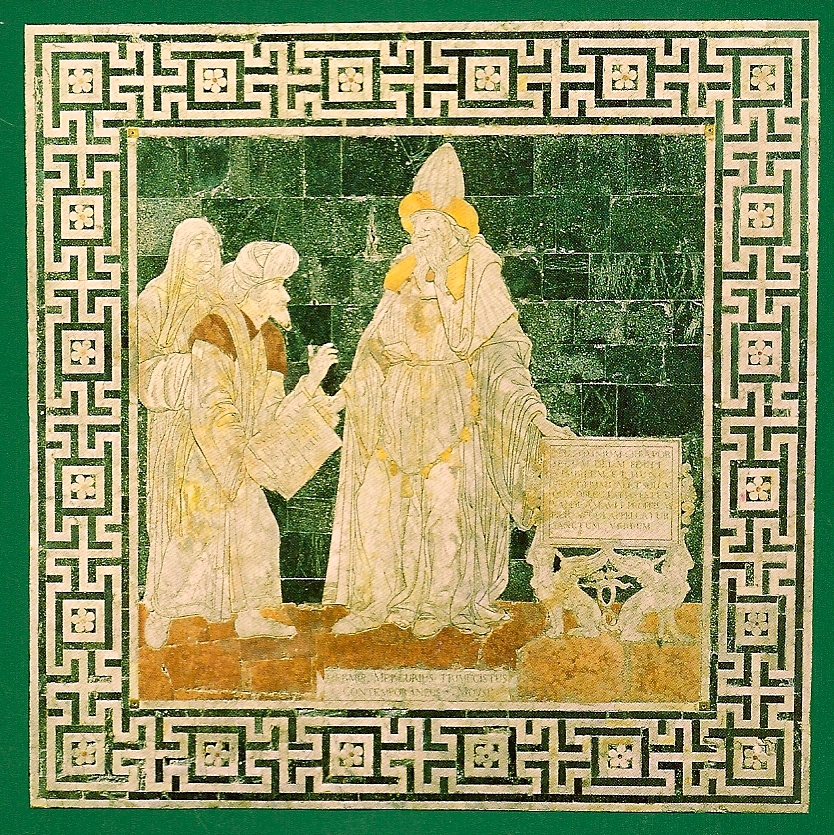
Corpus Hermeticum & Asclepius (Copenhaver Critical Edition)
The definitive scholarly translation of the Greek and Latin Hermetica attributed to Hermes Trismegistus, foundational to Renaissance Neoplatonism and Western esotericism.