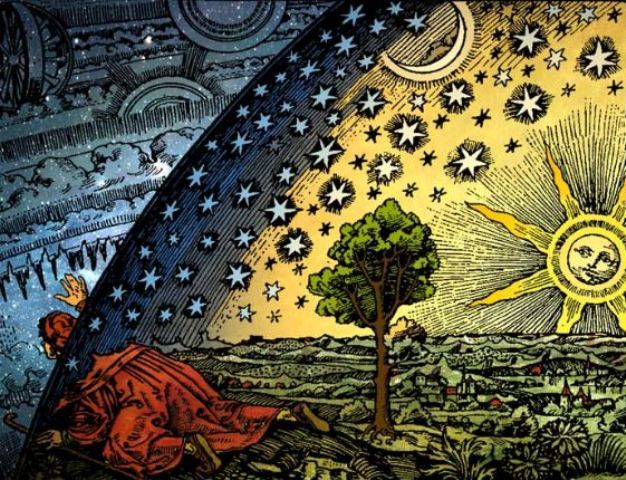
By examining the principles and correspondences within this esoteric current, we will uncover the underlying themes and principles that govern these esoteric traditions, revealing a rich body of spiritual and philosophical inquiry.
The Gnostic Foundation
Gnosticism, a complex and manifold philosophical and mystical tradition, emerges as a fundamental thread in this esoteric tapestry. Its emphasis on direct, intuitive knowledge of the sacred aligns closely with the teachings found in works such as "The Kybalion." Gnosticism integrates elements from early Christian, Greek, Egyptian, and Persian metaphysics, creating a unique system that highlights the significance of personal and intuitive knowledge over dogmatic adherence.
The Hermetic Connection
The Kybalion, a hermetic text, serves as a philosophical work and a master-key to esoteric knowledge. Its principles, such as Polarity, underpin the nature of reality and the universe. The Kybalion is structured to offer fundamental teachings and principles, accompanied by aphorisms and wisdom that encourage deeper insight into the Hermetic teachings. The text provides an accessible framework for understanding the true nature of life and reality, making complex esoteric concepts more approachable.
Mentalism and the Power of the Mind
Mentalism, a fundamental concept within the Hermetic Philosophy, posits that "The All is Mind; the Universe is Mental." This principle, often referred to as Mentalism, highlights the transformative power of the mind. According to Hermetic teachings, Mentalism emphasizes the mental nature of the universe, asserting that the greatest force shaping and governing the cosmos is mental power. By understanding and applying this principle correctly, individuals can revolutionize their lives, aligning their thinking with universal laws and principles.
Rituals and Practices
The rituals of mentalism, as outlined in The Kybalion, are practices that align with the principle of mentalism. These rituals are designed to help individuals understand and interact with the universe, harnessing the power of the mind to shape reality. Heracles, a hermetic philosopher, is associated with these rituals, demonstrating a deep comprehension and application of the underlying mental laws that govern the universe.
Bibliographia & Fontes
Primary Source Books Used in This Article
The doctrines, historical citations, and symbolic correspondences synthesized in this article are drawn from the following primary works and chapters:
- I.The Three Initiates, The Kybalion: A Study of the Hermetic Philosophy of Ancient Egypt and Greece1908
The Seven Hermetic Principles
Chapters / Sections Consulted:Introduction & Seven Hermetic Axioms - II.Manly P. Hall, The Secret Teachings of All Ages1928
An Encyclopedic Outline of Masonic, Hermetic, Qabbalistic and Rosicrucian Symbolical Philosophy
Chapters / Sections Consulted:Ch. “The Ancient Mysteries and Secret Societies (Part II)”
Further Inquiry in This Cycle
Companion Studies & Disputations
Relationship between the Master and Hermetic Aphorisms
Through a careful analysis of the classical sources and relationships, this synthesis reveals the Master's reliance on Hermetic Aphorisms as the foundation…
Kybalion, Mentalism & Heraclius in Hermeticism
Through a detailed analysis of the relationships between these figures and symbols, we reveal a unified understanding of the universe as fundamentally…
The Esoteric Synthesis of Gnosticism
Gnosticism, a complex and manifold philosophical and mystical tradition, has had a profound impact on various religious and philosophical systems. Emerging…
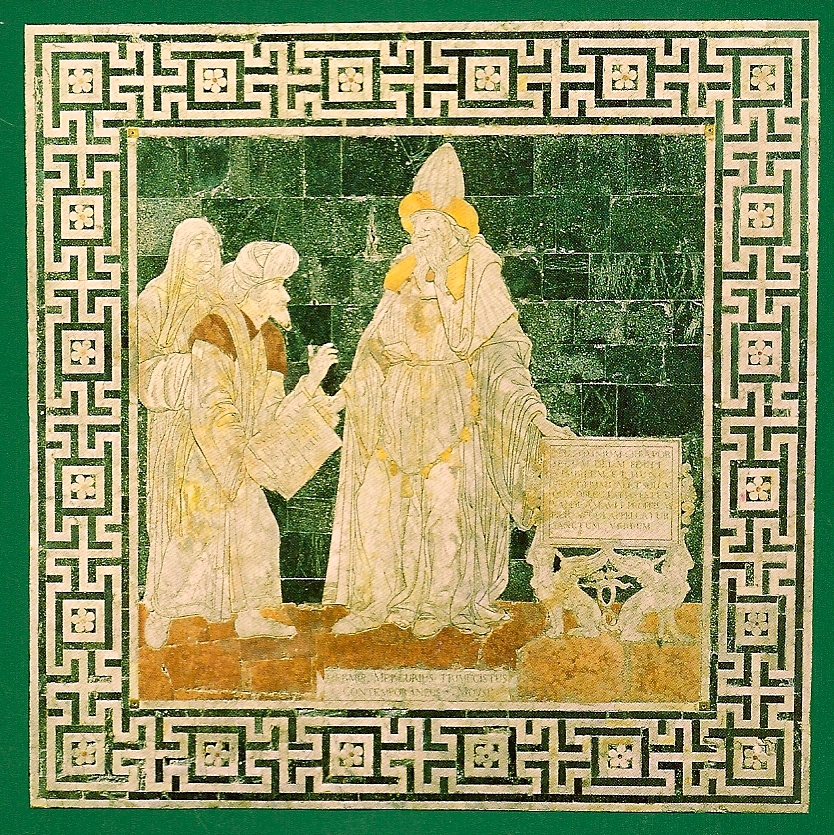
Corpus Hermeticum & Asclepius (Copenhaver Critical Edition)
The definitive scholarly translation of the Greek and Latin Hermetica attributed to Hermes Trismegistus, foundational to Renaissance Neoplatonism and Western esotericism.