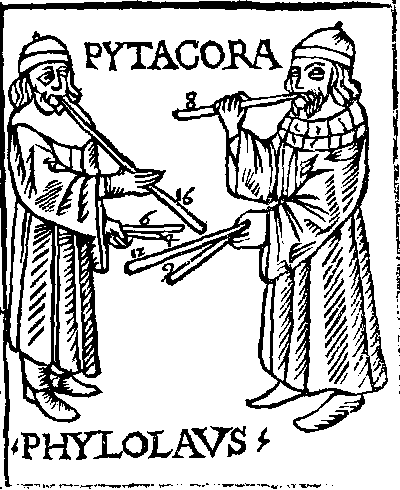
The doctrine of Astrology encompasses esoteric concepts and relationships that weave together to form a profound philosophical framework. Central to this framework is the ancient discipline of Astrology, which serves as a bridge between the divine, celestial, and earthly realms.
Historical & Symbolic Context
The philosophical underpinnings of this hermetic lineage revolve around the concept of harmony and balance, as exemplified by the principles of Astrology and the Three Mobiles. Astrology, as a divine science, seeks to understand the intricate influences of celestial bodies on human affairs, providing a framework for self-knowledge, individual character analysis, and spiritual growth. The Three Mobiles, as important astrological concepts, correspond to planets and play a essential part in understanding the celestial ballet that governs human destiny.
The concept of Balance, as embodied by the zodiac sign of Libra, is closely tied to the principle of Polarity, which governs the universe. This principle is influenced by the genii GRASGAR-BEN, who are associated with the zodiacal constellations and astrological entities. The harmonious coexistence of opposing forces and the equilibrium established by the Principle of Rhythm are fundamental to the concept of Balance.
Éliphas Lévi, a French occultist and author, played a significant role in shaping the modern occultist and Hermeticist movements. His writings on the Tarot, as an esoteric tool, reflect his deep engagement with Kabbalistic and tarot-based practices. Lévi's views on the Tarot as the "Alphabet of Enoch, Hermes Trismegistus, and Cadmus" and the "Gospel of all Gospels" demonstrate the profound significance of this tool in understanding the mysteries of the universe.
The relationships between Temperance, Prudence, and Astrology reveal a shared emphasis on moderation, balance, and thoughtful decision-making. Temperance, as a tarot card, symbolizes the virtue of moderation and self-control, while Prudence embodies careful management and wise decision-making. Both virtues are closely tied to the concept of Astrology, which seeks to understand the celestial influences on human affairs.
The connections between Luna, Venusia, Iapetusia, and Jupiteria, as celestial bodies and symbols, highlight the importance of understanding the cosmic forces that govern human experience. Luna, as the Moon, is associated with soul life, imagination, and uncertainty, while Venusia, Iapetusia, and Jupiteria, as planets, represent concepts of love, time, and wisdom, respectively.
Royal Fortitude and Prudence, as virtues, represent a balanced response to adversity and life's challenges. Royal Fortitude embodies supreme courage and inner strength, while Prudence involves practical wisdom and thoughtful decision-making. Both virtues are essential for navigating life's complexities and making informed choices.
The philosophical underpinnings of this hermetic lineage reveal a profound understanding of the universe and human experience as governed by the principles of harmony, balance, and moderation. The relationships between Astrology, the Three Mobiles, Balance, Éliphas Lévi, Luna, Temperance, Prudence, Royal Fortitude, Venusia, Iapetusia, and Jupiteria demonstrate a shared emphasis on understanding the celestial forces that shape human destiny and the importance of thoughtful decision-making in navigating life's complexities.
Bibliographia & Fontes
Primary Source Books Used in This Article
The doctrines, historical citations, and symbolic correspondences synthesized in this article are drawn from the following primary works and chapters:
- I.Arthur Edward Waite, The Pictorial Key to the Tarot1910
Being Fragments of a Secret Tradition under the Veil of Divination
- II.Manly P. Hall, The Secret Teachings of All Ages1928
An Encyclopedic Outline of Masonic, Hermetic, Qabbalistic and Rosicrucian Symbolical Philosophy
Chapters / Sections Consulted:Ch. “An Analysis of Tarot Cards” - III.Éliphas Lévi, Transcendental Magic: Its Doctrine and Ritual (Dogme et Rituel de la Haute Magie)1856 / 1896 trans.
Translated and Annotated by A. E. Waite
Chapters / Sections Consulted:Part I: The Doctrine of Transcendental Magic - IV.A. E. Thierens, The General Book of the Tarot1930
Containing the Astrological Key to the Esoteric Tradition of the Greater and Lesser Arcana (Intro. by A. E. Waite)
Further Inquiry in This Cycle
Companion Studies & Disputations
Temperance: The Harmony of Virtues
The concepts of Balance, Temperance, and Prudence form a philosophical triad that attests to the necessity of moderation, self-control, and wisdom in…
Astrology, Occultism, and the Divine Sciences
By examining the intersections between astrology, Éliphas Lévi's teachings, and the celestial bodies of Luna, Venusia, Iapetusia, and Jupiteria, we reveal…
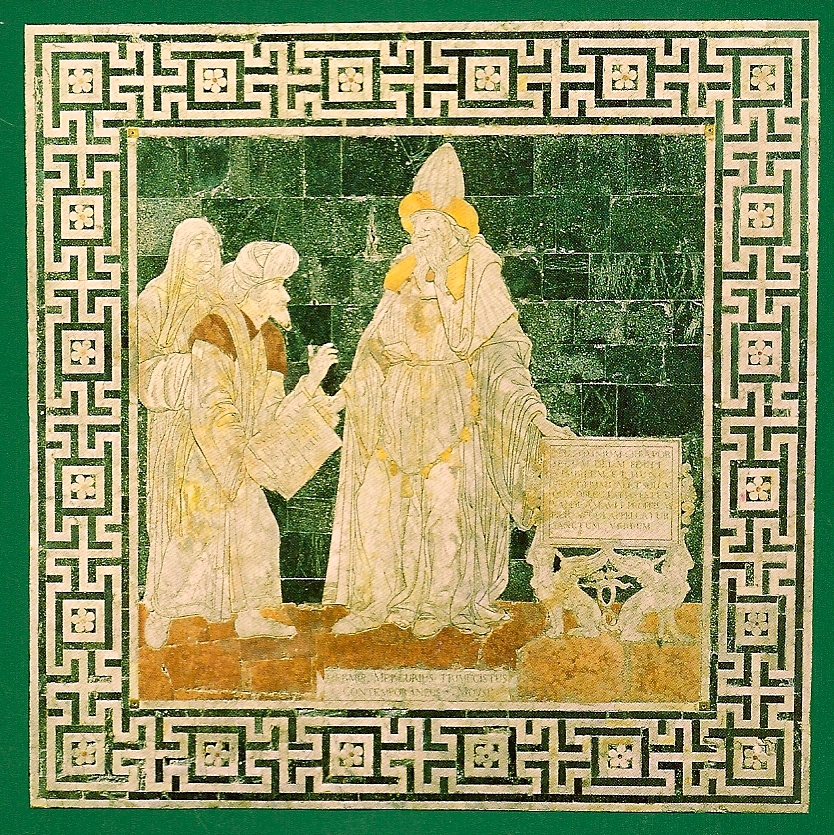
Corpus Hermeticum & Asclepius (Copenhaver Critical Edition)
The definitive scholarly translation of the Greek and Latin Hermetica attributed to Hermes Trismegistus, foundational to Renaissance Neoplatonism and Western esotericism.