Saturn

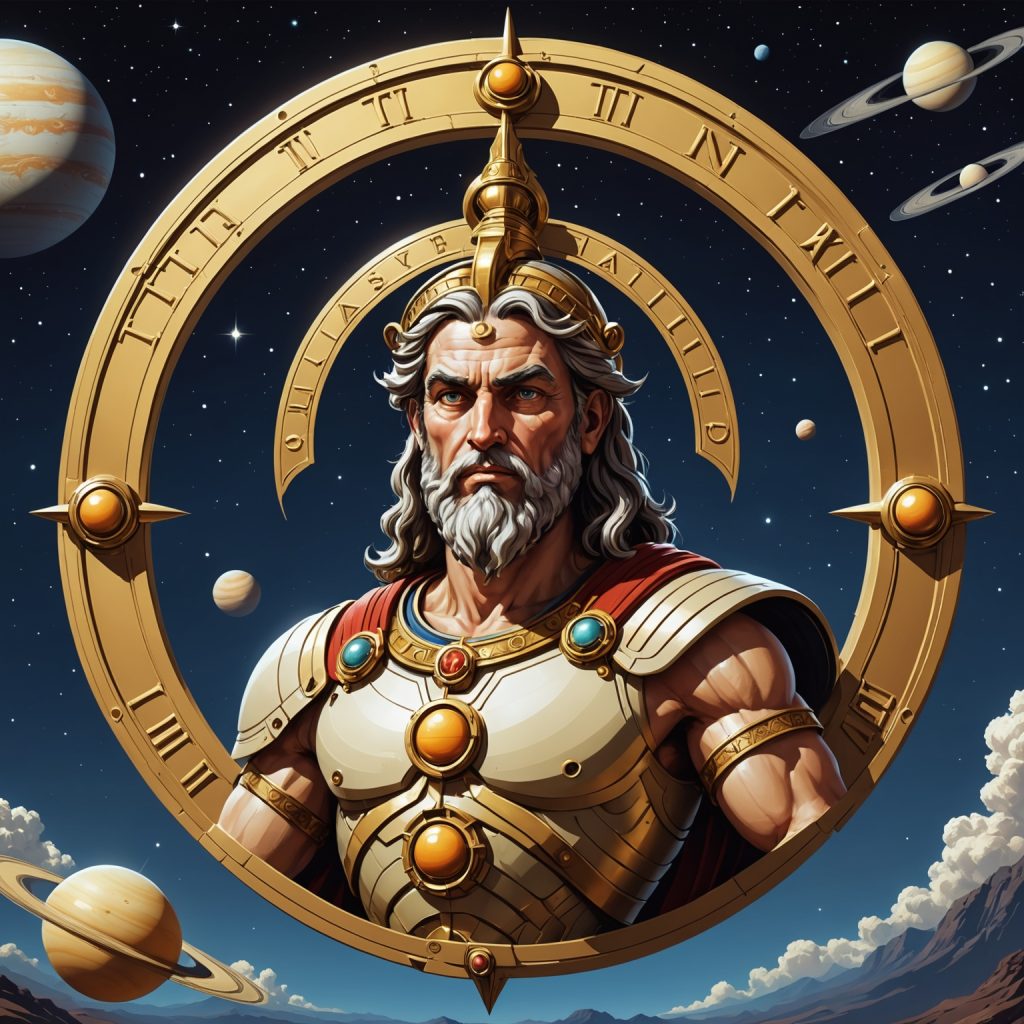
Saturn is primarily a deity from Roman mythology. He is associated with time, harvest, and generation. His Greek counterpart is Cronus (or Kronos). Saturn also features symbolically in Western esoteric traditions, such as astrology and alchemy, where he represents structure, discipline, limitation, and karmic lessons.

Saturn is often titled "Lord of Time" or "Lord of Karma." In Roman mythology, he is also known as the god of agriculture, wealth, and renewal. Esoterically, Saturn governs discipline, structure, limitation, and spiritual maturation.

Saturn, in esoteric spirituality, is a powerful archetypal force associated with time, structure, limitation, discipline, karma, and transformation through trials. Often depicted as the stern teacher or the great taskmaster, Saturn governs boundaries—both physical and metaphysical—and enforces the laws of cause and effect.

In Roman mythology, Saturn is the god of time, agriculture, and wealth, closely linked to the Greek Kronos. In astrology, Saturn rules Capricorn and Aquarius (traditional rulership), symbolizing responsibility, maturity, and the passage of time.

Energetically, Saturn represents the process of crystallization—what becomes solid and lasting through effort, patience, and endurance. Its influence often feels heavy but is ultimately constructive, pushing individuals to confront fears, establish order, and gain mastery through perseverance.

Spiritually, Saturn teaches lessons of humility, detachment, and the acceptance of reality. It is associated with the alchemical principle of lead and with the planetary sphere of Binah on the Kabbalistic Tree of Life, symbolizing understanding and divine structure.

Working with Saturn involves commitment, self-discipline, and embracing challenges as gateways to inner wisdom and growth.
Domain/Area of Influence

Saturn governs structure, discipline, time, responsibility, karma, boundaries, and lessons through limitation. It influences personal growth through hardship, maturity, and mastery. Energetically, it brings grounding and tests endurance to foster inner strength and spiritual evolution.

Attributes

Saturn is associated with discipline, structure, responsibility, and time. It governs boundaries, limitations, karma, and life lessons. Spiritually, Saturn teaches through challenges, delay, and endurance, urging maturity and self-mastery. **Personality:** Stern, authoritative, wise, restraining, patient, sometimes harsh or cold. **Powers:** Regulation of time and cycles, karmic justice, manifestation through effort, long-term growth, boundaries, and protection. **Symbols:** Scythe or sickle, hourglass, the color black or dark blue, stone (especially lead), and rings or circles (representing cycles and limits). In astrology, Saturn rules Capricorn and traditionally Aquarius, and it influences structure, societal roles, and spiritual tests.

Symbolism

Saturn symbolizes structure, discipline, limitation, and karmic lessons in esoteric and metaphysical traditions. It governs time, cycles, and boundaries, often seen as a teacher that brings growth through challenge. In metaphysical symbolism, Saturn represents maturity, responsibility, and spiritual grounding. It is associated with the root chakra due to its stabilizing influence and connection to survival, safety, and structure. In jewellery, Saturn-themed pieces (like rings or talismans) can be used to enhance focus, inner strength, and mastery over life’s lessons. They are often worn during periods of transformation or to reinforce commitment to long-term goals and spiritual discipline. Materials like lead (Saturn’s alchemical metal) or black stones such as onyx or obsidian may be used to channel grounding and protective energies.

Shadow Aspect

Saturn’s shadow aspect represents restriction, fear, control, and harsh judgment. It’s the part of us that internalizes limiting beliefs, leading to self-doubt, rigidity, and resistance to change. Associated vices include repression, authoritarianism, obsession with order, and emotional coldness. Challenges often manifest as chronic guilt, perfectionism, and fear of failure. In its darker form, Saturn imposes blocks and delays, forcing us to confront our inner critic and karmic lessons. Integration involves developing discipline without self-punishment and embracing responsibility without losing compassion.

Offerings

Saturn, in esoteric spirituality and traditional occult systems, is associated with discipline, structure, time, karma, limitation, and deep spiritual maturity. Offerings to Saturn are meant to honor these qualities and seek Saturn’s aid in grounding, protection, and mastery of life’s lessons. **Traditional Offerings and Associations:** 1. **Metals:** Lead (primary Saturnine metal) 2. **Colors:** Black, dark blue, deep violet 3. **Herbs and Plants:** Cypress, myrrh, patchouli, rue, hemlock (with caution), and sage 4. **Crystals/Stones:** Obsidian, onyx, jet, smoky quartz, hematite 5. **Incense:** Myrrh, frankincense, patchouli 6. **Foods/Drinks:** Dark bread, black beans, rye, red wine (in moderation) 7. **Symbols:** Scythe, hourglass, sickle, the ouroboros 8. **Animal Associations:** Crow, raven, owl, goat 9. **Day of the Week:** Saturday 10. **Planetary Hours:** Saturn hour on Saturday is most potent for offerings Offerings are typically made in a serious, respectful tone. Saturn favors sincerity and strictness over lavishness—keep rituals minimalistic but meaningful.

Invocations

To work with Saturn esoterically, focus on discipline, structure, and karmic lessons. Saturn governs time, boundaries, responsibility, and mastery. 1. **Timing**: Work on a Saturday, preferably during the hour of Saturn (use a planetary hours calculator). 2. **Symbols**: Use the planetary seal or sigil of Saturn, and the color black or deep indigo in your setup. 3. **Offerings**: Offer iron (as a metal), black onyx or hematite (stones), and grounding incense like myrrh or patchouli. 4. **Invocation**: In quiet meditation or ritual space, say something like: *“O Saturn, Lord of Time and Structure, teach me discipline and inner strength. Let your wisdom guide me through trials to mastery.”* 5. **Anchor Intention**: Meditate on accepting challenges as opportunities for growth. Journal your insights. Saturn’s energy is slow, serious, and transformative. Approach with respect and willingness to assume personal responsibility.

Related Deities

Saturn is associated with deities of time, discipline, karma, and limitation. Related or similar deities include: – **Cronus (Greek)** – The original Greek counterpart of Saturn; god of time and agriculture. – **Shani (Hindu)** – Planetary deity of Saturn, linked to karma, justice, and hardship. – **Sani (Buddhist/Tibetan)** – Similar to Shani; represents karmic retribution and delay. – **Hades/Pluto (Greek/Roman)** – Associated with the underworld, transformation, and hidden wealth; thematically linked through death and rebirth. Opposing or balancing entities include: – **Jupiter/Zeus (Roman/Greek)** – Associated with expansion, abundance, and optimism, the astrological and mythological counterpoint to Saturn’s restriction and seriousness. – **Venus/Aphrodite** – In some esoteric systems, Venus balances Saturn’s severity with beauty and harmony. These relationships appear across mythological, astrological, and metaphysical frameworks.